National Scout Jamboree

by Senior Midnight Freemason Contributor
WB Gregory J. Knott


This past week in West Virginia, the Boy Scouts of America held the 2017 National Scout Jamboree. I have attended this once every four-year event three times, in 1981 as a Scout, in 2010 as an adult leader and staff member, and in 2013 in visiting with my son Hayden.

This scouting event is unlike anything else the Boy Scouts put on.  45,000 scouts from around the United States and the world gather together to celebrate the world-wide brotherhood of Scouting.  Held at the Summit, which is the BSA’s new high adventure base, scouts can participate in an almost limitless number of activities such as fishing, zip lines, boating, swimming, learning a new skill such as movie making merit badge or engineering merit badge.

The scouts are organized into Troops of 36 scouts and four adult leaders.  Within the troop many of the scouts will have a leadership role such as Patrol Leader, Quarter Master, Chaplains Aide, etc.  These troops are made up of scouts from a large geographic area or Council.  The scouts will be with other scouts they may not know well, but will by the end of this two-week trip.

The troops must prepare their own meals, keep their campsite in an acceptable condition, and be active in the daily planning of the activities the troop will participate in.  The scouts are learning and applying leadership skills daily.  The transformation that you see in these young scouts in this short of time is nothing but remarkable.  

I often think of scouting in parallel with Freemasonry.  Both organizations share similar values, provide leadership opportunities, allow for individual skill development, encourage the growth of the individual character, and ultimately improve your ability to serve your god, your country, your neighbor and yourself.

There is a song that the scouts often sing at a campfire to end the day, the Scout Vesper sung to the tune of “O Tannenbaum”.  The first verse is as follows:

Softly falls the light of day, 
While our campfire fades away. 
Silently each Scout should ask 
Have I done my daily task? 
Have I kept my honor bright? 
Can I guiltless sleep tonight? 
Have I done and have I dared 
Everything to be prepared?

Whether it be scouting or freemasonry this simple but powerful message applies. Are you doing everything you can in your lodge to be prepared?

~GJK

WB Gregory J. Knott is the Past Master of St. Joseph Lodge No. 970 in St. Joseph (IL) and a plural member of Ogden Lodge No. 754 (IL), Homer Lodge No. 199 (IL) and Naval Lodge No. 4 in Washington, DC.  

On The Membership Issue or: Why The Troma Rules of Production Doesn’t Apply to Freemasonry

by Midnight Freemason Contributor
WB Adam Thayer

I was listening to the "Whence Came?" You podcast today (which, as an aside, if you don’t listen to it, I highly recommend it), when WB Robert Johnson asked WB Michael Blasius about the membership issue that we are facing today in Freemasonry. I had to stop the podcast for a minute so that I could answer the question for myself (which, I’m sure the other people on the road thought I looked like a lunatic), and I’d like to share that answer with you.

We don’t have a membership issue. I should clarify that we, the Blue Lodges, don’t have a membership issue...

Everyone is concerned that we’re losing members faster than we’re replacing them, and this is absolutely true, but we don’t have a membership issue. The question really is, are we losing Masons? Because we can lose card carrying, dues paying members, whose shadows never darken our doorway after they take their Master’s degree, and it won’t actually affect anything (except for our revenue), but are we losing men who are making the world a better place? To that, I’m not actually certain; I believe we may be losing a few here and there, but I think for the most part, men who were first prepared to be Masons in their heart are remaining as Masons. They’re out there, practicing Masonry in the world, and that’s the most important thing that we teach.

So, who DOES have a membership issue?

Well, the Grand Lodges have a membership issue; to continue supporting all of the programs that they put in place during the “golden age” of Freemasonry, they need revenue. That is completely understandable, and I can’t fault them for that. Many of these programs do great work in the world, and we are all very proud of what they accomplish.

The appendant bodies have a membership issue; for them to continue their existence, they require more men to become Masons, so they can turn them into Scottish Rite Masons, York Rite Masons, and Shriners.

These additions to Freemasonry (yes, the Grand Lodges are additions, remember that originally independent lodges joined together to form the Grand Lodges) all are facing potentially catastrophic membership issues, but the Blue Lodge… The Blue Lodge is running along just fine, doing what it has always done, which is taking the raw material of good men and turning them into the tools to change the world for the better.

One of the potential resolutions that I’ve heard thrown out to combat the perceived membership issue is the one day class (you may have heard it called a “Blue Lightning”, and you may have even heard some pretty negative terms for it that I won’t justify by repeating here). Now, if you haven’t ever sat and spoken with me about it before, let me tell you now: I hate one day classes. I hate them with a passion. I hate the idea of them, the shrinking of a life changing event into a rapid fire orgy of lectures, and I hate the mentality that has led us to believe that they are ok to perform on a routine basis.

That’s not to say I hate one day Masons; one of my first mentors and dearest friends is the product of a one day class, and it didn’t affect his Masonic journey in any way. But I hate one day classes, and here’s why: one day classes cheapen the experience for the newly made Mason. That’s it, really. Our whole purpose of performing the degree work is to leave an impression on the Brother, and I don’t believe we can adequately do that in a single day. (Dear Scottish Rite, I’m looking at you here too, because there is absolutely no way a man can absorb 29 degrees worth of material, or even the few mandatory degrees, in a single weekend.)

Of course, as I mentioned earlier, men who were prepared to be made Masons in their hearts first are going to take the lessons and apply them as best they can, even though they were only exposed to them in a short, overwhelming burst. As they keep coming back and learning more, they’re going to find better ways to apply them in their lives.

As much as I hate one day classes, I hate degree work that has multiple candidates even more, for the same reason. Awkward confession: at my EA and Fellowcraft degrees, there were three of us as candidates, and I shared my Master’s degree with another brother, although we took our obligations and second section of that degree individually. Speaking first hand, it cheapens the experience for the individual if you’re sitting on the sideline, watching someone else learn the lessons that were meant to be taught to you directly. (Ahem, Scottish Rite… And York Rite too!)

All of this has lead me to think about Troma Entertainment. Now, if you’ve never heard of Troma Entertainment, good for you! I watch horrible, low budget movies, and as such I can’t help but have experienced a good many Troma movies. Troma Entertainment is a production company, known for ultra low budget movies such as The Toxic Avenger and Poultrygeist: Night Of The Chicken Dead. If those sound like absolutely terrible movies, you’re right, although “terrible” isn’t a strong enough descriptor.

Lloyd Kaufman of Troma Films

On every Troma production, the three House Rules of Production are posted in highly visible locations, so that everyone on the cast and crew sees them enough times to never forget them. They are, in order:

SAFETY TO HUMANS
SAFETY TO PEOPLE’S PROPERTY
make a good movie (that last one is in very small print, compared to the other two)

I worry sometimes that we try to apply this same mentality to our degree work. Of course, we want to make sure that everyone involved is safe, that is definitely important, and we want to treat our buildings with respect and make certain that we don’t burn them down by using too much flash powder (that happened to a Past Grand Master I know, who managed to set the curtains on fire during a Scottish Rite reunion), but then at really small print at the bottom we say “give the candidate a good degree experience”, and I think we’re going about it the wrong way. Giving the candidate the best experience possible should be our priority; put it at position one, in bold print, all caps, and the largest font you can possibly squeeze onto a piece of paper. If it was to be put on a website, put that in scrolling and blinking text, so that everyone sees it enough times to never forget: our job in degree work is to give the candidate the best degree possible.

If we approach degree work with a candidate-centric approach like this, all of a sudden everything changes. We’re there to impress our lessons on him, and impress how important those lessons are so that he can use them to become a better man.

I don’t know how your lodge operates when it comes to degree work, but I know how mine does: we practice, and we practice…. We practice again… Then, when we think we have it down, we practice some more. Sometimes, we’ll show up to practice not knowing what we’re practicing; we don’t know what degree we’re working on, and in that degree, we don’t know what part we’re performing. Sometimes, we’ll even draw roles out of a hat. We practice so much that the people who do our degree work KNOW every single word and every single footstep of the degrees. This gives us one very distinct advantage: when it’s time to do our degree work with a live candidate, we’re not focused on the words, we’re not focused on where we’re walking, we’re focused on giving our candidate the best experience, and that makes all the difference in the world.

From the minute the candidate enters our building, we’re focusing on the candidate. Nobody is worried about forgetting their lines, because they have locked them into their memory as deeply as the names of their own family members. Nobody is worried that everything is set up correctly, because we’ve done it so often that our crew (which is mainly just our Tiler) can do it in their sleep. All we’re focused on is if the candidate is being taken care of. Is he having a good time? Does he feel welcomed into the lodge? Is he meeting his soon-to-be brothers and getting to know them?

This candidate-centric approach sets the tone for the whole evening. When we go into the degree work, we spend the whole time focusing on the candidate. There are no brothers chattering on the sidelines, and no members shouting out corrections during the degree. They’re watching everything that’s being done to make sure that the candidate is picking up what is being taught, to look for areas that the candidate might be getting confused for later discussion, and to be sure he is understanding it (insofar as a new candidate can understand everything that is thrown at him in a degree).

How does your lodge do degree work? A number of lodges that I’ve been to as an apprentice custodian do things differently; they focus on the ritual itself. Now, that’s not to say that a focus on ritual isn’t important, because our ritual work is very important. These lodges, however, are focusing on the ritual to the exclusion of the candidate! They’re so concerned about being word perfect with every lecture, and having every footstep hit the exact place that it should, and oh yeah, by the way, we have a candidate here as well.

The candidate ends up feeling left out, like he’s not really a part of the degree, as much as he is just a prop for the brothers to use to make themselves look good. If your lodge does this too, don’t fret, it’s easy to fix! Practice, and then practice some more. And then when you know it, go ahead and practice some more. Get it so ingrained that you forget about performing, and focus on making your candidate have the best experience possible. If you do that, you’ll find that everything else falls in line; your candidates keep coming back because they felt important, and they might even bring in one or two special men who will also become Masons (notice: Masons, not Members), and by this method the Craft continues to propagate itself.

This will also help bolster the ranks of the Grand Lodges, and will work its way into helping build back the appendant bodies, but if you start doing this for the purpose of bringing members to these groups you’ve missed the whole point of what I’m saying, because you’re no longer doing it for the candidate. I’ve seen a number of appendant bodies starting to look at ways to make new Masons in the thought that they can get them to join the bodies immediately as well and build back up the numbers; these efforts are doomed to fail, because they’re only going to bring in members who will stay in Freemasonry for as long as these groups can hold their interest.

I’m going to summarize with a phrase one of my bosses used to repeat: always focus on the customer, and everything else will fall into place. As long as we remember that our candidates are our customers for degree work (and all of our brothers are customers of the lodge all year long), our focus will stay true, and we can finally relax a bit about membership!

~AT

WB. Bro. Adam Thayer is the Senior Warden of Lancaster Lodge No. 54 in Lincoln (NE) and a past master of Oliver Lodge No. 38 in Seward (NE). He’s an active member in the Knights of Saint Andrew, and on occasion remembers to visit the Scottish and York Rites as well. He continues to be reappointed to the Grand Lodge of Nebraska Education Committee, and serves with fervency and zeal. He is a sub-host on The Whence Came You podcast, and may be reached at adam@wcypodcast.com. He will not help you get your whites whiter or your brights brighter, but he does enjoy conversing with brothers from around the world!

A Look at Inside the Freemasons

Inside the TV series that goes inside the United Grand Lodge of England

by Midnight Freemason Contributor
Steven L. Harrison, 33°, FMLR


Sitting with me at lunch as we were planning a Masonic project, a Brother pulled something out of his briefcase and handed it to me, “Here… take a look at this and tell me what you think of it.”  I took it and found myself looking at a DVD case — Inside the Freemasons.  I almost felt as if I was holding contraband; and in a sense I was.  This was the much-ballyhooed Sky TV production about the United Grand Lodge of England not intended, initially at least, to air in the US.

Sky TV billed the series as a documentary to “discover the truth behind the ancient rituals and closely-guarded practices of the world’s oldest social network, taking viewers exclusively behind the scenes in the run up to its 300th anniversary in 2017.”

Excited about the prospect of possessing this forbidden fruit, I scampered back home and popped it in my DVD player only to get the message, “Can’t Operate Disc.”  Uh-oh.  Not only is it not meant to play in the US, it’s coded so it won’t play here.  Contraband, indeed.  Well, there’s more than one way to skin a cat.  When I tried this in my computer’s DVD drive, it played (caveat emptor – in case you’re thinking of purchasing the DVD, this doesn’t always work).

Well, problem solved, popcorn popped, easy chair reclined, I was ready for the adventure.

The pre-release buzz about this five-part series indicated it was going to be a classier, more accurate assessment of Freemasonry than the run-of-the-mill sensationalism we usually see about the Brotherhood.  Unquestionably, it was.  However, the producers still could not resist claiming they would “lift the veil of secrecy” and “reveal what really goes on behind closed doors.”  Not so much — If anything the producers went out of their way to respect the privacy of the degrees, visibly closing the doors on the viewer more than once.  I’m no expert on UGLE Freemasonry but for ceremonies they show – installations, dinners and other meetings – corresponding events are open or not considered “secret” in my jurisdiction. 

The show also promises “to reveal what it means to be a modern day Freemason.”  In this vein as we watch Brothers in pursuit of various aspects of Freemasonry, from being initiated to attaining high office, we also see them interacting with their families, jobs and hobbies.  The show contrasts the “stuffed shirt” aspect of Freemasonry with Brothers engaged in farming, sky-diving, motorcycling, boxing and such.  We even see the consecration of a Lodge exclusively for footballers (you know, the thing we in the US call “soccer”) — again, an open ceremony over here.

Mainly recorded at Freemasons Hall in London (Covent Garden), headquarters of UGLE and the “spiritual home of Freemasonry,” the series is peppered with Masonic tidbits, mostly light-hearted, where a narrator asks something about the fraternity and a Brother responds.  As an example, in one of these scenes (which almost look like outtakes) the narrator asks, “Tell me a surprising Masonic fact.” A chuckling Brother responds, “There are no goats involved.”

There are poignant moments as well.  In one such scene a Brother shows a picture of himself and his wife smiling arm-in-arm at a Masonic function.  Just seconds after the photographer snapped the picture, his wife collapsed and died of a heart-attack.  The Brother talks about the support he and his daughter have received from the Masons after the devastating event.

While watching, US Brothers can’t help but compare US customs to those in the UGLE.  Most notable to some may be the formality of dress in England compared to the ultra-casual attire one finds in the US.  The impeccably-dressed UGLE Masons somehow exude an air of courtesy and respect for each other that jeans and T-shirts can’t match. To others, the biggest contrast may be the free-flowing alcohol at UGLE Lodge functions.

A scene that is sure to send many US Brethren reeling is one in which a Mason explains expenses to a prospective candidate.  “So,” he explains, “our subscription per year is £215.  There is also a Provencal Grand Lodge Registration fee of £25, and then there’s a Grand Lodge Fee which will be £31.  There is a one-off fee of £111 plus the subscription of £190.  As a Mason we expect some monetary contribution to our charities and also then the dining cost;  We don’t eat for free, unfortunately…  so the dining meal is generally £24… £23… depends on the menu.  If you want wine on top, that’s generally about £5 or £6;”  And all this was said to a prospect who, as a student, was getting a discount.  So just to get in, not counting meals and donations, that’s a total of £572 or about $750.  It is unclear if the £190 subscription is annual but the subscription of £215 amounts to a minimum annual dues of $282.  My Lodge dues are $46 and that comes with the right to gripe about them being too high.

Viewers will also notice scenes where some Brother’s faces are blurred so they will not be recognized as Masons.  Things aren’t so open in England as they are in the US.

For the record, here is a brief description of what is in each episode:

Episode 1: A Quarterly Communication; a candidate preparing for his initiation and Brothers practicing for the degree; installation of a Provincial Grand Master; a festive board.

Episode 2: A candidate preparing for the Fellowcraft Degree;  snippets of the candidate being questioned in the Second Degree (something akin to our proficiencies), with the unprepared candidate stumbling through his responses; a Lodge-sponsored boxing event which raises £8,000 ($10,500) for charity.

Episode 3: Planning for a Quarterly Communication; a candidate preparing for his Master Mason Degree;  a Masonic Ladies’ Night including a traditional “grand march”; a look at the Widow’s Sons motorcycle club led by Peter Younger, whose wife recently passed away at a Masonic event; a Quarterly Communication and festive board.

Episode 4: On-the-street interviews garnering public comments such as, “I can’t imagine what crazy things happen behind those doors”; the issue of Freemasonry as a men-only fraternity; a Masonic ladies’ event with the Lodge’s “First Lady” as the featured speaker; scenes from a well-known rapper’s second degree at Chelsea Lodge for entertainers; the Consecration of a new music-themed Lodge.

Episode 5:  Freemasonry’s “battle plan” to attract younger members; preparation for and the Annual Investiture; events leading up to the consecration of a Lodge themed for football players and enthusiasts; the grand entrance of the Grand Master (Duke of Kent) at the Annual Investiture for which doors are closed “out of respect for the Duke of Kent.”

There is much more to see in this series which, in my opinion, will be enjoyable and educational for Masons and non-Masons alike.  Freemasons will find many of the scenes familiar and very much like Masonic activities in the US.  Other scenes will be a learning opportunity as we experience the light by which other Brothers work.

If you’re interested in purchasing the two-DVD set, it’s available for about $20 (US) here: http://bit.ly/2v4ejbL (Don’t forget, if you purchase it the discs may not work in your DVD player).  If you live in a region eligible for Sky TV and are a subscriber, you may watch online here: http://bit.ly/2teEhMs .

~SLH

Bro. Steve Harrison, 33° is Past Master of Liberty Lodge #31, Liberty, Missouri. He is the editor of the Missouri Freemason magazine, author of the book Freemasonry Crosses the Mississippi, a Fellow of the Missouri Lodge of Research and also its Worshipful Master. He is a dual member of Kearney Lodge #311, St. Joseph Missouri Valley of the Scottish Rite, Liberty York Rite, Moila Shrine and a member and Past Dean of the DeMolay Legion of Honor. Brother Harrison is a regular contributor to the Midnight Freemasons blog as well as several other Masonic publications. His latest book, Freemasons: Tales From the Craft & Freemasons at Oak Island. Both are available on amazon.com.

A Little Pixie Dust

by Midnight Freemason Contributor
WB Scott Dueball

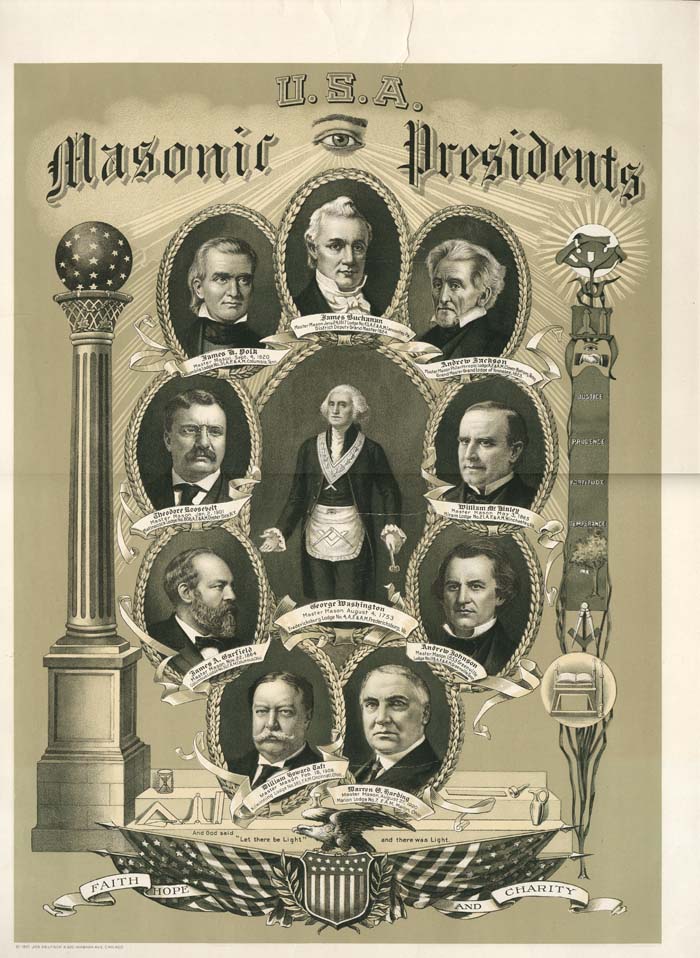
I was recently approached by the newest Master Mason in our lodge who asked how we could update one of the ‘Famous Mason’ posters we are all familiar with. I must admit that in my mind there was a flash of grown up Peter Pan looking back at how he had grown up and lost his sense of freedom and wonder. I too used to wonder things like, "How can we make the fraternity seem more relevant to great young men who could benefit greatly from our philosophy?" I had once believed this was necessary to, “save our Gentle Craft.” I wondered if I had grown cynical and allowed boring, mature thought to become engrained in my outlook.


It turns out that it’s not that I think that updating our lists of great men is unnecessary. There may be nothing more necessary than that. We simply no longer count men of this type of greatness among our rolls. Taking fame out of the equation, do you personally know a Brother who has such conviction in his purpose that he might stand up to the greatest government the world has ever known? How about a Brother who’s earned the Medal of Honor? Or a Brother who will one day compose a literary work so great that young adults read it not just once but maybe 2 or 3 times during their schooling?


I have seen Masonry in a lot of different places and it’s rare that I observe the onboarding of a man with potential for true greatness. More often we find ourselves taking the men who have the time, who have nothing better to do, or who we don’t fear will ridicule us when we approach them about the Craft. This serves an important mechanism. We must bring in men who can cook the dinners, prepare the education, and run the lodge meeting. All of which are great in their own right but not... Davy Crockett-great; not John Wayne-great; not Satchmo-great. We need these men too. Men like George Washington who left his mark on humanity but likely never presided over a lodge or delivered the Senior Deacon’s Stair Lecture.


If we want to update the ‘Famous Mason’ posters, it’s our responsibility to find great men. Not famous men but men with the honest-to-God potential to excel in their lives. Find men who not only believe that humanity can improve but who spend every breathing moment spreading that Masonic Justice which many of us just talk about in our degrees. Find these men and flood our lodges with them.

~SSD


WB Scott S. Dueball is the Worshipful Master of D.C. Cregier Lodge No. 81 in Wheeling, IL and holds a dual membership in Denver Lodge No. 5 in Denver, CO. He currently serves the Grand Lodge of Illinois as the State Education Officer. Scott is also a member of the Palatine York Rite bodies and the Valley of Chicago A.A.S.R.-N.M.J. He is passionate about the development of young masons, strategy and visioning for Lodges. He can be reached at SEO@ilmason.org