“I can't believe I said yes
to this.” Pudge punched his pillow as he grumbled, “This ground is as hard as a
rock!” The old man replied as his voice could be heard in the darkness, “Well,
I'm sure there are plenty of rocks in the ground you are laying on.” Pudge not
seeing the humor in the 50-year member's remark and began to mutter, “I could be
home right now playing a video game, eating pizza, and falling asleep in my
nice comfy bed. Why in the world did the Master think it would be a great idea
for the members of the lodge to all go camping together?” He continued
muttering as he abused the pillow underneath his head.From The Archives: The 50 Year Member: Part Fourteen - Whisper Good Council
“I can't believe I said yes
to this.” Pudge punched his pillow as he grumbled, “This ground is as hard as a
rock!” The old man replied as his voice could be heard in the darkness, “Well,
I'm sure there are plenty of rocks in the ground you are laying on.” Pudge not
seeing the humor in the 50-year member's remark and began to mutter, “I could be
home right now playing a video game, eating pizza, and falling asleep in my
nice comfy bed. Why in the world did the Master think it would be a great idea
for the members of the lodge to all go camping together?” He continued
muttering as he abused the pillow underneath his head.From the Archives: Day By Day, The Masonic Way: Disappointment
Brethren, as I look back over the pieces I’ve written in the past few years, I see many things I’m very proud of. There were a great many papers on various topics, full of emotion and passion, but what I’ve found missing is what I would consider “solid” education, that is, a practical application of the instructions we are taught in our three degrees. Over the next series of papers I write, I plan to address that issue. I hope to be able to provide some solid teachings, and learn something myself in the process!
Many minds far greater than my own have written examinations of the symbols that are presented, and I promise that if you spend the time pouring over their writings you will find it to be a rewarding and enriching pursuit. Instead of retreading the words of our forefathers, I hope to break new ground by discussing the issues that face our brothers today. I won’t even pretend to be doing this for entirely noble reasons; to a degree (if you’ll excuse the pun), this is my attempt to deal with these issues in my own life and, through that process, find peace for myself.
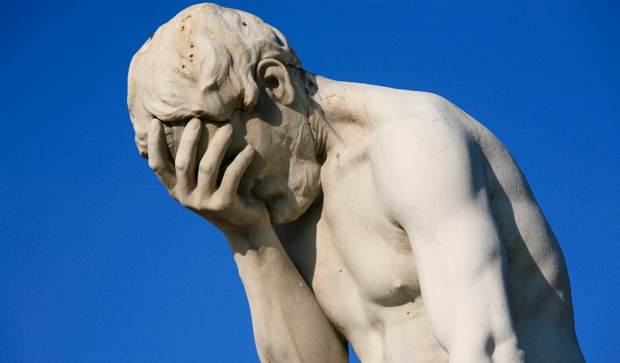
Tonight, the issue that is most heavy on my mind is that of disappointment. Disappointment comes in many forms; maybe you didn’t get the promotion you deserved, or your team ended their season with a 6-7 record (I’m looking at you Cornhuskers), or maybe your evening just didn’t go the way you had hoped it would. Disappointment is a common human condition, however to dismiss it so easily is to downplay how absolutely crushing the experience can be when it occurs.
At its core, disappointment comes from reality not living up to our expectations. Perhaps our expectations were set too high, perhaps we ignored the reality of our situation, or perhaps the world is a complex, sometimes cruel place where things don’t go the way they should. Whatever the real reason, disappointment taken to an extreme can lead to severe anxiety issues, with sufferers going out of their way to avoid any risk that may lead to disappointment.
King Solomon knew disappointment; even with all of his accomplishments he saw failure after crushing failure, leading him to say “I surveyed all that my hands had done and what I had toiled to achieve, everything was meaningless, a chasing after the wind.” King Solomon definitely had a flair for the melodramatic, however I believe we can all identify with the sentiment: after all of our hard work and effort, when everything comes crashing down around us, what is the point of our labors?
When faced with disappointment, my mind first goes to thoughts of the mosaic pavement. Being the representative of human existence, it is necessarily equally checkered with both white and black tiles, which we are taught is emblematical of the good and evil in our lives. It could also be said to represent our victories and our defeats, our joys and our disappointments, which equal out in the long run of our lives.
A man much wiser (and significantly cheesier than I) once stated that walking the mosaic pavement is very hard on the feet. This is most especially true when we’re face to face with our disappointments.
Truly dealing with our disappointments head-on takes courage, but it also takes a humble spirit. It begins with accepting what has happened, which many of us have a very difficult time with. It also takes time, something that I myself have an issue with; we want everything fixed right now, not at some magical later date. Finally, it takes a willingness to learn from the situation, to prepare us for future storms.
Here’s a little secret from me to you: life is full of disappointments. Rather than letting them destroy us, we have the opportunity to learn and grow from them. If the human life is an alchemical process, then disappointment is the process which transforms our rough ashlars into perfect ashlars.
I hope you can learn to channel your disappointments into your passion; for me, that passion is writing, and the large number of papers that have been posted since my first guest post nearly two years ago is a testament to the disappointments in my life. For one of my good friends, he pours his disappointment into music, and has constantly improved his talent to a near professional level. Whatever your passion is, I encourage you to pour all of your frustrations into it; let them fuel you as you strive to become ever greater.
Childlike Wonder
Occasionally I find myself occasionally jaded or even burned out by disappointment. This might be disappointment in others’ actions or maybe lack of actions I expected. Sometimes I just get overextended and have to refocus on why I decided that sleep and health were more important than getting that last email or spreadsheet completed before bedtime. This leads me to a sometimes rather negative perspective of questioning myself as to why the responsibility lies with me? Why can’t others just simply do what’s expected of them?
Disappointment can be a downward spiral, and I am blessed to have had good role models and mentors that took time to demonstrate both responsibility and how to adjust our outlook when negative events occur. I like to think of it as childlike wonder mixed with gratitude. The childlike wonder comes and goes, and gratitude simply takes practice to change into habit. Doing things for others simply because you see the need, being the responsible adult without asking for recognition, that is the lesson of building internal character.
The wonder of the world through the new eyes of a child never ceases to be amazed. Discovery of new things, learning something fun and making a game of it, finding ways to play, to create, to become whimsical may seem far away or not. I remember my childhood playtime and reading time, not so much the individual events but more the general feelings of happiness and contentedness, simply escaping in my own mind with fantasies of driving fast with model cars or reading books until my eyes were filled with sleep. I remember the feeling of internal happiness and pride I felt when I was recognized by my parents or friends as being helpful and appreciated.
We learn gratitude in many different ways. We often learn of it in church reciting or listening to prayers of gratitude to Deity. We learn to say please and thank you with intent and meaning, not just for polite society. Gratitude extends inwardly with lessons of turning pride into gratitude as can be examined through the Masonic lessons of Charity/Love. That in itself could be a paper or even a book topic for those studying psychology. I learned the lesson of gratitude from a dear friend and mentor through of all things, just a simple passing comment. He simply said, paraphrased, we need to remain grateful for all things, and that gratitude leads to love and wisdom.
Wow! That struck me like a lightning bolt. Gratitude leads to love and wisdom. The simplest of phrases, yet the impact was felt at my core as I realized the connection between my own humility, gratitude, and the paths that open with remaining humble. I reflected in childlike wonder at that powerful message, and I still use gratitude and humility as a base for my meditations. Am I worthy to even be writing this to you? No, but maybe not for any expected reasons. I can only open the veil into my own life or experiences and humbly offer my thoughts and expressions. I can only do so with the hope, the childlike wonder, the gratitude felt, while connecting and maybe helping others on different places we share as we climb the mountain together. My own honest reflection into my experience connects with some, connects with different people differently, and so will your own experiences connect with others. I learn far more from reaction and interaction after I write these than what went into the writing.
Freemasonry teaches the lessons of humility, gratitude, love, and wisdom. These lessons repeat in the degrees, lectures, and charges. The opening and closing of the lodge reminds us of gratitude and focus on internal reflection, and we are repeatedly reminded that we are all on the way toward perfecting our ashlar, not that we have perfected it.
We as Freemasons use the symbols and working tools for a mental focus toward perfection, and we must be vigilant that we don’t hold ourselves on any pedestal for others to emulate; we must keep our egos in check. We must not fall into the trap of grandstanding our views to others while we still have much work to do internally. That trap starts with: “Why am I having to do this?”
Take a moment to stop, look someone in the eye, and say please or thank you, or you’re welcome, with focus and intent. Let’s break that down into actionable pieces. Maybe we go through a door at a local business, and we hold the door open for the next person behind us. Maybe we catch the door that was held by the person ahead. Expressing gratitude takes no real effort, but maybe it changes someone’s day. Maybe that person ahead of you or behind you is having a rough time, and simply taking a second to look them in the eye and thank them lifts their spirits. Maybe you’re opening the car door for your wife. It doesn’t matter if the other person even acknowledges your action because you don’t do it for their reaction. Do it. Say it. Mean it. Put focus behind it. Walk the walk of gratitude, humility, and find ways to help others even through simple intent of please, thank you, and you are welcome. Reflect upon your actions while never losing that childlike wonder of discovery.
Randy and his wife Elyana live near St. Louis, Missouri, USA. Randy earned a Bachelors Degree in Chemistry with an emphasis in Biochemistry, and he works in Telecom IT management. He volunteers as a professional and personal mentor, NRA certified Chief Range Safety Officer and enjoys competitive tactical pistol, rifle, and shotgun. He has 30 plus years teaching Wing Chun Kung Fu, Chi Kung, and healing arts. Randy served as a Logistics Section Chief on two different United States federal Disaster Medical Assistance Teams over a 12 year span. Randy is a 32nd degree KCCH and Knight Templar. His Masonic bio includes past Lodge Education Officer for two symbolic lodges, Founder of the Wentzville Lodge Book Club, member of the Grand Lodge of Missouri Education Committee, Sovereign Master of the E. F. Coonrod AMD Council No. 493, Co-Librarian of the Scottish Rite Valley of St. Louis, Clerk for the Academy of Reflection through the Valley of Guthrie, and a Facilitator for the Masonic Legacy Society. Randy is a founding administrator for Refracted Light, full contributor to Midnight Freemasons, and an international presenter on esoteric topics. Randy hosts an open ongoing weekly Masonic virtual Happy Hour on Friday evenings. Randy is an accomplished home chef, a certified barbecue judge, raises Great Pyrenees dogs, and enjoys travel and philosophy.
Hiram Struck Down
I first met Tim Uriah Thomason shortly after he was raised in 2016. He was a curious man. He was quiet and observant. I have half a dozen stories about Tim stunning us with his knowledge of various Masonic histories, facts, and interpretations of our teachings. We listened, and we learned. He was such an asset to the Masonic Fraternity, and not only to Illinois but to the Craft as a whole.
Many unique tributes and kind words were written about Tim in the last few weeks. One, in particular, caused me to contemplate after reading it...the words as I read them--pausing to think as I took them in and wiping my eyes. Tim was a special kind of Mason. He was one of those 3%ers. He was not just active at his home lodge, where he was the Current Worshipful Master at the time of his transition. He traveled all over the place. He was an honorary in a handful of Lodge's. He was an international member as well.
It took me a few days to write this because I just didn't feel like it was the right time. I suppose the time will never be right to type these kinds of things. I keep thinking that if Tim's transition affected me so strongly, someone who only spent occasional time with him, what do those closest to him feel? I can't imagine their pain and loss. Tim was only 36 years old. I feel like we lost an up-and-coming titan of Freemasonry. Tim already had legend status--It didn't matter where in the state something was happening...Tim might just walk in the door and be ready to get to work.
Tim's Masonic Service was a packed house. There was standing room only. Brothers of all ages, elbow to elbow, lined up to pay their respects to a Just and Upright Mason--Timothy Uriah Thomason. I looked around and thought, when we're old and pass on to the world to come, our peers come to gather and mourn our passing. Often times there aren't many people in attendance. I can't help but think this may be because the people we touched are also old, and many of them may have passed. Tim passed on so early in life--those people he touched are all still around, and it showed.
I don't know if anything I can say is better than what our Brother Ryan Flannagan posted. With Ryan's permission, I post his original words.
Your name badge said “Timothy U. Thomason Landmark Lodge #422”. You had just walked into a Stated Meeting in Springfield, something that members ten minutes away can’t be bothered to attend. And you drove from Joliet? I was skeptical, but you were a legit member. [I] figured I’d never see you again, but it wasn’t long before I realized there was no one in the state like you. While I rarely expected to see you, I learned never to be surprised to see you. So many events that were unforgettable in their own right, you were there. It was my good fortune, having met you that night in Springfield, that we’d frequently spend time together at these events, sometimes even hanging out afterwards despite you usually having a 2-3+ hour ride home. During the lockdown, you joined the Zoom calls a couple guys from [No.] 500 down here started. While everyone was trying to get a word in, crack a joke, or steer the conversation (most of the time me for all three), you’d just listen. When you did talk, everyone shut up because it was usually exactly what needed to be said. You were one of the guys that was supposed to come up with us, the guy we’d hear got appointed to some big position, the name we’d see on a list and say “Whatever else they’re doing, if they’re putting Tim in there, they’re doing something right.” You loved Masonry not just for what it could be, but for what it already was. You didn’t travel the State just for what you could get, but for what you could give. You sincerely enjoyed being with your brothers, and had a genuine love for the Fraternity unlike any Mason I’d ever met, and maybe ever will meet again. I woke up today to learn I’ll never see you again. I guess it’s one more Lodge you’ve visited before me. Until we meet again, dear friend and brother, until then, farewell. ~RW Bro. Ryan FlanaganThank you, Ryan, for articulating so well these sentiments.
~RHJ
RWB Johnson is a Co-Managing Editor of the Midnight Freemasons blog. He is a Freemason out of the 2nd N.E. District of Illinois. He currently serves as the Secretary of Spes Novum Lodge No. 1183. He is a Past Master of Waukegan Lodge 78 and a Past District Deputy Grand Master for the 1st N.E. District of Illinois. He is the current V:. Sovereign Grand Inspector for AMD in I.L. Brother Johnson currently produces and hosts weekly Podcasts (internet radio programs) Whence Came You? & Masonic Radio Theatre, which focuses on topics relating to Freemasonry. He is also a co-host of The Masonic Roundtable, a Masonic talk show. He is a husband and father of four, works full time in the executive medical industry. He is the co-author of "It's Business Time - Adapting a Corporate Path for Freemasonry," "The Master's Word: A Short Treatise on the Word, the Light, and the Self – Annotated Edition," and author of "How to Charter a Lodge: A No-Nonsense, Unsanctioned Guide. More books are on the way.
Clorox™ Masonry
Freemasonry teaches targeted touch up cleaning in some areas where a good strong cleaner may be needed in others. We as Masons are admonished to whisper tenderly in a brother’s ear when we encounter perceived shortcomings, and that seems synonymous to me with a gentle wipe of a broad-spectrum cleaner. Why would we go deep dive into that brother’s business with a targeted intervention when we could simply offer a few words of coaching or even encouragement in getting past whatever situation we perceive as negative? We must remain cognizant that we do not walk in their shoes, we don’t experience the same situation as the brother, and we certainly don’t know what goes on within that brother’s life even when we are told by the brother. We simply weren’t there inside that brother’s head.
Yet I still see brothers all up in other brothers’ business. I witness brothers and their families talking about other brothers and their families like school children at recess. Why is that? Our own house is so solid that there are no more rough ashlars? We can go critique our brother while he’s doing the best he can? Or put another way, the coming down hard on a brother, tearing him a new orifice, as opposed to coaching and offering to assist in helping him in his time of need? There’s no reason to spray strong acid indiscriminately when a gently applied soft cloth removes the stain. Even if we open ourself to such critique, we should never speak badly about a brother behind his back with very few exceptions, and those based on absolute necessity.
We do need to speak about each other. We need to convey news to other Masons, and we need to keep our lines of communication open. We must maintain legitimate communication no matter what the circumstances. Maybe the easiest test to check the legitimacy of our words is to simply ask, did I say these same words to the brother in question? Did we say these exact same words to the brother before we say them to someone else? Another option, always available to Masons, is silence and leading by example. Communication should be the spreading of brotherly love, otherwise, silence is the Clorox™ Clean Up of Freemasonry.
Randy and his wife Elyana live near St. Louis, Missouri, USA. Randy earned a Bachelors Degree in Chemistry with an emphasis in Biochemistry, and he works in Telecom IT management. He volunteers as a professional and personal mentor, NRA certified Chief Range Safety Officer and enjoys competitive tactical pistol, rifle, and shotgun. He has 30 plus years teaching Wing Chun Kung Fu, Chi Kung, and healing arts. Randy served as a Logistics Section Chief on two different United States federal Disaster Medical Assistance Teams over a 12 year span. Randy is a 32nd degree KCCH and Knight Templar. His Masonic bio includes past Lodge Education Officer for two symbolic lodges, Founder of the Wentzville Lodge Book Club, member of the Grand Lodge of Missouri Education Committee, Sovereign Master of the E. F. Coonrod AMD Council No. 493, Co-Librarian of the Scottish Rite Valley of St. Louis, Clerk for the Academy of Reflection through the Valley of Guthrie, and a Facilitator for the Masonic Legacy Society. Randy is a founding administrator for Refracted Light, full contributor to Midnight Freemasons, and an international presenter on esoteric topics. Randy hosts an open ongoing weekly Masonic virtual Happy Hour on Friday evenings. Randy is an accomplished home chef, a certified barbecue judge, raises Great Pyrenees dogs, and enjoys travel and philosophy.
Sub Aspects To Our Archetypes
We use these thought patterns, or archetypes, as symbols in our meditation as a means to gain deeper insight into any given situation. Consider an issue with jurisprudence within a lodge as an example. Who better to meditate upon for wisdom in dealing with this than wise King Solomon? You get the picture. Many of us have already done this, some many times, some have taken the journey with an archetype for a much longer period, considering what that archetype’s response might be to any current event or situation. North Carolina’s Middle Chamber education program takes this to a different level, and without giving away what I know of it, let’s say I’m looking forward to booking my flights when the Middle Chamber course is offered again.
Here’s an exercise to consider when you’ve passed the initial work of having that internal conversation with these archetypes. It really is just a means of exploring ideas beyond your own initial thoughts or normal consciousness. I would like you to consider sub-aspects to our archetypes.
Let’s focus on Wisdom, Strength, and Beauty for the moment, although we can use any of our Masonic Archetypal references. Within Wisdom lies both Strength and Beauty, within Strength lies Wisdom and Beauty, within Beauty lies Wisdom and Strength. You see here two possible sub-aspects to each archetype to expand your contemplation.
Then again, maybe not. It’s just an exercise in your own contemplation, in your own thinking.
~RS
Bro. Randy Sanders and his wife Elyana live near St. Louis, Missouri, USA. Randy earned a Bachelors Degree in Chemistry with an emphasis in Biochemistry, and he works in Telecom IT management. He volunteers as a professional and personal mentor, NRA certified Chief Range Safety Officer, and enjoys competitive tactical pistol, rifle, and shotgun. He has 30 plus years teaching Wing Chun Kung Fu, Chi Kung, and healing arts. Randy served as a Logistics Section Chief on two different United States federal Disaster Medical Assistance Teams over a 12-year span.
Randy is a 32nd-degree KCCH and Knight Templar. His Masonic bio includes past Lodge Education Officer for two symbolic lodges, Founder of the Wentzville Lodge Book Club, member of the Grand Lodge of Missouri Education Committee, Sovereign Master of the E. F. Coonrod AMD Council No. 493, Co-Librarian of the Scottish Rite Valley of St. Louis, Clerk for the Academy of Reflection through the Valley of Guthrie, and a Facilitator for the Masonic Legacy Society.
Randy is a founding administrator for Refracted Light, a full contributor to Midnight Freemasons, and an international presenter on esoteric topics. Randy hosts an open ongoing weekly Masonic virtual Happy Hour on Friday evenings. Randy is an accomplished home chef, a certified barbecue judge, raises Great Pyrenees dogs, and enjoys travel and philosophy.
This Is Not An Education Piece
My favorite piece of art is an oil on canvas painted by the Belgian surrealist Rene Magritte. After working as a commercial artist for a number of years, he painted a picture of a large wooden pipe, and underneath wrote “Ceci n’est pas une pipe”, or literally “This is not a pipe”. To tie it all together, he titled the painting The Treachery Of Images, to remind us of the dangers that images can pose.
Years later, when he was questioned about the image, he replied firmly that what he wrote was correct; it was not a pipe, it was a representation of a pipe. You couldn’t put tobacco into it, you couldn’t light it, because it was only an image of a pipe. In fact, he went on to say “if I had written on my picture ‘This is a pipe’ I’d have been lying!”
As a writer, it reminds me of Alfred Korzybski stating “The map is not the territory - the word is not the thing”. It’s a constant reminder that words, no matter how beautifully written, are still just representations of the actual thing. I could spend paragraphs detailing Magritte’s beautiful pipe – which is, I remind you, not a pipe – the fantastic shine of the bowl and stem, the glow of it against the golden background, the thin, almost fragile lettering underneath, and yet that description is still a pale comparison to seeing the actual picture in person.
I imagine many of us feel that way about our degrees; I can tell you about the nerves I experienced leading up to it, the scent of the room, the feeling when I was first brought to light… but none of this can live up to having been there, in that room, in my skin. Yet, in the act of describing it, I remember that night ten years ago, as if I was still there.
Neither can I put the sound of a brother’s voice in your head the way I hear it, clear as day, whenever I get up to give what I still consider to be “his” lecture. The best I can give is a representation of it, kind, loving, yet firm in his demand that I never let that lecture be read from the book or be performed without feeling.
Our symbols are like that too; while you may have some of the symbols as physical representations (doesn’t every lodge have a square and compass?), they are still just that – representations. The compass in our lodges, for instance, is generally not a compass one could actually use to circumscribe a true circle. What’s more, I’ve yet to find a lodge with an actual beehive, although I do think selling Masonic Honey sounds much more interesting than flipping pancakes.
The Treachery Of Images is a fantastic reminder of the place our symbols belong in Masonry – as mental placeholders for complex teachings and morality instruction. The symbols themselves only contain the meanings we put into them, and as such should not be deified in and of themselves.
Of course, the phrase “The word is not the thing” should bring a special meaning to the Master Mason, which I will point out for those who are inclined to ponder without expounding the substitution principle to the uninitiated.
So Adam, I hear you thinking, what’s your point? Has all of this been a rambling opportunity for you to have an excuse to write about your favorite piece of art? Yes, obviously. Perhaps I should have titled this “The Treachery Of Education” and include the disclaimer “Ce n’est pas une conference educative”.
Perhaps I could trick you into reading paragraph upon paragraph, expecting to find some hidden nugget of wisdom that I subtly snuck in but that you are starting to doubt is in there. Perhaps I already have.
Perhaps the point of all Masonic Education really shouldn’t be to teach necessarily, but to encourage you to think and discover meaning for yourself. Then again, to paraphrase Magritte, this is not a Masonic Education piece. Unless, of course, it was.
Journey of a Stone
Over the years I've explained the journey of consciousness and sentience using the water cycle. We were created (evaporated) from the ocean of Universal Consciousness, live an individuated existence (as vapor and rain), and eventually, through Enlightenment, stream back to the Source. This is described variously in all the mystical traditions of humanity, theistically and non-theistically, from St. John of the Cross's Union with God to D. T. Suzuki's works regarding Satori. But all fingers point to the same moon. What finger does Freemasonry provide?
How do we, as a Living Stone, start our journey? We first became an individuated object when we were cut in the Quarry, where all stone is one united (universal) mass. In Masonry, our journey begins with a recognition of this separation in the form of duty to God. We cannot know Deity until we suffer the realizations of our separateness, after all.
The Lewis is one of the symbols associated with our Frist Degree, clearly visible on the tracing boards of old, but absent from our ritual, at least those versions I am familiar with. Operatively, the lewis is a tool by which a stone is grasped and lifted. At this point, it is clearly no longer within the bosom of Mother Earth, but ready to be worked upon.
In some jurisdictions, there is a "Lewis Jewel" that serves the purpose of recognizing a Brother whose son or father was a Mason (sometimes with allowance extended to grandparents, fathers-in-law, etc.). These jewels may even have multiple bars of names, signifying a line of many generations of Masons. The longest I have seen is six, tracing from well over a hundred years ago to a young gentleman at a neighboring Lodge. Such is the nature of humankind, ever lifting up new generations, yet each stone unique and in need of its own perfections.
The various tools we encounter on our path are all applied either to the drafting of the Stone's purpose or its shaping. The entire work of Masonry is to learn how to shape, and work to fit, each of our stones. What are we fitting it for? The Temple the Lodge is at least twofold in its representation. The first is an edifice brought together by many men, allegorically — the Lodge as a collective body. The second is the building of our personal existence, not just as the refining of an eternal soul, but a record of words and deeds that we shall leave behind.
The former is social; the latter is personal. And work on ourselves as both an Ashlar for its own perfection is intimately connected with how our stone fits into a bulwark of a band of Men and human society overall. We live an often conflicting dichotomy as individuals and as a member of something greater. This is because, as we are separate beings and yet cannot exist outside of Deity, the stone that once had no independent shape is now moved to and around the worksite, searching for its place within the plans of the Grand Architect.
How it fits (or doesn't fit) is a discussion that could never be exhausted, though we shall endeavor that another time. But the point here is that the ultimate goal is to be united in one mass, one existence. This is how we are, even in temporal form, a citizen of two worlds — one of solitary birth and death, and one of Oneness with what during our life can be no more than the "Divine Other".
The cement of Brotherly Love, unlike the mortar of the World that wears and decays, sets our interdependent fates into an intricate framework of time and space. The final result is beyond our human comprehension. However, each of us partakes fully upon the reality of the whole on a higher plane.
The journey ends where it began, to our Eternal Home from whence our eternal soul originally came, adding our journey's experiences to the limitless, yet united, divine existence.
Bro. Ken JP Stuczynski is a member of West Seneca Lodge No.1111 and recently served as Master of Ken-Ton Lodge No.1186. As webmaster for NYMasons.Org he is on the Communications and Technology Committees for the Grand Lodge of the State of New York. He is also a Royal Arch Mason and 32nd Degree Scottish Rite Mason, serving his second term as Sovereign Prince of Palmoni Council in the Valley of Buffalo, NMJ. He also coordinates a Downtown Square Club monthly lunch in Buffalo, NY. He and his wife served as Patron and Matron of Pond Chapter No.853 Order of the Eastern Star and considered himself a “Masonic Feminist”.
In Which All Men Agree
Think about that.
As an interfaith minister and citizen of the world, I appreciate (rather than just tolerate) other beliefs. As someone educated in the Humanities, I accept that there is more than one way of looking at things, be it economics or politics or human nature. But I expect certain truths to be universally understood, even if the application of them may take forms that may pit us against one another. Masonry teaches us to Love one another in spite of our spirited debates and disparate votes.
The more I become aware of Masonic experiences across my jurisdiction and the world, the more I see a diversity of expressions of Masonic principles. However, I am also seeing a diversity of values, some of which are incompatible with what I would suggest are taught in our lessons. Contemplating the inconsistent amity regarding Prince Hall Masons, for example, exposes two centuries of fundamental duplicity. By continued support or silent complicity of segregated recognition, we clearly do not practice what we preach. But it’s more than institutionally systemic. It’s personal.
In the last year, it has become painfully obvious that political divisions have crept into the Craft. Or that’s what we think is happening. I suggest it’s much, much worse: basic values, rather than just specific beliefs, have become politicized. It is not that we are bringing politics into the Craft, but that people are bringing politics into the very discussion of our VALUES. Partisan lines have been drawn, even if only in stereotype, as to which human beings are worthy of our help and which deserve our fear. Justice has become a charged buzzword, Liberty a hollow platitude, Equality a battleground. These words have taken on political meanings that have nothing to do with the Morality on which all reasonable, good and decent people can agree.
There was even one Brother on Facebook who expressed how angered he became upon seeing a “Be Kind” bumper sticker. How bad have things gotten to where we use terms like “virtue signaling” to dismiss or even ridicule today’s version of “Love thy neighbor”? People don’t like being told that what they are doing (or not doing) is inconsiderate or selfish. We may be reminded of our obligations by some stranger and it infuriates us. (Mind you, such things may be worth civilly debating if there is an ethical rebuttal to be had. But such conversations are almost immediately framed by the actions or opinions of politicians, who, frankly, were not invited to the conversation.)
We may be wrestling over things like “political correctness” and “identity politics”, but the underlying values they deal with (however poorly or disingenuously) should not be held in question. Many of us use a dislike of certain people demanding civic duty and respect as an excuse to not be a good person. Instead, we defiantly base our patriotism on personal sovereignty without obligations. We put party identities over the country we claim to love. With so much ritual touching upon the subject of good citizenship, we must wonder if Brothers with this attitude have taken the same Degrees as the rest of us.
But don’t get me wrong. Masons aren’t perfect. So what makes us Masons? It’s not that we aren’t ever prejudiced or selfish, but that we try not to be. It’s not that we don’t sometimes ignore the needs of our fellow Man, or lack tolerance toward them, but that we aspire to do so as we are able. Seeking to be better ought to be considered an unwritten, yet non-negotiable Landmark of Masonry.
If we can at least agree on that, how many of us live up to it? Brother Franklin had his detailed plan to focus on a different virtue each week, yet after years of rotations had not become a Perfect Ashlar. But he made an honest, conscious effort to live a truly virtuous life nonetheless. How many Workmen actually do this most important of Masonic Work in some way, big or small? And if we are failing to do even this, do we accept whispered wise counsel and be awakened from our moral slumber? I would never ask more of a fellow Brother.
But there are those who are petulantly stubborn in their righteousness or simply do not care. Those latter stones may not ever be of suitable material, and yet some Lodge did a disservice to us all by admitting them to our quarries. At least from my experience, we are getting better at guarding the West Gate. Gone are the days when petitions were handed out like brochures to a carnival.
But we still find ourselves with a necessary purging of our Lodges. By that, I don’t mean merely to forbid prejudices, incivilities, or other Unmasonic conduct when and where we find it. I mean the Lodge within ourselves. What Masonic values have we rebelled against in the name of politics? Can we find a way to live up to our obligations without becoming untrue to our particular beliefs, political or otherwise? And if one has to go – a political belief or a principled value – we must decide which to divest ourselves of. Such choices will prove our true worth as good Men and Masons.
Bro. Ken JP Stuczynski is a member of West Seneca Lodge No.1111 and recently served as Master of Ken-Ton Lodge No.1186. As webmaster for NYMasons.Org he is on the Communications and Technology Committees for the Grand Lodge of the State of New York. He is also a Royal Arch Mason and 32nd Degree Scottish Rite Mason, serving his second term as Sovereign Prince of Palmoni Council in the Valley of Buffalo, NMJ. He also coordinates a Downtown Square Club monthly lunch in Buffalo, NY. He and his wife served as Patron and Matron of Pond Chapter No.853 Order of the Eastern Star and considered himself a “Masonic Feminist”.