Showing posts with label meeting. Show all posts

Coming Back Is Not Easy

by Senior Midnight Freemason Contributor
WB Gregory J. Knott


I don’t know about you, but returning to meetings for the blue lodge and other groups has been harder than I thought.   After basically a year of not attending meetings in person, I’ve come to see I have a different perspective on the necessity of my attendance.   I haven’t had as much free time as I did in the last year since I was very young and I have very much enjoyed not going to as many meetings.


As we get back into full speed, I have personally made the determination that I am going to attend meetings I wish to attend, not because I have to attend.   My days of going to mindless business meetings that really serve no purpose other than to plan the next mindless business meeting or talk about who is behind on paying dues are going to be limited.   


This isn’t to imply that I am down on Freemasonry, because I am not.  However, for me, Freemasonry isn’t reading the minutes, talking about a roof for months on end or complaining about the same guys who don’t pay their dues on time year after year.    Freemasonry to me should be educational opportunities, fellowship, service to others, and work within the community all with a purpose of individual self-improvement. 


What are your thoughts on returning to the lodge?  Do you look at things differently?  Are you satisfied with the way things were going before the pandemic and hope they return?  I am curious about your thoughts and perspectives.   Please leave them here in the comments or on our Facebook page at https://www.facebook.com/midnightfreemasons


~GJK

WB Gregory J. Knott is a founding member and Senior Contributor of the Midnight Freemasons blog. He is a Past Master of St. Joseph Lodge No. 970 in St. Joseph (IL) and a plural member of Ogden Lodge No. 754 (IL), Homer Lodge No. 199 (IL) and Naval Lodge No. 4 in Washington, DC. He’s a member of the Scottish Rite, the York Rite, Eastern Star and is the Charter Secretary of the Illini High Twelve Club No. 768 in Champaign-Urbana. He is also a member of ANSAR Shrine (IL) and the Eastern Illinois Council No. 356 Allied Masonic Degrees. Greg serves on the Board of Directors of The Masonic Society and is a member of the Scottish Rite Research Society and The Philathes Society. He is a charter member of a new Illinois Royal Arch Chapter, Admiration Chapter U.D. and serves as its Secretary. Greg is very involved in Boy Scouts—an Eagle Scout himself, he is a member of the National Association of Masonic Scouters. You can contact him at gknott63@gmail.com

Redefining the Stated Meeting

by Midnight Freemason Guest Contributor
Bro. William H. Boyd


This is an amazing time in masonry with new tools available that allow us to meet virtually, research inexpensively and from home, and share our findings widely. We can study and learn nearly everything we desire about masonry and pursue those passions as far as technology will take us. Even considering the many opportunities now available to us, I frequently find in my travels, in my reading, and in various podcasts I listen to, a chorus of voices begging to eliminate or reform the dreaded stated meeting. How is it that of all of the various masonic topics, functions, and activities that the stated meeting has become the focus of so many searching for the fulfilling masonic future? I have some thoughts and suggestions on ways for you to put and keep stated meetings in their proper masonic place. 

Is your personal masonic foundation based mostly or completely on your experiences with stated meetings? Are stated meetings the central focus of your own masonic experience? What do I mean and how would you know if it is? Are stated meetings your main reference point in your discussions about masonry? If someone asks you about masonry, do you eventually find yourself explaining about paying bills and reading minutes? When you talk with brothers from other lodges about your experiences in masonry, do you find yourself mostly recounting events from stated meetings? Have you told, or do you tell other brothers that your biggest frustration with masonry is the way stated meetings are run and how long they are? I would propose that if you answered yes to those questions, and if you find that all or most of your memories, impressions, and opinions revolve around stated meetings, then your masonry is mostly based or centered on stated meetings – and if you were looking for more from masonry when you joined the craft, then perhaps you’re doing it wrong.
 
The natural question becomes “how do we, how do I fix this”? Can we re-center our own personal masonry so that stated meetings are reduced or relegated to its true minor but necessary role in our personal and collective masonic experiences? I truly believe that we can and we must if we are to truly improve ourselves, enjoy and expand our masonic experiences, and take control of our masonic journey rather than being pulled along from one stated meeting to the next.

In Lodges of varying sizes, varying levels of activity, and the common complaint heard throughout the fraternity is: “stated meetings will be the death of freemasonry” and “if we don’t fix the stated meetings, masonry is doomed”. When you reach this point, the stated meeting is the center of your masonic focus. Stated meetings have become distractions and convenient excuses for some that are unfulfilled and unsure of how to find satisfaction or a way forward. It is too easy to withhold a question or an idea, or to sit out from discussion in the name of not wanting to extend an already-lengthy business meeting and that becomes the natural impulse for many on the sides, depriving themselves and their brethren of rich discussion and the exploration of ideas.
 
How can we, as individual travelers with individual interests and journeys shift our center, or refocus our masonic attention to topical, substantive, informative masonic facets of our own choosing? I offer you these suggestions: 

1. Personal Study. Go forth and find the topics or questions that capture your attention, then go out and research the answers and learn about the topic to your own satisfaction. There are plenty of resources like books, podcasts, Vlogs, Blogs, speakers, masonic conferences, and more. Once you have answered your question, or learned about your topic, you will find it vastly rewarding to share your newfound knowledge with brethren of your lodge and, perhaps, other lodges; do not hold your new knowledge as a “masonic secret” that you keep close. When you share knowledge, you will find knowledge seekers – perhaps not every brother in your lodge, but passion attracts the passionate.

2. Organize Topic-specific Meeting Nights. Perhaps your lodge is one that only has one meeting a month – the dreaded stated meeting. In this situation, prepare the materials on the topic you are interested in and ask the Worshipful Master if you can schedule two hours of lodge time some evening to provide a program. If it is successful, plan out four or five months’ worth of programs where your topics can be presented and members can attend knowing why they are there and what to expect. An active schedule offers brothers choices and opportunities to grow and expand their knowledge. Do not be discouraged if only a few brothers attend, rather understand you’ve tapped into the curious of your lodge in search of masonic substance and seize the initiative! If your lodge isn’t offering an experience or opportunity you are interested in beyond the stated meeting, create it and offer it yourself. 

3. Start a Club. Clubs are growing in popularity and can offer you and your brother’s terrific opportunities to enjoy programs, experiences, or topical education based on commonality with other brothers. Book clubs provide brother opportunities to read and discuss masonic books. A masonic history club might provide for discussions on the history and origin of freemasonry or historical events in masonry. The type of a club is limited really only by the imagination of the brothers. Set a schedule and provide form and structure so that brothers incorporate it as a serious aspect of their masonic life and actually plan time around it. Clubs can have discussions or speakers, and they can travel on “field trips”, all of which can strengthen the bond of brotherly love and affection among lodge members.
 
4. Travel! Travel and visit lodges as often as you can. Meet brothers; enjoy their programs and degree work. Offer a program from your lodge to other lodges and then travel to those lodges to provide it. Traveling offers terrific opportunities to provide and receive education, expand your masonic network, assist other lodges, and learn about other masonic activities. You might even see if another local lodge has its own clubs that you might visit.

In all of these suggestions, the key to your success will be communication. Publicize, announce, and discuss your plans and programs with other brothers. When you announce a program or club meeting, use your local lodge means of communication to spread the word. Some lodges use social media, some use email groups, and some use combinations of several means. Find out which you can use and spread the word to grow your support! Announce your program nights, advertise your club, discuss your planned visits to other lodges – you never know who may come along as part of their own search for “more”. 

Ultimately it is up to each one of us to assess and define our relationship with masonry and decide if our journey is going in the direction that satisfies our interests and our desires. There are some simple tools a brother can use to implement change and to focus his masonry on a firm and satisfying center. Those tools are:
 
Ask – ask your lodge leaders and brethren for their ideas, guidance and counsel for opportunities and content that fulfill your longing for intellectually satisfying experiences. Identify the influencers in your lodge and ask them for their support and active participation. Ask experienced brothers how to implement your ideas an invite them to see your results. 

Seek – seek the content and those opportunities for personal growth and ways to ignite or tap into those sentiments among your brothers. Search outside the confines of the stated meeting and your lodge in your effort and consult with learned brothers on their opinions, experiences, and recommendations on how to turn your aspirations into reality. Find those resources that address your own questions and thirst for knowledge. 

Knock
– knock on the door; take those first actions and steps that set your ideas into motion. Alarm the brethren of your lodge that an opportunity has arrived and is ready to be admitted, recognized, and engaged. 

Ask, Seek, Knock; these are the working tools of change. We talk of change, and we talk of a hunger for substance and direction, yet often our working tools remain silent and unused. It is time to blow the dust off your working tools. I believe once we identify our priorities and assess whether we are addressing them, and then employ our working tools, the dreaded stated meeting will naturally gravitate to its rightful place in our collective masonic experience, that of a necessary administrative function that supports your lodge separate and apart from your loftier, masonic pursuits.

Waiting for change to come to you someday in the future will ensure that change will never come. Set your own change in motion and zealously pursue your interests, and you will find that a rich and fulfilling masonic experience outside and apart from the stated meeting awaits. Ask, Seek, Knock, and focus on the masonry that excites and challenges you. Lodges are simply our universal construct providing us the infrastructure and initial lessons to use in designing our individual masonic journeys. Masonry is universal and it is up to each of us how we apply ourselves to masonry and masonry to our lives. Do not allow yourself to be distracted and lulled into focusing on the stated meeting as the center of your Masonic universe.

~WHB


Bro. William H. Boyd was raised at Somerset Lodge #1205 in Somerset, Texas in January 1999. He has presided over several appendant bodies and served as Worshipful Master of Valley-Hi Lodge #1407 in San Antonio, Texas in 2015 – 2016 and was then selected and appointed District Deputy Grand Master for Masonic District #39A of the Most Worshipful Grand Lodge of Texas in 2017. Following his service as DDGM, he served as District Education Officer, also for District #39A. Bro. Boyd continues his service to the craft through administration of his “BroBill’s Masonic Education” Facebook group for Master Masons, where he shares educational material and papers on lodge administration policies and procedures. You can contact Bro.Boyd at whboyd@gmail.com.

Its Not About the Food

By Midnight Freemason Contributor
Bro. Erik Marks


At breakfast of my first day in the Scottish Rite, a Brother welcomed me and said: “don’t you worry, you’ll make back your dues in the meals…the food is great.” I thought to myself: “I didn’t come here for the meal.” Later the same evening in recounting an amazing day of deep insights and new friends to my partner and sons. I explained with slight dismay of my newfound Brother’s welcome serving. It was disappointing the first fare of the day was the extent of his and my conversational fodder. My spouse exhorted: “Erik. You know this: it is notabout the food!” Light. In her inimitable way, Corinna conducted me with laser precision to the heart of what is my problem, not his: our breakfast banter is my bread and butter.

Food is the metaphor for the nurturing, Love, we never received in our families or denied in our co-construction of society. In every culture, we have traditions, ceremony, and rituals around or about food. The Seder plate has foods with metaphoric meanings. We eat specific foods on designated days to remember aspects of divinity, honor ancestors, and celebrate the ample freedoms we enjoy. We break fasts with specific foods. Certain foods are used as medicines. In traditional Chinese Medicine, Vedic and Tibetan medicinal systems, foods are prescribed for myriad ailments. A doctor with an integrated approach prescribed warmed garlic oil for an ear infection I kept having, along with the standard amoxicillin in case the natural method didn’t work. I never had to fill the penicillin prescription…

Foods are sometimes misused as a substance for emotional management or control. People restrict intake to feel a sense of control over their body. Some over indulge regularly or at intervals in order to generate strong bodily sensation to mask emotion, divert attention from emotion, and create an emotion to manage another. Often, anxiety creates an empty sensation people try to fill or blunt with food. When sad, lonely, or depressed, we use foods that boost positive feelings: chocolate, carbs, fats, and sugars. We use food to fill emptiness and its encouraged through marketing. “I’m an emotional eater…” is a common phrase I hear. This can be a difficult pattern, habit, or symptoms to change since we can’t simply encourage abstinence as we can with alcohol or drugs/substances used recreationally or to self-medicate. Food is essential for life, so other approaches to change problematic eating are needed.

Food has always been a part of Freemasonry—as it has in every tradition. It is both material relief and metaphor. In our second degree, part of our traditional wages. Lodges set aside days of the year or month to serve those less fortunate. We provide meals to brethren with thought and care. Men, cooking or providing for, and nurturing, one another…and cherishing every moment. To be clear, at the core of every meal is not always about the food. The primary ingredient is quite often, Love. I can’t blame lack of coffee the morning of my initiation for the fact I wasn’t ready to ascertain the meaning in my newfound Brother’s gift to me: “Welcome. You will not be taxed or punished for getting what you need here. I’ve felt welcomed and cared for by the fraternity. Don’t worry Brother, it can happen for you, too.” He is getting what he needs for his development through the way he serves and is served-literally-in the Scottish Rite. Who am I to disrupt or disparage his path? 

 I may not see what he gains through the degrees or deserts. I may not need what he needs to be nourished towards perfection. Labor, physical, psychological, or spiritual can be draining and requires sustenance. Just because he doesn’t reflect his experience back to me in an esoteric or philosophic frame does not mean he isn’t affected in the ways I may want for me and would like to discuss. Growth can take time and our path cannot be everything to all men at the pace wethink they need. Nor should we try to be so for everyone. It seems we offer a tremendous amount to some; for others our overtly esoteric and philosophic explorations may go unnoticed, for now and we remain persistent. So, the problem is my own. He welcomed me in his way and I missed the chance to engage him: due to my insistence on a particular mode of communication, we both lost out…or maybe it was only my loss. Thank you, Brother. I hope to see you at the next reunion’s wonderful breakfast.

~EM

Brother Erik Marks is a clinical social worker whose usual vocation has been in the field of human services in a wide range of settings since 1990. He was raised in 2017 by his biologically younger Brother and then Worshipful Master in Alpha Lodge in Framingham, MA. You may contact brother Marks by email: erik@StrongGrip.org

The Importance of a Meeting

by Midnight Freemason Guest Contributor
WB Robert E. Jackson


When is my next meeting? Ugh, that's too far out. I need to find a meeting. This day was complete crap, work is driving me nuts, family pressures are surmounting, and tax season. Arrgh! Great, I found a meeting, show up, there is coffee, some sweets, and people that I can speak with openly and trust not to judge me for my indiscretions.

Growing up in a household plagued with addictions, the discussion of 'finding a meeting' happened at least monthly, but not always the same person. The purpose for finding the meeting, however, is always the same. Things are going rough in life. Heightened stress and anxiety, pushing you to take another drink. Once in that meeting, though, you are surrounded by people who care about you, and your success in sobriety. People that will accept you, no matter what you've done, recognizing how difficult it was simply to be there, and that you're there for one reason, to improve yourself in sobriety. See any parallels? I'm hoping so…

This week was rough. I'm still not sure why. Any number of things can contribute to an 'off' day. The demands of Lodge, Scouts, Work, Family can ebb and flow on their own cycles. When those things add up though, sometimes life's challenges can seem insurmountable. Almost like a tidal wave of responsibilities and expectations, ready to knock you on your ass no matter how hard you try to stay on your feet. These are the times, when I need a meeting.

Last night, my Masonic District had our monthly Lodge of Instruction. Officers from around the district gather at one of our Lodges for a program assembled by our Grand Lodge. In the past, these programs have centered around a PowerPoint presentation, very similar to the presentation received the year before. Lately, however, the programs have become more interactive. Discussions of topics ranging from various interpretations of the circumpunct, to creating a value proposition for the Lodge. Last night's discussion was a great reflection on whether or not we were living up to the promise and ideals of Masonry. In the course of a few hours, I went from wondering how the world would be impacted if I simply drove into a telephone pole, to being excited about the prospects of our beloved Fraternity and its impact on our culture. None of my Brothers knew about my mental state walking into the meeting, but just by being there, by being my Brothers, they lifted me up yet again.

I'm not looking for a pitty-party, or any sympathy, with this paper. I have been incredibly fortunate in my life, and I fully understand that my trials are insignificant compared to many. However, I felt it important to tell this story for a couple of reasons. We all have our own struggles, and sometimes it can be really difficult to find a way out. Finding a meeting may help more than you know. Additionally, when you are sitting in Lodge, make that effort to reach out to a Brother. It doesn't have to be much…a simple handshake or compassionate smile may be all it takes to save a Brothers life.

~REJ

Robert Edward Jackson is a Past and presiding Master of Montgomery Lodge located in Milford, MA. His Masonic lineage includes his Father (Robert Maitland), Grandfather (Maitland Garrecht), and Great Grandfather (Edward Henry Jackson), a founding member of Scarsdale Lodge #1094 in Scarsdale, NY. When not studying ritual, he's busy being a father to his three kids, a husband, Boy Scout Leader, and a network engineer to pay for it all. He can be reached at info@montgomerylodge.org .

What If We Actually Did Masonry?

by Midnight Freemason Contributor
RW Robert H. Johnson


We’ve all been there, a meeting where everyone has to put in their two cents regarding a charity event or a lodge repair. A discussion that lasts twenty minutes too long. Men informing the lodge that they “know a guy.”, who can do it cheaper, or perhaps raising the dues $5 a year is too expensive, or still yet, perhaps it's about how much money is going to be earmarked for the upcoming scholarships.

I commend these brothers who dig into the nitty-gritty of lodge minutia. It’s something I’ve just never cared much about or felt I needed to contribute to. These guys are into it though, they do it without being prompted, they take ownership and are made sure their voices are heard.

The title of this article alludes to the core mission of Freemasonry, to make good men better. Yes we’re charitable, yes we serve our communities, but what are we teaching our members about actually improving men? I addressed this concern in a previous piece which you can read HERE.

What if though?

What if, that same gusto for discussing these things--building maintenance and pancake breakfasts, was had when we introduced Masonic Education? What if Masonic Education wasn’t met with eye rolls from around the lodge? What if people cared as much for Masonic Education as they do about the minutia? What if Worshipful Masters didn’t buckle under the stress of the membership, requiring Masonic Education to be a mere five minutes or less? What if we did what we’re supposed to do, and fulfill the membership in the Masonic way, through improvement and education? What if instead of being told that we should start a study club on off nights for Masonic Education, we embraced the present opportunity to affect all present?

What would happen if we ALL changed the order of business, so that Masonic Education came right after the opening? What would happen if we spent twenty, thirty, dare I say an hour on a topical presentation complete with questions and answers with discussion from the brothers? Maybe we just change it so that it’s all education and only a couple bills? What would happen if these brothers were as engaged in the educational topic as they are about replacing the toilet seat, or procuring the free pancake mix from the local restaurant? Would the previous discussed minutia be then seen as the five minute bastard of the meeting? Relegated to the end, much like education is in too many lodges?

The chances are we would lose a lot of members by doing this. In fact, because Freemasonry is many different things to many different people, the least of which is an educational system. To do these things would require some sort of drastic change within the organization. Perhaps the way to experience this for those interested is to start a new lodge based on these principles.

Recently there’s been some great conversation about members who are unsatisfied, starting their own lodges. In some cases, a Grand Lodge has asked the members, “Rather than walk away, why not start a new lodge?” Members took that advice. Members across the USA are taking that advice.

Perhaps something that needs to be considered here is that Freemasonry should serve to fulfill its membership. Instead, what occurs is that the membership is largely guilted into not giving up on the current lodge, not walking away and actually to double and triple down and urged to join all the other appendant bodies. These extra organizations which are looking for anyone at all to convey the degrees upon, many times in an abbreviated form, just to get a warm body in a position. Bro. Scott S. Dueball made a case for this in his piece, “Blue Lodge First”, read it HERE.

Above I asked a whole lot of questions, and in my imagination, I thought about the response I would likely get online and the things which would be talked about, if at all. I just couldn’t help but think to myself, that the response would be something like, “I wouldn’t go to lodge anymore.” or perhaps, “By doing education first or by pushing hard for Masonic Education like this, you’re being unbrotherly.” I don’t know how that would be true, but that's basically what I think I’d hear.

I think those imaginary but prophetic responses I mentioned earlier are why the idea would never work. It’s why the membership that’s out there should just go ahead and start a new lodge if they want the educational kind of experience. Focus on what you want and leave the rest behind until they learn to attract you through additional fulfillment, not by begging you to show up. Have doubts about how this works? Check out Admiration Chapter of Royal Arch Masons in Eastern IL. Or ask Homer Lodge, also in Eastern IL about having education right after opening and letting it go for "...as long as it goes." according to Todd E. Creason, founder of the Midnight Freemasons. In fact recently, Todd had let me know that one of their chief detractors in the beginning of this effort, recently came to him and Greg Knott to tell them how much he now looks forward to the meetings.

While some reading this might belong to an education focused lodge and have no issues, I assure you, you are the minority.

I have said it before, and I will say it again. If Freemasonry is indeed a system which teaches good men to be better, then we better start having more education meetings than degrees and business combined. If we’re not doing this, we’re just lip service.

~RHJ

The Awesome Meeting

by Midnight Freemason Contributor
Steven L. Harrison, 33°, FMLR


I went to a Lodge meeting last night.


We opened on the First, Second and Third Degrees of Freemasonry.


The Worshipful Master called on the Secretary to read the minutes of the last meeting. The
Secretary read the minutes, including the name of every attendee and the names of each
officer filling a station. The Secretary then reported he also had minutes from a called meeting
held since our last regular stated communication. He read those minutes and in the same
manner ran through the list of names of all attendees and officers in each position. The
members present approved the minutes as read.


The Worshipful Master asked if there were any petitions presented. The Secretary
announced there was one. He read the petition in full, word-for- word. The Worshipful
Master appointed an investigating committee to meet with the petitioner.


Things got exciting when there was an alarm at the outer door. At the direction of the
Worshipful Master, the Junior Deacon answered and announced there were two additional
Brothers desiring admission. The Worshipful Master directed him to admit them and inform
them we were working on the Third Degree of Freemasonry.


The Worshipful Master asked if there were any reports from committees. A Brother stood and
reported on the results of an investigating committee visit. The committee’s recommendation
was full and favorable. That being the case the Worshipful Master called for a vote. The
Worshipful Master, along with the Senior and Junior Wardens inspected the ballot box and the
Brothers lined up, filed past the box and voted. The vote was clear in the South, West and
East. The Worshipful Master said he would contact the candidate to agree to a time and date
suitable for his initiation.


A Brother from the building committee reported the air conditioner did not have to be replaced
but could be repaired. The members voted in favor of allocating funds for the repair.
Another Brother reported a long-standing member of the Lodge had passed away. The
Worshipful Master called for a moment of silence and asked that the Charter be draped.
Time being short we tabled a discussion to plan our upcoming fish fry.


The Worshipful Master then proceeded to close the Lodge, peace and harmony prevailing.
I’m looking forward to the next meeting. That discussion of the fish fry could get really
interesting when we try to decide what to serve the attendees who don’t like fish.


It was an awesome evening. I just can’t figure why attendance at meetings is so low and why
anyone would not want to join this fraternity.


~SLH


Bro. Steve Harrison, 33° is Past Master of Liberty Lodge #31, Liberty, Missouri. He is the editor of the Missouri Freemason magazine, author of the book Freemasonry Crosses the Mississippi, a Fellow of the Missouri Lodge of Research and also its Worshipful Master. He is a dual member of Kearney Lodge #311, St. Joseph Missouri Valley of the Scottish Rite, Liberty York Rite, Moila Shrine and a member and Past Dean of the DeMolay Legion of Honor. Brother Harrison is a regular contributor to the Midnight Freemasons blog as well as several other Masonic publications. His latest book, Freemasons: Tales From the Craft & Freemasons at Oak Island. Both are available on amazon.com.

Burnouts and Buffets

by Midnight Freemason Contributor, 
WB Bill Hosler


I just finished reading a piece written by fellow Midnight Freemason contributor, my friend and Brother Robert Johnson, called “Is The Honeymoon Over?” As I sat here reading his work I began to notice myself nodding my head in agreement with every word RJ had written.

I have a rather unique position in the Craft; I am not an old Mason, but I am not a new guy either. At the time of writing this piece, I became an Entered Apprentice fourteen years ago. From the time I signed my petition, I couldn't wait until I was a Master Mason. Before the ink was dry on my signature, I was looking at Masonic books and looking at Masonic rings. I couldn't believe how slow the petition process was. And the thought of waiting between degrees was agony!
The night I was finally raised, I couldn't believe I had finally made it. I was a full fledged, bonafide Freemason. I began to feel like a dog who caught the car. “I caught it, now what do I do with it?” Luckily my question was answered before I exited the lodge room.
In nearly each hand I shook in congratulations another hand contained a petition for another Masonic body. From the Shriners to the Scottish Rite and York Rite, I had an application for all of them. I placed them in my pocket and went home. My mind was on overload with all I had seen and had done that night.

Within the next three months I had became a member of everything: the Shriners, the Scottish Rite
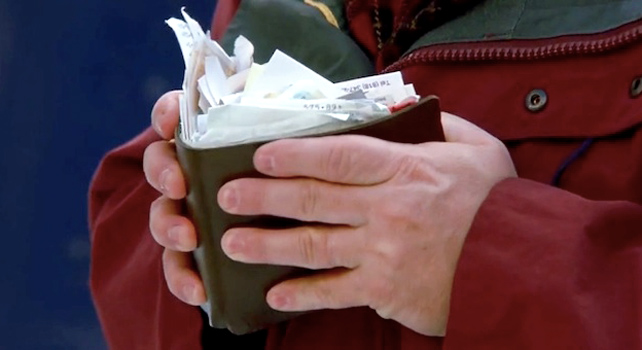
and the York Rite, along with such groups as the Philalethes Society. My wallet began to explode with dues cards!

Once the dues cards were in place, the offices came. My first lodge meeting as a Master Mason I became Junior Steward, and since I had shown the Brethren I had an ability to memorize, I also received multiple pieces of ritual to learn. I was asked if I wouldn't mind filling a chair in one of the York Rite bodies. In my zeal I agreed and I received an office in body of the local York Rite. And with the jewels of the office, came even more ritual to memorize.

I can honestly say I gave Masonry my all. I had a meeting nearly every night for almost seven years. I became a Past Master and a Past High Priest in my Royal Arch Chapter. Along the path I picked up other responsibilities. I was a member of a Grand Lodge committee and I became a webmaster for a Grand York Rite, while still,  I gathered even more jobs within my local Shrine temple. I can honestly say I loved most every minute of it.

But with problems within my family and my job, the burnout sat in. Real life began to invade my Masonic fantasy. The 24 inch gauge I had thrown away came back with a vengeance. The politics I once shrugged off began to anger me. The pieces of ritual I had been juggling for four different Masonic bodies no longer came easy to me. The representation of King Solomon’s Temple I built within myself fell apart. I went into a Masonic funk. I guess it could be called a period of Masonic darkness.

Just as Brother RJ wrote, "Masonic burnout" set in. For the longest time I was like everyone else: I thought burnout was a bad thing. But much like an old forest fire removes much rubbish and allows new life to set in, maybe Masonic burnout can be useful as well.

If you go to a drag race, people talk about burn outs as a positive thing. A burnout is when you make your rear wheels spin as fast as you can while sitting in place with your foot on the brake. When a drag racer brings his car to the race track in his preparation to race he will intentionally burn out his tires, which gets his tires warm and helps create traction which, if properly, done can be the difference between winning the race or losing.

As I'm sure you have been told many times “Masonry is a marathon, not a sprint.” That is all well and true, but if you don't get warmed up and gain traction you will fail at that race. Why not try a little of everything and find out what parts of Masonry you like and discover the ones that aren't for you?

Much like an all you can eat buffet, the first trip most people mound their plates full with as many types of dishes as they can heap on. When they return to the buffet a second time, they have a better idea of what foods they want to eat and only fill their plate with the foods they have found they liked.

After a period of Masonic inactivity and self reflection I got my life back on track and began to think about the parts of Freemasonry I liked and missed and the parts I could live without. I realized that being approached with the possibilities of Grand offices and the honors I received gave me a swelled head. I lost my perspective. I began to look at the Fraternity in a different way. I also discovered, thanks to Brother Robert Johnson, I enjoyed writing about Masonic topics. My burnout period also provided experiences for writing. It allowed me to use the experiences as “teachable moments”.

Don't get me wrong: I'm not advocating you take your zeal for Freemasonry and fill every night with a different meeting. I advocate moderation, not excess. Use your experience to find your place within your fraternity. If you find your place you are more likely to get the traction you will need to make that sprint into a marathon.

If you only take one thing away from this piece is DON’T QUIT! You joined this fraternity for a reason. Don't stop searching until you find it. Don't let the bickering or the politics or even some of the rules you find silly discourage you and make you demit. All of these silly things will eventually go away. Masonry is just like life. There will be things you love and things you hate. Just take it all in stride and make the fraternity yours.

~BH

WB Bill Hosler was made a Master Mason in 2002 in Three Rivers Lodge #733 in Indiana. He served as Worshipful Master in 2007 and became a member of the internet committee for Indiana's Grand Lodge. Bill is currently a member of Roff Lodge No. 169 in Roff Oklahoma and Lebanon Lodge No. 837 in Frisco,Texas. Bill is also a member of the Valley of Fort Wayne Ancient Accepted Scottish Rite in Indiana. A typical active Freemason, Bill also served as the High Priest of Fort Wayne's Chapter of the York Rite No. 19 and was commander of of the Fort Wayne Commandery No. 4 of the Knight Templar. During all this he also served as the webmaster and magazine editor for the Mizpah Shrine in Fort Wayne Indiana.