Showing posts with label on the level. Show all posts

Is Homosexuality Unmasonic? - Revisit

by Midnight Freemason Contributor
Bro:. Jason Richards
&
Guest Contributor
WB:. Jon Ruark


On Friday, 26 June, 2015, the United States Supreme Court handed down a landmark decision in support of homosexual marriage equality. This nationwide declaration of equality and the changing societal norms it represents necessitates taking a hard look at Freemasonry--long having been recognized as an organization that celebrates all men as equals--and its attitude toward homosexuality in order to ask the question: “If all men are equal, and now have equal rights to marriage across the United States, is the practice of homosexuality in and of itself ‘unmasonic’?” 

Before delving into such a discussion, it is necessary to define the term “unmasonic” for the purposes of our discussion here. Unmasonic conduct is often referenced--even by Albert Mackey on numerous occasions--but has seldom been defined. Most often, it is utilized either as a synonym for “immorality” or described as “conduct unbecoming of a Mason.” However, both of these uses are deeply subjective, and interpretation could vary widely depending on a given culture or circumstance as moral laws differ greatly from culture to culture. For the purposes of our discussion here, we would posit a more objective and measurable definition of unmasonic conduct: “an action that causes serious harm within the fraternity or its public image outside of the fraternity.” As a society of good men who strive to make eachother into better men, it is important to retain harmony within the organization so it doesn’t crumble from within, but also just as important to retain a positive public image so that the organization can persist and attract membership. 

(Left to Right) Bros. Robert Johnson,
Jason Richards &
Jon Ruark broadcasting TMR from
Jason's house in VA
Masonic laws concerning homosexuality vary widely from jurisdiction to jurisdiction. Many jurisdictions have no stated policy on the matter, but some Grand Jurisdictions (who will remain nameless) list transvestitism, homosexual behavior, or even the sheer promotion of homosexuality as Masonic offenses punishable by suspension or expulsion. Many of Masonry’s rules and Landmarks originated in time immemorial; however, the laws, rules, and edicts of each sovereign Grand Lodge comprise a governing framework established by men in authority at a given period of time, based on personal--and therefore subjective--worldviews influenced by societal norms. We would posit that as societal norms change and evolve, regulations at the Grand Lodge level should be revalidated and updated to reflect the greater society within which Masonry operates. As such, the Supreme Court decision on Friday gives leaders of the Masonic fraternity a distinct opportunity to reevaluate existing policies on homosexuality. 

But back to the original question of this article. If we look at unmasonic conduct from the objective lens postulated earlier, we find it difficult to reconcile calling homosexuality “unmasonic.” Homosexuality causes no inherent harm within the lodge. Regardless of race, age, or sexual orientation, brethren are expected to treat each other with the utmost respect. Furthermore, as societal norms have changed and homosexuality is no longer the social taboo it happened to be several decades ago, the presence of homosexuals in the lodge does not harm the fraternity’s public image. Quite to the contrary--as we have seen in recent times with organizations accused of anti-gay sentiment (
https://en.wikipedia.org/wiki/Chick-fil-A_same-sex_marriage_controversy), even a perceived lack of toleration can do harm to an organization’s public image. If we care about public perception--and we should given the past 50 years’ worth of membership trends--then a reexamination of our rules and perceptions toward homosexuality is prudent. 

If homosexuality is now accepted as a societal norm (much like minorities were increasingly accepted as equal members of society after the Civil Rights movement of the 1970’s), and causes no inherent harm within the fraternity or to the fraternity’s public image, then where are these regulations rooted? Arguably, much of the resistance to homosexuality in Masonry has roots in Christianity, the principles and dogma of which have long been interpreted as condemning the practice of homosexuality. But whether or not a given brother or grand officer subscribes to those interpretations is irrelevant where Masonry is concerned as religion has no place inside the walls of the lodge. The fraternity’s most recent addition to the landmarks of Freemasonry (https://en.wikipedia.org/wiki/Masonic_Landmarks) is that religion and politics (and sometimes nationalities/borders) are not to be discussed in lodge as those topics only serve to divide, rather than unite, brethren. For the sake of the fraternity, brethren are exhorted to celebrate the common belief of a Supreme Being within lodge while, at the same time, respecting each brother’s right to subscribe to his own religious dogma. 

As a result, a brother’s religious-inspired belief that homosexuality is immoral (and therefore “unmasonic”) has no place within the confines of the lodge room. Likewise, a man’s sexual orientation should have no bearing on his being accepted or rejected as a candidate to receive the degrees in Freemasonry. After all, candidates are balloted upon within the lodge room during a tiled meeting. As such, religious and political biases should have no bearing on a candidate’s internal qualifications for Masonic membership. 


Friday’s Supreme Court decision has presented our brotherhood with a distinct opportunity to move forward in line with the ideals upon which our great fraternity was founded: tolerance, harmony, and unity. By embracing toleration for all men under the fatherhood of God regardless of race or sexual orientation, we can set ourselves above today’s polarized society. That toleration, in turn, will promote harmony and build unity within our lodges. By celebrating our diversity rather than condemning it, our fraternity will grow stronger and attract innovative, exceptional young men to join our ranks as men and Masons for years to come. 


~JR & JR


(Left to Right) Bro. Jon Ruark,
Bro. Jason Richards
Bro. Jason Richards is the Junior Warden of Acacia Lodge No. 16 in Clifton, Virginia, and a member of both The Patriot Lodge No. 1957 and Fauquier Royal Arch Chapter No. 25 in Fairfax, Virginia. He is also Chaplain of Perfect Ashlar Council No. 349, Allied Masonic Degrees. He is the sole author of the Masonic weblog The 2-Foot Ruler: Masonry in Plain Language, and is a co-host on the weekly YouTube show and podcast The Masonic Roundtable. He lives in Virginia with his wife, cats, and ever-expanding collection of bow ties.

WB. Jon Ruark is a Past Master of The Patriot Lodge No. 1957 in Fairfax, VA. His love of technology and gadgets led him to start The Masonic Roundtable as a Hangout on Air. His Masonic interests lean toward the esoteric and philosophical aspect. He lives in Virginia with his wife, 2.5 children, a dog named Copernicus, and a cat named Tesla who’s a jerk.
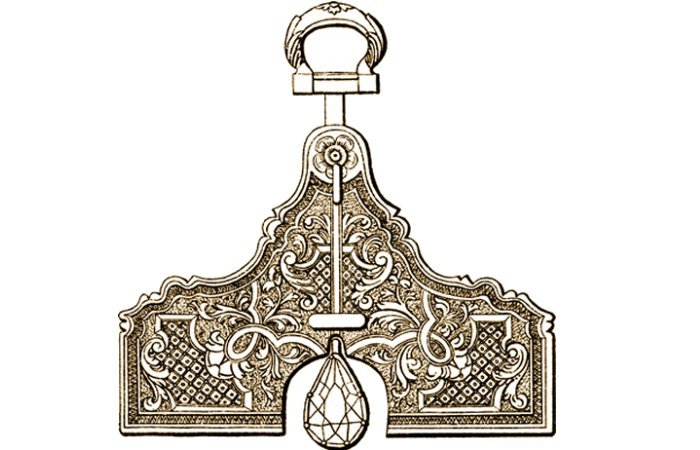
Contemplating the Level

by Midnight Freemason Contributor
Brian L. Pettice, 33°


Last month Brother R J Budler, posted a Masonic Challenge on the Grand Lodge of Illinois Facebook group page. He challenged all to pick a specific working tool to ponder the meaning of and attempt to apply to our lives for one month and then share our thoughts and results. The Worshipful Master of Olive Branch Lodge No. 38, after learning of this challenge, charged each of us lodge members to do this exercise and report back to the lodge. I chose the level. Here are my reflections on the symbolism of the level and how I attempted to apply it to my life.

When the level is introduced to us a working tool, in the second degree, we are told that it is an instrument used by operative masons to prove horizontals and that it reminds us as speculative masons that, “We are traveling upon the level of time, to that undiscovered country, from whose bourn no traveler returns.” This is not the first we have heard of it though. If we were paying attention at the close of the first degree we learned that masons should, “meet on the level.” I think the symbolisms of the level in these two instances hints that the level has something significant to teach us about both life and death.

First, anyone familiar with the works of William Shakespeare recognizes the phrase, “that undiscovered country, from whose bourn no traveler returns” from Hamlet where one of its interpretations is that it means death. From this we are reminded that we all are going to die. We all have the same destination. We are equal in this regard. Texts from ritual we use in our public ceremonies further bear this out. In our Funeral ritual we are charged to learn, “from the level, equality.” We also meditate on this passage, “What are all the externals of human dignity, the power of wealth, or the charms of beauty when nature has paid her just debt? View life stripped of its ornaments, and exposed in its natural weakness, and we see the vanity of all earthly things save those which go to the growth and perfection of individual character.

In the grave all fallacies are detected, all ranks are leveled, all distinctions are done away. Here the scepter of the prince and the of the beggar lie side by side.” We also learn when the Senior Warden is invested with the level as the jewel of his office at installation that, “a time will come—and the wisest knows not how soon—when all distinction but that of goodness shall cease, and Death, the grand leveler of human greatness, reduce us to the same state.” We are all, indeed, equal in Death.

But what does the level teach us about life? Again from the Senior Warden’s installation ritual, “The level demonstrates that we are descended from the same stock, partake of the same nature, and share the same hope; and though distinctions among men are necessary to preserve subordination, yet no eminence of station should make us forget that we are brethren; for he who is placed on the lowest spoke of Fortune’s wheel may entitled to our regard.” Recognizing that we are all equal in Death, we should also recognize that we are equal in Life. This recognition should change the way we live. It should change how we treat each other. 

It is intimately connected with Justice, not in the sense of retribution for a wrong done, but in treating each other with that, “just due without distinction.” We are to love each other. We are to serve each other. We are to treat each other better than we deserve—everyone, not just the person you like, not just the person you agree with, not just the person who treats you well, but everyone. For as we are equal in death, we are equal in life. We all are endued with that divine spark; with a soul; with that, “immortal part which survives the grave and bears the nearest affinity to that Supreme Intelligence which pervades and animates all nature, and which can never, no never, die.”

I am reminded of a scene in lecture in the upcoming Feast of the Paschal Lamb portrayed by the Scottish Rite. On the evening of the Last Supper, Christ’s disciples argued about which among them was the greatest. Just as we often are-- as I often am—they were concerned with matters of ego and of passions that have no importance. Jesus responded by giving them a lesson in sacrifice and humility as he washed their feet. It is that kind of humility, that kind of sacrifice, that kind of selflessness that the level challenges us to strive for. These are the things I thought of as I contemplated the level this month. These are the things I tried to remember and apply to my interactions with my fellow human beings.

~BLP

Brian L. Pettice, 33° is a Past Master of Anchor Lodge No. 980 and plural member of Olive Branch Lodge No. 38 in Danville, IL and an Honorary Member of a couple of others. He is also an active member of both the York and Scottish Rites. He cherishes the Brothers that have become Friends over the years and is thankful for the opportunities Freemasonry gives and has given him to examine and improve himself, to meet people he might not otherwise have had chance to meet, and to do things he might not otherwise have had chance to do. He is employed as an electrician at the University of Illinois and lives near Alvin, IL with his wife Janet and their son Aidan. He looks forward to sharing the joy the fraternity brings him with others. His email address is aasrmason@gmail.com.

Is Homosexuality Unmasonic?

by Midnight Freemason Contributor
Bro:. Jason Richards
&
Guest Contributor
WB:. Jon Ruark


On Friday, 26 June, 2015, the United States Supreme Court handed down a landmark decision in support of homosexual marriage equality. This nationwide declaration of equality and the changing societal norms it represents necessitates taking a hard look at Freemasonry--long having been recognized as an organization that celebrates all men as equals--and its attitude toward homosexuality in order to ask the question: “If all men are equal, and now have equal rights to marriage across the United States, is the practice of homosexuality in and of itself ‘unmasonic’?” 

Before delving into such a discussion, it is necessary to define the term “unmasonic” for the purposes of our discussion here. Unmasonic conduct is often referenced--even by Albert Mackey on numerous occasions--but has seldom been defined. Most often, it is utilized either as a synonym for “immorality” or described as “conduct unbecoming of a Mason.” However, both of these uses are deeply subjective, and interpretation could vary widely depending on a given culture or circumstance as moral laws differ greatly from culture to culture. For the purposes of our discussion here, we would posit a more objective and measurable definition of unmasonic conduct: “an action that causes serious harm within the fraternity or its public image outside of the fraternity.” As a society of good men who strive to make eachother into better men, it is important to retain harmony within the organization so it doesn’t crumble from within, but also just as important to retain a positive public image so that the organization can persist and attract membership. 

(Left to Right) Bros. Robert Johnson,
Jason Richards &
Jon Ruark broadcasting TMR from
Jason's house in VA
Masonic laws concerning homosexuality vary widely from jurisdiction to jurisdiction. Many jurisdictions have no stated policy on the matter, but some Grand Jurisdictions (who will remain nameless) list transvestitism, homosexual behavior, or even the sheer promotion of homosexuality as Masonic offenses punishable by suspension or expulsion. Many of Masonry’s rules and Landmarks originated in time immemorial; however, the laws, rules, and edicts of each sovereign Grand Lodge comprise a governing framework established by men in authority at a given period of time, based on personal--and therefore subjective--worldviews influenced by societal norms. We would posit that as societal norms change and evolve, regulations at the Grand Lodge level should be revalidated and updated to reflect the greater society within which Masonry operates. As such, the Supreme Court decision on Friday gives leaders of the Masonic fraternity a distinct opportunity to reevaluate existing policies on homosexuality. 

But back to the original question of this article. If we look at unmasonic conduct from the objective lens postulated earlier, we find it difficult to reconcile calling homosexuality “unmasonic.” Homosexuality causes no inherent harm within the lodge. Regardless of race, age, or sexual orientation, brethren are expected to treat each other with the utmost respect. Furthermore, as societal norms have changed and homosexuality is no longer the social taboo it happened to be several decades ago, the presence of homosexuals in the lodge does not harm the fraternity’s public image. Quite to the contrary--as we have seen in recent times with organizations accused of anti-gay sentiment (
https://en.wikipedia.org/wiki/Chick-fil-A_same-sex_marriage_controversy), even a perceived lack of toleration can do harm to an organization’s public image. If we care about public perception--and we should given the past 50 years’ worth of membership trends--then a reexamination of our rules and perceptions toward homosexuality is prudent. 

If homosexuality is now accepted as a societal norm (much like minorities were increasingly accepted as equal members of society after the Civil Rights movement of the 1970’s), and causes no inherent harm within the fraternity or to the fraternity’s public image, then where are these regulations rooted? Arguably, much of the resistance to homosexuality in Masonry has roots in Christianity, the principles and dogma of which have long been interpreted as condemning the practice of homosexuality. But whether or not a given brother or grand officer subscribes to those interpretations is irrelevant where Masonry is concerned as religion has no place inside the walls of the lodge. The fraternity’s most recent addition to the landmarks of Freemasonry (https://en.wikipedia.org/wiki/Masonic_Landmarks) is that religion and politics (and sometimes nationalities/borders) are not to be discussed in lodge as those topics only serve to divide, rather than unite, brethren. For the sake of the fraternity, brethren are exhorted to celebrate the common belief of a Supreme Being within lodge while, at the same time, respecting each brother’s right to subscribe to his own religious dogma. 

As a result, a brother’s religious-inspired belief that homosexuality is immoral (and therefore “unmasonic”) has no place within the confines of the lodge room. Likewise, a man’s sexual orientation should have no bearing on his being accepted or rejected as a candidate to receive the degrees in Freemasonry. After all, candidates are balloted upon within the lodge room during a tiled meeting. As such, religious and political biases should have no bearing on a candidate’s internal qualifications for Masonic membership. 


Friday’s Supreme Court decision has presented our brotherhood with a distinct opportunity to move forward in line with the ideals upon which our great fraternity was founded: tolerance, harmony, and unity. By embracing toleration for all men under the fatherhood of God regardless of race or sexual orientation, we can set ourselves above today’s polarized society. That toleration, in turn, will promote harmony and build unity within our lodges. By celebrating our diversity rather than condemning it, our fraternity will grow stronger and attract innovative, exceptional young men to join our ranks as men and Masons for years to come. 


~JR & JR


(Left to Right) Bro. Jon Ruark,
Bro. Jason Richards
Bro. Jason Richards is the Junior Warden of Acacia Lodge No. 16 in Clifton, Virginia, and a member of both The Patriot Lodge No. 1957 and Fauquier Royal Arch Chapter No. 25 in Fairfax, Virginia. He is also Chaplain of Perfect Ashlar Council No. 349, Allied Masonic Degrees. He is the sole author of the Masonic weblog The 2-Foot Ruler: Masonry in Plain Language, and is a co-host on the weekly YouTube show and podcast The Masonic Roundtable. He lives in Virginia with his wife, cats, and ever-expanding collection of bow ties.

WB. Jon Ruark is a Past Master of The Patriot Lodge No. 1957 in Fairfax, VA. His love of technology and gadgets led him to start The Masonic Roundtable as a Hangout on Air. His Masonic interests lean toward the esoteric and philosophical aspect. He lives in Virginia with his wife, 2.5 children, a dog named Copernicus, and a cat named Tesla who’s a jerk.