Showing posts with label perfection. Show all posts

From Rough Ashlar to Refined Self: The Masonic Journey Toward Perfection

by Midnight Freemason Contributor
Jim Stapleton


In Freemasonry, the Rough and Perfect Ashlars are two important symbols that represent the moral and spiritual development of the individual Mason. By understanding the meaning of the Rough and Perfect Ashlars, we can gain insight into the necessary journey of personal growth and self-improvement that is required of us all. However, despite our best efforts, perfection will always remain out of reach. This shortfall should not be seen as a failure. The important truth is that the value of perfection lies not in its attainment, but in the pursuit of perfection. The journey toward perfection helps us to grow, learn resilience, and gain a deeper understanding of ourselves.

The Rough Ashlar is a stone taken directly from the quarry in its raw and unshaped form. The rock is jagged, uneven, and not suitable for use in construction. We view the Rough Ashlar as a symbol of the new Brother as they embark on their Masonic Journey. As a Rough Ashlar, they are full of potential, but in need of refinement. The goal of the Freemason is to shape this imperfect stone into something useful, just as an operative stonemason would carve a stone hewn from the quarry into a building block fit for construction. The process of shaping the stone symbolizes our work towards self-improvement and the journey toward moral and ethical development.

In contrast, the Perfect Ashlar is a stone that has been carefully shaped, polished, and squared. Through its transformation, it is ready to be used in the construction of a building. In Freemasonry, it represents the ideal that every Mason should strive to be - a moral person that is wise and caring. The Perfect Ashlar is the product of a lifetime of continuous effort, reflection, and discipline. The stone is no longer flawed and therefore made suitable for the construction of the Spiritual Edifice. 

Striving for perfection is a noble endeavor, but we can never reach a truly perfect state. Afterall, as humans we are imperfect beings. Yet, the process of striving towards an ideal state encourages personal growth and perseverance. People who aim for perfection in their craft - whether in art, sports, science, or personal development - often achieve a level of excellence far beyond what they would have if they never made the attempt. The Japanese concept of kaizen encourages continuous improvement through small, incremental changes. Every small improvement contributes to long-term growth and fosters a mindset that values effort over final outcomes.

Consider the example of an artist. A painter may never create a "perfect" masterpiece, but the process of attempting to do so refines their technique, enhances their creativity, and deepens their emotional expression. Every mistake, correction, and revision shapes their skills and overall understanding of their craft. Similarly, the scientific field is full of examples of people building on past discoveries to achieve progress. The process of challenging existing paradigms and proposing new ideas leads to groundbreaking discoveries. Thomas Edison, considered to be amongst the most prolific inventors, experienced a number of failures. He often credited those failures as learning opportunities that helped him to achieve success. Athletes are another example because they face constant failures such as missed shots, losses, and injuries. Those who remain committed to the process of improvement often come back stronger. When perfection is thought of as a guiding principle rather than a destination, failure becomes a valuable teacher. People who embrace failure as part of the process develop resilience, adaptability, and a growth mindset.

Those who pursue perfection with the belief that it is obtainable may experience suffering as a result. Perfectionism can lead to increased anxiety, stress, depression, fear of failure, procrastination, strained relationships, etc. The unrealistic expectations they set for themselves and others is unhealthy and unproductive. 

The symbolism of the Rough and Perfect Ashlars are important images for Masons to use in their daily lives. Recognizing that we are imperfect and that we need to develop the tools, skills, and discipline to improve ourselves is the point of our spiritual journey. While the attainment of perfection is impossible for us, the journey towards perfection is where the true value lies. Slow and steady progress with the goal of working towards perfection is how we grow, develop wisdom, and become more resilient. Through this mindset we can unlock the power to become better, stronger, and more fulfilled individuals.
~JS

Jim Stapleton a Past Master of USS New Jersey Lodge No. 62. He is also a member of the New Jersey Lodge of Masonic Research and Education No. 1786. Jim received the Distinguished White Apron Award from the Grand Lodge of New Jersey. He was awarded the Daniel Carter Beard Masonic Scouter Award. Jim is also a member of the Society of King Solomon.

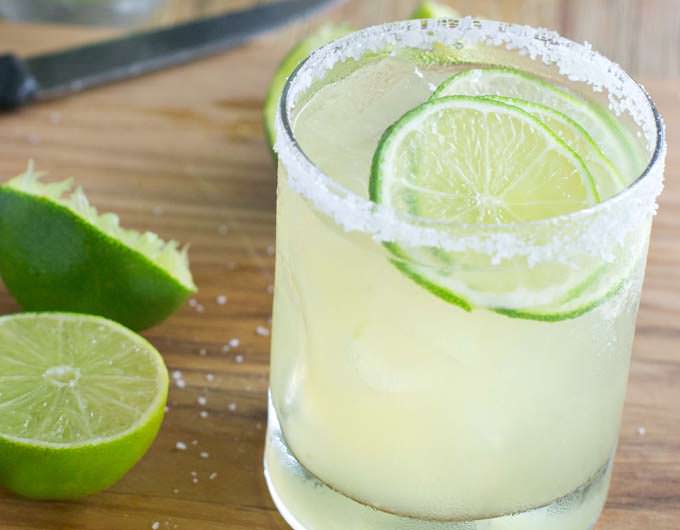
The Perfect Margarita

by Midnight Freemason Contributor
WB Adam Thayer


As I write this, it is currently 105 degrees in beautiful Lincoln, Nebraska, and I am sitting in the dark, hot library of my lodge. It is important to note that there is absolutely no air conditioning in this part of the building, and it doesn’t help that there is a group of brothers in here, all writing their own papers. Right now, the only thing I can think about is having a margarita at the Mexican restaurant across the street from our lodge.

I’ve searched for a very long time to find the “perfect” margarita recipe, and while I’ve had many delicious drinks, I’ve yet to find one that hit all of the notes I was looking for. I have found one that was just nearly perfect, which I’ll share with you below, but even it is missing… something.

You may wonder what this has to do with Freemasonry.

The perfect margarita has a few key ingredients: lime, tequila, and some salt for flavor. The perfect lodge has a few key ingredients as well: ritual, brotherhood, and some education for flavor. And just like a margarita, there are many different opinions as to what goes into the “perfect” lodge experience. Some people will say that the lodge needs charity work, while others will say to focus solely on ritual work. Some crazy people even say that reading the minutes brings something special to the lodge, and should never be skipped. (Coincidentally, these are the same sort of people who put mint in a margarita… odd, to say the least.)

Some people prefer the “original” margarita, while many enjoy the newer fruit flavors, such as strawberry or mango, and some have even created exotic flavors such as red chili or hibiscus. This same attitude is mirrored in our lodges; many are perfectly content with sticking to blue lodge Freemasonry, while others will pursue the Scottish and York Rites, the Shrine, and a few adventurous individuals will seek out Rites such as Memphis and Misraim.

Who is to say which is right, and which is wrong? While I personally think it’s insane to put red chili into a drink, I’ve met people who will swear by it. At the same time, however, I’m willing to sample all of the different flavors that Freemasonry presents, even when I find one that doesn’t agree with me, because it is better to have been exposed to it than to spend my Masonic years sheltered in the safe harbors of blue lodge.

Whatever flavor of Freemasonry you find that you enjoy, I hope you will throw yourself into it with gusto to get the most out of it. And remember: don’t eat the lime.

The “Good Eats” Margarita: (by Alton Brown, food nerd)

Ingredients:
2 ounces 100 percent agave silver/blanco tequila, divided
1 tablespoon kosher salt
4 limes, divided
1/2 small Hamlin or Valencia orange
2 tablespoons light agave nectar
3/4 cup ice cubes, about 3 to 4

Directions:
Pour 1/2-ounce of the tequila into a small saucer. Spread the kosher salt in a separate small saucer. Dip the rim of a martini or other wide rimmed glass into the tequila. Lift out of the tequila and hold upside down for 10 seconds to allow for slight evaporation. Next, dip the glass into the salt to coat the rim. Set aside.

Halve 2 of the limes, cut a thin slice for garnish from 1, and set aside. Juice the halved limes into the bottom of a Boston-style cocktail shaker. Cut the remaining 2 limes and the orange into quarters and add them to the juice in the shaker. Add the agave nectar to and muddle for 2 minutes until the juices are release. Strain the juice mixture through a cocktail strainer into the top of the shaker and discard the solids.

Return the juice to the bottom of the shaker, add the remaining 1 1/2 ounces of tequila and any remaining on the saucer. Add the ice to the shaker, cover and shake for 30 seconds. Strain the mixture through a cocktail strainer into the prepared glass, garnish with reserved lime slice, and serve immediately

~AT

WB. Bro. Adam Thayer is the Senior Warden of Lancaster Lodge No. 54 in Lincoln (NE) and a past master of Oliver Lodge No. 38 in Seward (NE). He’s an active member in the Knights of Saint Andrew, and on occasion remembers to visit the Scottish and York Rites as well. He continues to be reappointed to the Grand Lodge of Nebraska Education Committee, and serves with fervency and zeal. He is a sub-host on The Whence Came You podcast, and may be reached at adam@wcypodcast.com. He will not help you get your whites whiter or your brights brighter, but he does enjoy conversing with brothers from around the world!