Showing posts with label motivation. Show all posts

Are We Looking at Our Own Jedi Moment?

by midnight Freemason Guest Contributor
Kevin Homan, PM
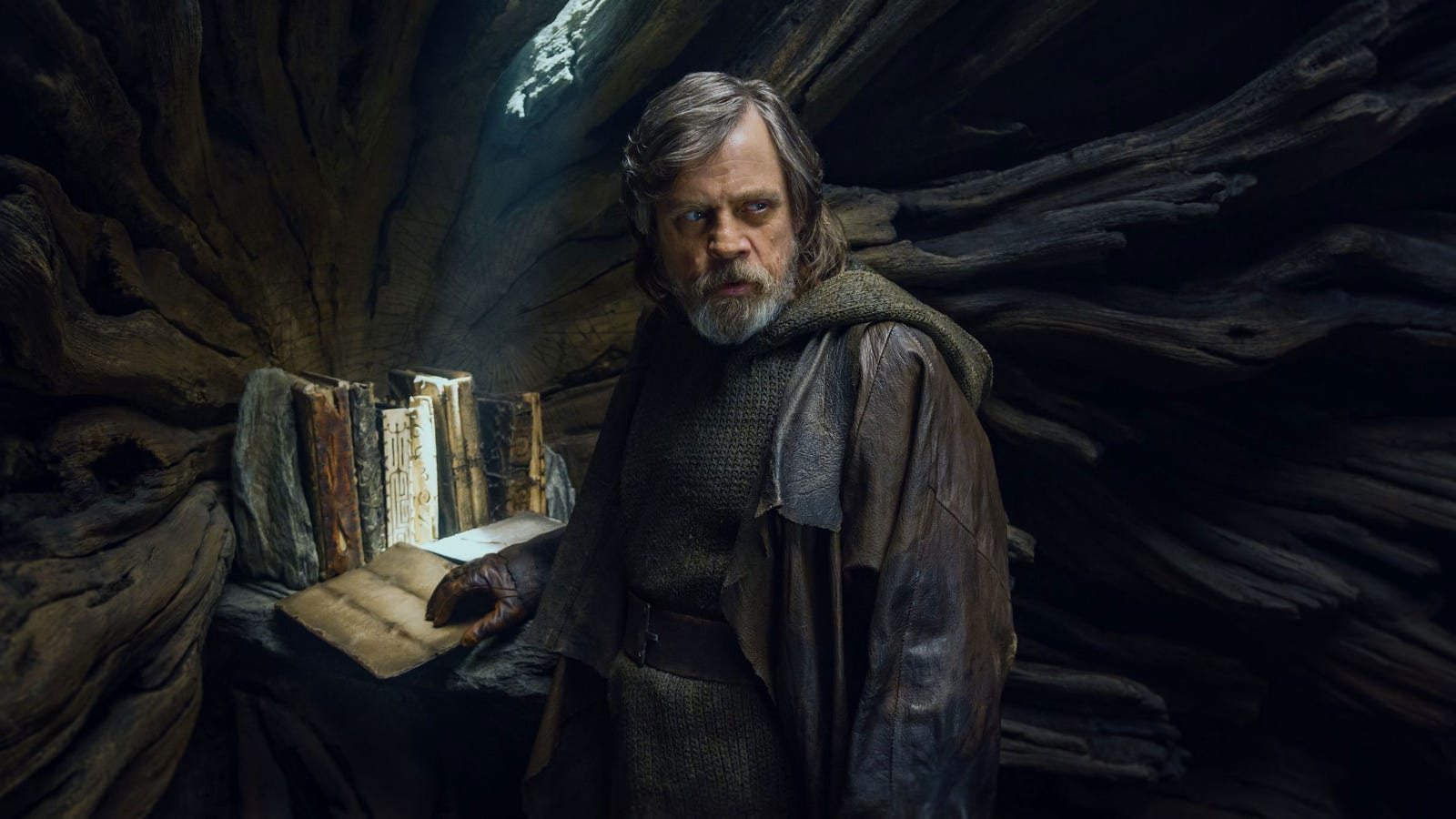

I was lucky this last year that I got the entire week between Christmas and New Year’s off so it was nice to spend the week with my family and not have any work to worry about. On the Tuesday after Christmas we went out and watched Coco as a family. My wife and I both made the mistake of chopping onions towards the end of the movie, and while its a wonderful movie, Coco isn’t the particular movie I’m talking about (but seriously go see it). I am, of course, referencing Star Wars here, as several days later my son and I finally went out and saw The Last Jedi. The movie seems to be polarizing to Star Wars fans, some liking the movie, others not. I happened to very much enjoy the movie, and while no movie is perfect, I found it very enjoyable and feel it really furthered the lore of the Star Wars universe. I also, a day later, found myself thinking about the movie, its relation to the Prequels (more on that shortly), and the relation between Freemasonry and the fictional Jedi Order.

To begin, we go all the way back to the Prequels, a VERY sore subject for darn near 99% of Star Wars fandom (I happen to be in that 99%). However, I do think the prequels do get one thing right: the Jedi Order, and the rise of Emperor Palpatine and Darth Vader. Now, it's easy to see the movies and just say “well, Senator/Chancellor/Emperor Palpatine was so powerful, that along with Anakin Skywalker as the most powerful Jedi, they took over the entire galaxy”. That’s all well and good, but it also ignores that the Jedi Order had Jedi who were just as powerful in the Force as Sheev Palpatine. In the Phantom Menace, when Obi-Wan Kenobi and his Master Qui-Gon Jinn first meet Anakin Skywalker, Qui-Gon instantly can “feel” that Anakin is Force sensitive. Furthermore, mention is made that the Order is able to detect Force sensitive children from birth, so it shouldn’t be too much of a leap to assume that Palpatine at some point should have come across the radar of the Jedi Order, yet he didn’t. Why? Fan theories and even the books have filled in a simple explanation, but the simplest explanation is...the Jedi Order became complacent, and forgot their ways. Their complacency was their downfall, just as it will be Freemasonry’s if we don’t do something about it.

In short, Freemasonry, like any other organization has had its ups, and downs. Our most notable ups would be after World War I, and World War II. With the period after World War II seeing growth in both membership, as well as growth in Masonic buildings. We brought in members, enjoyed lavish buildings and filled our coffers, but largely acted as a men's club and not much else. 

Which brings us to today. Our buildings, which were once opulent, have either been sold or are in need of massively expensive overhauls from years of neglect. Our members are dying off. And year after year, Grand Lodges across the country are losing members in droves instead of adding replacements to keep us alive. What happened? Like the Jedi Order, we became complacent. Lodges deferred Temple repairs and updates at a time when it would have been more affordable and eventually put themselves in a bind, with decreased membership, and income low because dues hadn’t been raised. Lodges either had to sell their property or just let it continue to fester. Lodges that did attempt to raise dues either had a revolt, or the membership outright voted not to increase it. Comfortability in our surroundings led to complacency. We downsized buildings, merged Lodges or just outright closed them altogether. 

The Last Jedi struggles with another theme, that of, "We need a hero." We need a recognizable hero. Initially Rey doesn’t understand this, and the point isn’t hammered home until the very end of the movie (which I won’t spoil here) that it isn’t about Skywalker’s, Solo’s or Akhbar’s. The Last Jedi isn’t about a recognizable name from the past coming out of hiding to save the day. It’s about the future, Rey, and Finn and Poe. The Rebellion (now the Resistance) , the Jedi Order (and the Sith) are now in the hands of Rey, Finn, Poe and Kylo Ren. Luke, Leia and the rest did their job, they saved the day once already, but now it's time for a new generation to step up and do the same. 

This topic is something I see Lodges and Masonic organizations struggling with; We (naturally) focus on our generation, our friend groups and peers, when we should be instead, looking forward. This is not to say we should just ignore our peer group and only look to the younger generations to save us. It will take ALL of us to save us. But the point I’m trying to make is that interest in Freemasonry is out there among the millennial generation and we have millennials among our ranks. We need to cater our message to them to get them to come out in greater numbers. Many Lodges and organizations use Facebook, and to a lesser extent, Twitter, which is great and keeps us quickly on the same page, but these efforts need to go further. We need to make sure we don’t skip a generation; We need to bring in the millennials. And eventually the millennials will be who will is running the show and they will need to figure out how to speak to the generations that follow them.

Freemasonry and its future hinges on what we do next. It hinges on us speaking to the next generation, to let them know it's “their time to lead”. If we can’t do that it may be the end of the Republic.

~KH

WB Kevin Homan was Raised to the Sublime Degree of Master Mason in August of 2007 at Olive Branch Lodge No. 114 in Leesburg, VA., and since then has like many Masons, involved himself in more and more bodies. In addition to being a Past Master of Olive Branch Lodge, Kevin is a member of Potomac Chapter No. 88, RAM, Piedmont Commandery No. 26 and the Alexandria Scottish Rite Bodies. Additionally Bro Kevin is a member of several of the York Rite invitational Bodies. Bro Homan has been married to his wife Hillary for the past ten years and they have three wonderful (mostly) children. When he’s not doing something with his family or the Lodge Kevin enjoys a good glass of Scotch, the occasional cigar and reading a good book in his office, which “smells of leather-bound books and rich mahogany.

Dangerous Travels

by Midnight Freemason Contributor
WB Bill Hosler


Recently, I've been thinking about the founding of my mother Grand Lodge in Indiana. In 2018, the Grand Lodge of Indiana will celebrate their bicentennial. In January 1818, Freemasons from nine lodges, working under charters by the Grand Lodge of Kentucky and the Grand Lodge of Ohio gathered in Madison, Indiana to start the process of organizing their own future.

Back in that day, there were very few choices of transportation by which you could travel across a newly formed state; you could travel by riverboat down the Ohio river (if your town was near the river and you could afford the fare), you could travel via horseback (down rough paths which could hardly qualify as a trail), and if you didn't own a horse, you walked.

No matter which mode of transportation you chose, the journey was guaranteed to be uncomfortable; muddy trails, snow and high winds combined to make the trip difficult. Depending on where you lived, your destination may be several days (or even weeks) away. In the winter you slept on the cold ground, shivering under a blanket near a fire, eating what meager provisions you brought. During the summer, you endured the heat of the day and hordes of insects. You might encounter highwaymen who would think nothing of robbing you of all your possessions and leaving you for dead in the wilderness. You always ran the risk of a wild animal who might see you as a threat to his domain and an easy dinner. There was no 911 or Auto Club to come to your rescue if you were in trouble. You were on your own.

No matter how you traveled, when you arrived at your destination the accommodations were scant at best. Most of these men would stay in the home of another Freemason or in a local inn. Tavern owners usually offered beds above their establishments; you paid to spend the night and you shared that bed with all of the other travelers. You ate what the tavern served that day. Once your business was complete, you began your return trip home facing the same dangers and discomforts as before.

These men so believed in the Craft that they were willing to endure all of these hardships and dangers, not to mention the days of being away from their families and livelihoods, all in order to help advance the Craft.

Traveling wasn't the only hardships our forefathers had to endure. We are taught that Masons originally met in high hills or low vales, which later became the upstairs loft spaces of inns and taverns, accessible only by climbing a ladder. I have heard stories of lodges meeting in caves, in barns, sometimes even in the home of one of the brothers. One thing is for certain, most of these spaces were not ideal for a lodge meeting. Before a lodge was opened, the Masons had to get to work setting up the room, moving the chairs into position, laying out the jewels and the aprons. If degree work was to happen that night, a brother would draw out the tracing boards on the floor which had to be mopped up after the lodge was closed. Once the lodge was closed, the furniture in the space had to be moved back to its normal position. These buildings were drafty, cold and uncomfortable to occupy.

Over the last century, we Freemasons have become accustomed to meeting in beautiful lodge buildings. Sometimes these edifices were marble palaces in the center of a big city, other times a modest room above a storefront in a small town. These buildings all have modern plumbing, are heated for the winter and sometimes even air conditioned for a pleasant climate in the summertime. Custom furniture was commissioned and purchased which never had to be moved. Beautiful carpets lay on the floor beneath the feet of the Brethren.

It’s difficult today for us to imagine the travel involved and the meeting places that our forefathers used to spread the light of Masonry. Sometimes just the events surrounding these men's lives added even more issues for these men to bear.

Most of us know that throughout the last few centuries many Grand Lodges issued emergent charters to men in order to meet during war time. The daily lives of these men are the hardest thing for me in my comfortable modern life to fathom.
These men would march for hours a day, usually with little sleep and even less food, to a battlefield where they had to make camp, and then risk their lives on the field of battle. Once the battle was over, if they survived the conflict and weren’t too badly injured, the men would erect a tent, get out the trunk of Masonic regalia from a wagon, and open a lodge. Sometimes lodge officers had to be continually re-elected, not because the brother quit the lodge, but because the man had been killed on the field of battle. Think of it: these men were hungry, exhausted, and trying to forget the horrors of war they had witnessed that day, but they still thought enough of their obligation to continue to meet, just like they would have back in their homes.

Throughout history, our Masonic forefathers endured hardships of all kinds just to practice what today we take for granted. From rough travel, to bad living and meeting accommodations, to actually risking their lives on battlefields or being tortured in a prison camp for their belief in Freemasonry.

Sadly, not all of these hardships are in our past. Many continue to this day. I recently had the distinct honor to speak with a Brother who asked that I keep his name and his home secret, not because he was worried about his own safety (he escaped and is now in a free country) but because the Brethren of his lodge in his home country are still in peril.
This Brother belongs to a lodge in the Middle East. His government has declared Freemasonry illegal. If the location of his lodge is discovered by their local government, his Brothers will be arrested, placed in prison, and after they are tortured into confessing crimes against the state, they would be executed. In spite of the risk, they still meet on a regular basis, in a secret lodge room. They meet and discuss Freemasonry and how it helps them in their lives. While meeting, they keep an eye on each other and if a member or his family needs Masonic charity they will quietly arrange it. They don't allow a dictatorship or the threat of death to stop their belief in the obligation they took.

Brother! After reading this short piece, I want to ask you a question: if these men can attend lodge with zeal and enthusiasm despite all these hardships, why don't you attend lodge? If our forefathers could risk their lives to the elements of weather and rough travel for days to attend a meeting, why can't you get in your well heated and air conditioned car to drive less than an hour on a well built road to visit a lodge in a well heated or air conditioned building with running water and electricity to spend an hour with the Brethren of your lodge? If the men in a secret lodge living under a dictatorship can sneak away in the dark of night in secret to meet under the possibility of being tortured and executed, why can't you endure the reading of the minutes or a treasurer's report? Is listening to Past Masters arguing about of the price of light bulbs the reason that keeps you away from a group of men you swore to treat as your Brother help him in his time of need?

No. I didn't think so.

I'm not saying dealing with our troubles are trivial. We all have a lot of current issues within our lodge rooms. But is quitting going to change them? No! The only thing not attending lodge will do is allow the problems to get worse and eventually put our Fraternity of the ash heap of history.

Instead of everyone quitting the Craft, why not find kindred spirits within your lodge and start changing what you don't like? Think of it this way: if your lodge only has eight regular attendees, if you and nine other Brethren vote to do something, you will win the majority. If your numbers continue to grow you and your brothers can start to transform the lodge into a place you can look forward to attending, chances are your changes will entice new men into joining your lodge. If for some reason this doesn't work, check with your Grand Lodge and see how many Master Masons it takes to start a new lodge.

Most of the hardships I have listed above, and many others I don't have the space to mention, can be fixed with hard work, perseverance, and time. Roads were built, money was raised for new, comfortable meeting accommodations, and lodges were arranged in secret to protect those in countries where Masonry is still illegal . Whining and quitting has never fixed anything. Neither has letting someone else deal with it. It's time for all of us to stand up, roll up our sleeves and make Freemasonry the Fraternity we want it to be and that it should be.

~BH

WB Bill Hosler was made a Master Mason in 2002 in Three Rivers Lodge #733 in Indiana. He served as Worshipful Master in 2007 and became a member of the internet committee for Indiana's Grand Lodge. Bill is currently a member of Roff Lodge No. 169 in Roff Oklahoma and Lebanon Lodge No. 837 in Frisco,Texas. Bill is also a member of the Valley of Fort Wayne Ancient Accepted Scottish Rite in Indiana. A typical active Freemason, Bill also served as the High Priest of Fort Wayne's Chapter of the York Rite No. 19 and was commander of of the Fort Wayne Commandery No. 4 of the Knight Templar. During all this he also served as the webmaster and magazine editor for the Mizpah Shrine in Fort Wayne Indiana.