Showing posts with label work. Show all posts

It's a small world

by Senior Midnight Freemason Contributor
Gregory J. Knott 33° 

This summer, I was visiting a local cemetery, when I came upon a tombstone that had some great advice on the backside. I wrote about this advice in an earlier article here on the Midnight Freemasons. I’ve thought about that advice from time to time, especially in the trying times that have defined the last couple of years for all of us.

The advice was crisp, clear, and simple, yet provocative in reaching into your soul.

I was talking with my wife Brooke about a phone call she took at work and the assistance she was providing to the caller. For whatever reason, it began clicking that I was familiar with the last name of the person she had been speaking with. I reviewed some of my notes and realized this family name was the same one that I found with the advice written on the tombstone. Brooke had been talking with the spouse. What a small world.

Let me again share the advice that was given:

Work - like you don’t need the money

Love - like you’ve never been hurt

Dance - like nobody’s watching

Sing - like nobody's listening

Live - like it’s heaven on earth

As we close out 2021, take the advice above to heart as you get ready to turn the calendar to 2022. I was reminded, the world is small, and you never know who your paths will cross with. Don’t get so caught up in day-to-day things that you truly forget about HOW to live.

~GJK

Gregory J. Knott, 33° is a founding member and Senior Contributor of the Midnight Freemasons blog. He is a Past Master of St. Joseph Lodge No. 970 in St. Joseph (IL) and a plural member of Ogden Lodge No. 754 (IL), Homer Lodge No. 199 (IL) and Naval Lodge No. 4 in Washington, DC. He’s a member of the Scottish Rite, the York Rite, Eastern Star and is the Charter Secretary of the Illini High Twelve Club No. 768 in Champaign-Urbana. He is also a member of ANSAR Shrine (IL) and the Eastern Illinois Council No. 356 Allied Masonic Degrees. Greg serves on the Board of Directors of The Masonic Society and is a member of the Scottish Rite Research Society and The Philathes Society. He is a charter member of a new Illinois Royal Arch Chapter, Admiration Chapter U.D., and serves as its Secretary. Greg is very involved in Boy Scouts—an Eagle Scout himself, he is a member of the National Association of Masonic Scouters.

The Right to Work Lodge

by Midnight Freemason Contributor
Bro. Ken JP Stuczynski


I visited Past Master Morgan in the nursing home a few times before he passed on. I wasn't yet a member of his Lodge but had heard he could use a visit. (I say "yet" because I was being groomed to help fill in their line, bring familiar with my Masonic work.) It's always a pleasure and treasure to talk to our older Brethren, and I received both in full measure. In fact, he said something that became a cornerstone of my leadership practice:

Give everyone something to do.

This wasn't shoving the newly raised into the empty Junior Deacon's chair. This was about giving people, from the start, a reason to be involved in some way, with or without a station or place. Remember, he was coming from a time when people waited for years just to BE in line. So how do we apply it now?

It hit me from another angle. The same few people doing all the work is a pervasive issue in all organizations. With it comes incessant complaining. Why is that? Well, you'll kick yourself if haven't figured it out because it's actually insanely simple — leaders wait for people to volunteer and members who would be willing are never asked. Over time, the expectation of Brothers to help are less and less and so it falls on the Officers, which in turn leads Brothers to believe it is exclusively the officers’ job to “run the lodge”. Eventually, no one is asked to help and the few who insist or are elected or appointed become resentful of lack of help. It’s a self-fulfilling and self-defeating prophecy.

I endeavored to solve this. When my time came in the East, I ignored distinctions between Officers and “Sideliners”. I heeded Past Master Morgan's sage advice. No one was on more than one committee so I could have more people doing more things, however small. And I ignored geography where I could, asking out-of-town Brothers or those who otherwise could not attend Lodge to do other tasks, such as setting up the newsletters or call Widows during the holidays. We ended up with Brothers who were not officers doing more work than some who were. Some people who didn't attend Lodge started to, or at least fulfilled duties at other times. And this wasn't by accident. I did the magical thing — ASKING THEM.

And yes, people who cannot or do not attend Lodge are still part of the Lodge. They can still be part of the Work. In fact, one Masonic author despised the term “attending” Lodge for this reason — it strengthens the idea of spectator-ism rather than living our allegories of laboring together.

The principle behind all of this is a recognition that above all else, our Lodge IS our Brothers. They are both our primary purpose and our best resource. Countless words have been written about bringing Brothers back to Lodge, waning participation, and not forgetting those we haven’t seen. These are all deeply related in both cause and solution.

Based on this I created the “Right to Work Lodge" model. It sees the ideal Lodge as one whose Brothers strive to find and give meaningful tasks and responsibilities to all of its members, regardless of stations, places, or even the ability to attend communications.

This is done by:
  • Reducing the distinction between officers and "sideliners", shifting the purpose of a communication from attending to participating;
  • Establishing regular contact with members who cannot attend due to infirmity, distance, and any other reason, providing them with a list of duties they may assume that can be done remotely;
  • Provide opportunities for spouses, widows, and children to participate in, rather than just attend, the programs and initiatives of the Lodge, thereby strengthening the bonds between Brothers in their everyday lives;
  • Have an advisory committee of ALL living Past Masters of the Lodge and consult as many as possible, even if infirmed or at a distance, on at least some decisions to be made, and voice their opinions in open Lodge;
  • Having a stated "Roll Call" where ALL members' names are called, with Brothers sharing tidings of those who are not present, such as their location, health, or a short message they may wish to be shared;
  • Encouraging or inviting guests to participate in ritual where appropriate;
  • Making sure newly affiliated Brothers, especially those from merged or dissolved lodges, are given equal opportunity in ritual and other work.
How is it implemented? Apart from events derived from the principles above, the key is communication. In addition to personal calls by the Master and Wardens, establish a phone tree whereby the officers and other willing Brothers will keep in touch with Brothers we don’t see at Lodge. Setting up a schedule based on birthdays is a good option.

The largest problem many Lodges and bodies have is that we have insufficiently accurate records on Brothers and widows. We need to hunt down lost Brothers and Widows, even if it means gleaning obituaries or sending out postcards to last known addresses. Local addresses can even be visited in person. (And it is inexpensive for a month's subscription to WhitePages Premium to find possible numbers and addresses.) We also ought to verify or acquire as many used email addresses as possible, something that will most regularly and affordably solidify communication for most of the Brethren.

To aid in making everyone feel involved, I also established two informal classifications of members: "True Men of Tyre", those out-of-town Brothers who can still benefit the Lodge or at the least keep in touch so we can share their messages and tidings; "The Men of Joppa", those in-town Brothers who find it difficult or impossible to attend Lodge but may still wish to be invited and welcomed into other events and projects.

There are more ideas and many ways to implement them, and what is best for your Lodge will be dictated by its own situation. But one thing is universal. The symbolic backdrop of our allegorical existence is that of WORK. Do we think most operative masons were there to listen to minutes and vote on paying bills? Can we honestly believe most of them were sideliners, or not given any tasks? I would suggest a Lodge – operative or speculative – should be judged not by its good intentions or hanging on by a thread through trying times, but by how actively and consistently it involves its Brethren in meaningful Work. The "Right to Work Lodge" attitude and strategies, by this or any other name, does just that.

~JP

Bro. Ken JP Stuczynski is a member of West Seneca Lodge No.1111 and recently served as Master of Ken-Ton Lodge No.1186. As webmaster for NYMasons.Org he is on the Communications and Technology Committees for the Grand Lodge of the State of New York. He is also a Royal Arch Mason and 32nd Degree Scottish Rite Mason, serving his second term as Sovereign Prince of Palmoni Council in the Valley of Buffalo, NMJ. He also coordinates a Downtown Square Club monthly lunch in Buffalo, NY. He and his wife served as Patron and Matron of Pond Chapter No.853 Order of the Eastern Star and considered himself a “Masonic Feminist”.

Freemasonry In Action

by Midnight Freemason Guest Contributor
Bro. Calvin Compton 32°, KT


Action is everything. For by what else can a man be held accountable? Strip all circumstances from him, and what is left? His biology is inherited from his parents. The situation he was raised in is dependent upon the wealth of his family. The quality of his thoughts, to some degree, is circumstantial to the information he was given by teachers and his family. Even the matter of intellect is relative to the genes of his parents. A man has no choice whether he is born a genius, or naturally athletic. There is no decision whether the family he is born into is one of wealth and status. If we had such a choice, surely we would choose the best for ourselves. But it is the actions that we can take, that we are concerned with today—the opportunities for and of action.

I am sure that none of us would want to be held accountable for every thought that has passed through his mind, especially those that come in moments of anger or regret. But in those thoughts, there lies a choice, a choice of action or inaction. It is when we make a choice, and in turn, act on that choice that our thoughts become a physical manifestation and now have an effect on our reality. While it is a thought, it is ethereal and open to possibility; when action is taken, it becomes real and is manifested in reality. It is able to be observed by those around us. And we are now able to be affected by the consequences of those actions.

Do not be fooled into thinking speech is not an action; everything we say has an effect on those that hear it. It has the effect of shaping the opinions others may have about you and may affect the way they feel about themselves. We should be mindful of our thoughts-- that they will breed good speech and good action. As Entered Apprentices, we are charged with divesting our minds and consciences of all the vices and superfluities of life. In doing so, we remove the circumstantial thoughts and beliefs we have tied into our ego and create a new space within us, a place where pure thoughts can dwell, a place worthy of the presence of Deity.
To be a true master, man must be a master of himself-- in control of his thoughts, words, and actions. Man must think, speak, and act. But a Freemason must do these deliberately and always bear in mind how his actions affect those around him. Will it bring good consequences? Will it work to raise up another man, and bring him good as well, or is it self-serving and inconsiderate of the others living around him?

Freemasonry is not concerned with making a good man better, to stroke his ego and make him feel superior. It is to make him understand that stripped to our bare essence, we are all the same, and thus worthy of the same good treatment we would expect to receive ourselves.

We are all the same before Deity. It is for this reason we enter into the Lodge for the first time stripped to our bare essence. Your entrance into this Lodge is symbolic of the start of a new life, stripped away from the baggage to which we have previously attached ourselves, and left with a firm and level foundation upon which to build with the good actions we will now make. I believe it is our duty as Masons every day to remember to make a conscious choice and effort in the actions we make, so that they may be a benefit to your life, and to the lives of those around you.
~CC

Brother Calvin Compton is a 32° Scottish Rite Mason and Knight Templar living in Tulsa, Ok. He was raised in 2007 at Millenium Lodge No. 543 and currently sits as Junior Warden at Tulsa Lodge No. 71. When not involved in Masonic activities or working, Calvin enjoys spending his time with his wife and two children.

When It All Goes Symbolic

by Midnight Freemason Contributor
Robert H. Johnson


As we move through the degrees in Freemasonry, there's a lot to unpack. The language is old, antiquated and generally hard to understand.

We tend to take everything we hear and read, and apply a passive attitude toward what's mentioned within. Did you study the seven liberal arts and sciences? Do you reflect on your behaviors and apply the working tools?

Passively sure. But being conscious of the lessons, is not enough. Knowing something exists does not mean you've done the work. One needs to actually apply the teachings in order to truly be "Masonic".

Much like the Penalties of the craft, I cannot write, suffice to say that these have been relegated to symbolic status only. I'm not making a case to make them real, just using the common example. In more than one jurisdiction additional verbiage has been added to make sure the initiate knows he doesn't actually have to worry about anything at all.

But what of the rest? To divest yourselves of the vices? Have you done this? Did you quit biting your nails? Quit smoking? Or, did you just keep on doing it, and say, "Man, that was cool."?

Did you apply yourself to the study of the craft with freedom fervency and zeal? Or are the teachings of Freemasonry and everything contained in regards to actionable items, just a symbolic ask?

Candidate: "So do where do I go to study the Seven Liberal Arts and Sciences?"

Lodge Officer: "Oh, you misunderstand. You don't really have to do those things."

Is the point to make you aware only? Or to actually do the things the Craft asks us to do? We cannot be workmen if we're about nothing more than a handshake and honor. How are you flawed? How can masonry help? Using the working tools of Freemasonry, we can identify these things within ourselves and with the lessons contained within ritual, we can conquer them.

Let's get down to business and do some Freemasonry--make some good men...better.

"It is absurd to thing that a vast organization like Masonry was ordained merely to teach to grown-up men the world the symbolical meaning of a few simple builders' tools." ~W.L. Wilmshurst

~RHJ

RWB, Robert Johnson is the Managing Editor of the Midnight Freemasons blog. He is a Freemason out of the 1st N.E. District of Illinois. He currently serves as the Secretary of Spes Novum Lodge No. 1183 UD. He is a Past Master of Waukegan Lodge 78 and a Past District Deputy Grand Master for the 1st N.E. District of Illinois. Brother Johnson currently produces and hosts weekly Podcasts (internet radio programs) Whence Came You? & Masonic Radio Theatrewhich focus on topics relating to Freemasonry. He is also a co-host of The Masonic Roundtable, a Masonic talk show. He is a husband and father of four, works full time in the executive medical industry. He is the co-author of "It's Business Time - Adapting a Corporate Path for Freemasonry" and is currently working on a book of Masonic essays and one on Occult Anatomy to be released soon

Masters of the Universe and Freemasonry

by Midnight Freemason Contributor
Robert H. Johnson

Just a day ago, Darin Lahners ended a piece he wrote on this blog with the words, "We have to try." It was in relation to attempting to change Freemasonry for the better. A few sentences earlier, he said change happens from the ground up in Freemasonry, and he's absolutely, 100% correct.

Before proceeding, I want to make myself absolutely transparent here. I am not advocating or even suggesting an "Us and Them" relationship when it comes to Freemasonry and her "camps"--The member at Lodge and the Grand Lodge. Quite the contrary--there is only us.

Grand Lodges exist today to assist in the administration of the Fraternity. The Education and experience you provide is up to the lodges. Grass-roots solutions and practices filter their way up and become either the scourge of a Grand Lodge Jurisdiction or common practice based on the determination of those who evaluate the preservation of the work. Chamber of Reflection? Pits in the West? Actual accosting? Requiring more than memorization to advance through degrees or none at all? Background checks on candidates? Credit checks? Whatever the case may be, the lodges are in control of this.

Whether you agree or disagree on elements I've stated above or any others you may find yourself pondering, we can all agree on one thing. We are the unified front that controls the Fraternity. The Grand Lodge is YOU! Want something changed? Submit the resolution. Get the signatures. Want to adopt something? Do the work to make it happen. Follow the protocols set forth to make it happen. I make an emphasis here because nothing good ever comes from coups, slamming GLs online, or anything else abrasive. It's about doing it, and doing it the right way. It CAN be done.

I guess my main point in this short blurb today, is that Freemasonry is NOT passive. You're not just a Freemason 30 minutes before the meeting. You don't cram everything you were supposed to accomplish over the last 30 days in the 30 minutes before the next meeting. Your meeting minutes shouldn't come out the day before the next meeting. (Pet peeve).

We must work--firing on all cylinders all the time. And there are those of us who do this. We try and make up for the 90% who don't. Even if you want to fight against a change, do it. Get active. The Grand Master of your jurisdiction was a regular dues paying member, just like you. He worked hard, had a vision and got involved. Look at the image below.


That's right. All that "I didn't vote." is very representative to the passiveness that the majority of Masons see around them. The inactive, dues paying, complaining with no action kind of paradigm. "I didn't vote." represents all the apathy we have. It's proportionally the same within any organization. The majority are along for the ride. Don't be along for the ride. Drive. Stay thirsty. Fight for it. Believe. If you build it they will come. Be the change. Just do it. Need any more adverts to get you motivated?

Look at North Carolina and their EDU platform. Look at Ohio and theirs. Grand Lodges are beginning to adopt rigorous and intense candidate education programs. Why? Because someone decided it was time. They did the work. They spoke to the right people. They became Atlas, holding it all and being that guy for a while. But they can't be there forever. Someone needs to step up. Be that person. This is you...a Master of the Universe--a He-Man.


Get to work--the future of everything is at stake.

~RHJ

RWB, Robert Johnson is the Managing Editor of the Midnight Freemasons blog. He is a Freemason out of the 1st N.E. District of Illinois. He currently serves as the Secretary of Spes Novum Lodge No. 1183 UD. He is a Past Master of Waukegan Lodge 78 and a Past District Deputy Grand Master for the 1st N.E. District of Illinois. Brother Johnson currently produces and hosts weekly Podcasts (internet radio programs) Whence Came You? & Masonic Radio Theatrewhich focus on topics relating to Freemasonry. He is also a co-host of The Masonic Roundtable, a Masonic talk show. He is a husband and father of four, works full time in the executive medical industry. He is the co-author of "It's Business Time - Adapting a Corporate Path for Freemasonry" and is currently working on a book of Masonic essays and one on Occult Anatomy to be released soon.

The Impact of Taking Your Values to Work - Updated

by Midnight Freemason Contributor
RWB Robert H. Johnson


*Note from the Editor: When I first wrote this it was true. And four years later, it's still true. The end. 
Image Credit: Zeta Group


I sometimes wonder how different my work ethic would be if I did not take the values of Freemasonry to work with me. I look back to before I was a Brother, a mere ten years ago and ask myself, do I like who I remember? Probably not as much as I would hope to. 

The values I took and continue to take from the Craft are seemingly infinite. When you think about it, there really is not one choice I make in a day that Freemasonry doesn’t impact in some way. It’s like a little reminder in the back of my brain, always there, always poking me and saying, “Hey, are you sure you want to go about it that way?” whenever I have to make a questionable judgment call. It’s like a mother-in-law guilt trip, joking of course. 

But in all seriousness, when a difficult situation arises those values just seem to come through and it shows. You see, my “day job” at the time of me writing this was in "Safety" in the workplace. Although I was not a manager, I seemed to receive more respect from employees than many others. Those same employees come to talk to me in place of the human resources department for advice, family issues and anything else and I believe its because I am able to keep secrets and offer advice which is safe, truthful and meaningful. Fast forward a few years to now. Currently I am in the executive medical industry, and guess what? Nothing has changed!

Where did I learn to do this? Well, in the place all Masons are first prepared to become  a Mason. In my heart, but those qualities were absolutely refined in the lodge rooms and anytime I opened a Masonic text.
 
My supervisors all know my lodge schedule, they don't interfere with it either. They know, that to me, it’s my “church”. They know that I am a charitable man, a good man, a powerful man (in the sense of the examples I set in honesty and integrity in the work place), and above all a rich man, not with money of course. The richness that comes from family, friends, neighbors, Brothers, Fellows and life itself. 

There are times I catch co-workers staring when I have a conversation with a well off client. They see me talking and laughing with them, shaking hands and even hugging some of them. After the client leaves my supervisors would say, “How do you know that guy?” And I simply say “He’s one of my Brothers” or more often, "I don't know them, I just met them." In the case of the later, Masonry teaches us to treat everyone like brothers and sisters, and in that, what is fostered is a genuineness that is ever growing.
   
At the end of the day, I can say that Freemasonry lends itself to a professional and meaningful experience in the work place. There is an  an excerpt, the phrase “...Plain dealings distinguish us...” which shows that we are men of truth, that there are no hidden objectives, in other words, no manure (BS), or whatever other colorful word you choose to use in our days to day dealings.

These virtues which we are taught and employ don’t stop at the threshold of ANY door, especially the work place. Freemasonry is not just a weekly meeting, it’s a way of life, and so you should employ it in everything you do in your life.

~RHJ

Robert H Johnson, 32° is the Managing Editor of the Midnight Freemasons blog. He currently serves as the Secretary of Waukegan Lodge No. 78 where he is a Past Master. He also serves as the District Deputy for the 1st N.E. District of Illinois. Brother Johnson currently produces and hosts weekly Podcasts (internet radio programs) Whence Came You? & Masonic Radio Theatre which focus on topics relating to Freemasonry. He is also a co-host of The Masonic Roundtable, a Masonic talk show. He is a husband and father of four, works full time in the executive medical industry and is also an avid home brewer. He is currently working on a book of Masonic essays and one on Occult Anatomy to be released soon


Thank You to My Brethren

by Midnight Freemason Contributor
WB Gregory J. Knott


As this year draws to a close I wanted to take an opportunity for a few personal reflections on several brethren who help make this fraternity a great organization.

First is Todd E. Creason, who founded this blog and has been a friend for more than 25 years. His commitment to Masonic education and a willingness to embark on any project to help further this fraternity is nothing short of remarkable. At times when I have gotten discouraged, I only needed to seek a bit of encouragement from Todd and onward we go. Todd has been there with me on this journey since he was on the investigation committee as I petitioned Ogden Lodge No. 754. I owe him a huge thank you for being a true brother and friend.

Robert Johnson is nothing short of an inspiration to so many, including myself. He took on the editorship of the Midnight Freemasons and has helped transform it into what I believe is one of the great lights for education in all of Freemasonry. His dedication to Masonic education is making an impact on not only the present, but the future of the Craft. Week upon week, I can count on listening to a new educational piece on Whence Came You, where Robert has expanded my knowledge on so many subjects. It is huge honor to call him my brother.

No one works harder in the quarries than Sean P. McBride. I met Sean during my first degree and he has been a true friend and brother ever since. Sean is one of these guys who never says no and he is a hard person to say no to when he asks you to take a part in a degree, help with an event, etc. No one exemplifies servant leadership in this craft today more than Sean.

There are a number of brothers in my local lodges of whom I have the greatest respect, for their ongoing dedication in ensuring success of the lodge. Ogden Lodge/Homer Lodge members Denver R. Phelps and Steve Hooper who do more degree work in this area than just about anyone else I know. Carl D. Lewis and Carl W. Lewis who have worked for decades to ensure the lights in Ogden Lodge stay on. St. Joseph Lodge No. 970 Treasurer Eric Buzzard who is always available to work on the building never misses a meeting and can always be counted for an encouraging word.

Just a few of the others I need to mention include William J. Hussey Jr., whose humor and dead straight honesty is exactly what Masonry needs. Brian L. Pettice, who is not only a tremendous ritualist, but has deep insights into the values we seek to espouse and he lives them daily. Michael J. Dooley travels around to our events further than anyone I know. Mike is extremely loyal and can always be counted on to follow through on his word.

The risk of making a list is leaving someone off and no doubt I have. There are countless other brothers whom I have met that make Freemasonry what it is, a special organization that is unlike anything else in the world.

To all my brethren, I extend my sincere thank you in helping me become a better person.

I wish you all a very Merry Christmas, Happy Hanukah and prosperous New Year!

~GJK

Burnouts and Buffets

by Midnight Freemason Contributor, 
WB Bill Hosler


I just finished reading a piece written by fellow Midnight Freemason contributor, my friend and Brother Robert Johnson, called “Is The Honeymoon Over?” As I sat here reading his work I began to notice myself nodding my head in agreement with every word RJ had written.

I have a rather unique position in the Craft; I am not an old Mason, but I am not a new guy either. At the time of writing this piece, I became an Entered Apprentice fourteen years ago. From the time I signed my petition, I couldn't wait until I was a Master Mason. Before the ink was dry on my signature, I was looking at Masonic books and looking at Masonic rings. I couldn't believe how slow the petition process was. And the thought of waiting between degrees was agony!
The night I was finally raised, I couldn't believe I had finally made it. I was a full fledged, bonafide Freemason. I began to feel like a dog who caught the car. “I caught it, now what do I do with it?” Luckily my question was answered before I exited the lodge room.
In nearly each hand I shook in congratulations another hand contained a petition for another Masonic body. From the Shriners to the Scottish Rite and York Rite, I had an application for all of them. I placed them in my pocket and went home. My mind was on overload with all I had seen and had done that night.

Within the next three months I had became a member of everything: the Shriners, the Scottish Rite
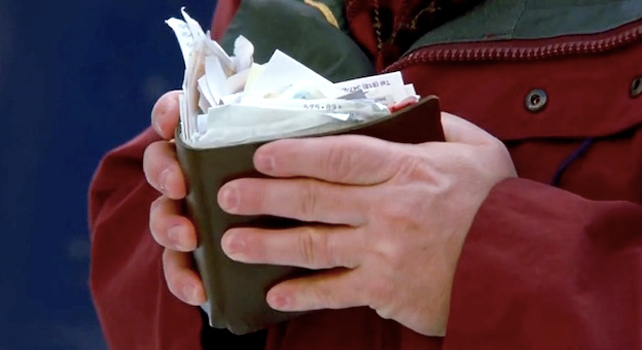
and the York Rite, along with such groups as the Philalethes Society. My wallet began to explode with dues cards!

Once the dues cards were in place, the offices came. My first lodge meeting as a Master Mason I became Junior Steward, and since I had shown the Brethren I had an ability to memorize, I also received multiple pieces of ritual to learn. I was asked if I wouldn't mind filling a chair in one of the York Rite bodies. In my zeal I agreed and I received an office in body of the local York Rite. And with the jewels of the office, came even more ritual to memorize.

I can honestly say I gave Masonry my all. I had a meeting nearly every night for almost seven years. I became a Past Master and a Past High Priest in my Royal Arch Chapter. Along the path I picked up other responsibilities. I was a member of a Grand Lodge committee and I became a webmaster for a Grand York Rite, while still,  I gathered even more jobs within my local Shrine temple. I can honestly say I loved most every minute of it.

But with problems within my family and my job, the burnout sat in. Real life began to invade my Masonic fantasy. The 24 inch gauge I had thrown away came back with a vengeance. The politics I once shrugged off began to anger me. The pieces of ritual I had been juggling for four different Masonic bodies no longer came easy to me. The representation of King Solomon’s Temple I built within myself fell apart. I went into a Masonic funk. I guess it could be called a period of Masonic darkness.

Just as Brother RJ wrote, "Masonic burnout" set in. For the longest time I was like everyone else: I thought burnout was a bad thing. But much like an old forest fire removes much rubbish and allows new life to set in, maybe Masonic burnout can be useful as well.

If you go to a drag race, people talk about burn outs as a positive thing. A burnout is when you make your rear wheels spin as fast as you can while sitting in place with your foot on the brake. When a drag racer brings his car to the race track in his preparation to race he will intentionally burn out his tires, which gets his tires warm and helps create traction which, if properly, done can be the difference between winning the race or losing.

As I'm sure you have been told many times “Masonry is a marathon, not a sprint.” That is all well and true, but if you don't get warmed up and gain traction you will fail at that race. Why not try a little of everything and find out what parts of Masonry you like and discover the ones that aren't for you?

Much like an all you can eat buffet, the first trip most people mound their plates full with as many types of dishes as they can heap on. When they return to the buffet a second time, they have a better idea of what foods they want to eat and only fill their plate with the foods they have found they liked.

After a period of Masonic inactivity and self reflection I got my life back on track and began to think about the parts of Freemasonry I liked and missed and the parts I could live without. I realized that being approached with the possibilities of Grand offices and the honors I received gave me a swelled head. I lost my perspective. I began to look at the Fraternity in a different way. I also discovered, thanks to Brother Robert Johnson, I enjoyed writing about Masonic topics. My burnout period also provided experiences for writing. It allowed me to use the experiences as “teachable moments”.

Don't get me wrong: I'm not advocating you take your zeal for Freemasonry and fill every night with a different meeting. I advocate moderation, not excess. Use your experience to find your place within your fraternity. If you find your place you are more likely to get the traction you will need to make that sprint into a marathon.

If you only take one thing away from this piece is DON’T QUIT! You joined this fraternity for a reason. Don't stop searching until you find it. Don't let the bickering or the politics or even some of the rules you find silly discourage you and make you demit. All of these silly things will eventually go away. Masonry is just like life. There will be things you love and things you hate. Just take it all in stride and make the fraternity yours.

~BH

WB Bill Hosler was made a Master Mason in 2002 in Three Rivers Lodge #733 in Indiana. He served as Worshipful Master in 2007 and became a member of the internet committee for Indiana's Grand Lodge. Bill is currently a member of Roff Lodge No. 169 in Roff Oklahoma and Lebanon Lodge No. 837 in Frisco,Texas. Bill is also a member of the Valley of Fort Wayne Ancient Accepted Scottish Rite in Indiana. A typical active Freemason, Bill also served as the High Priest of Fort Wayne's Chapter of the York Rite No. 19 and was commander of of the Fort Wayne Commandery No. 4 of the Knight Templar. During all this he also served as the webmaster and magazine editor for the Mizpah Shrine in Fort Wayne Indiana.