Showing posts with label jason richards. Show all posts

Is Homosexuality Unmasonic? - Revisit

by Midnight Freemason Contributor
Bro:. Jason Richards
&
Guest Contributor
WB:. Jon Ruark


On Friday, 26 June, 2015, the United States Supreme Court handed down a landmark decision in support of homosexual marriage equality. This nationwide declaration of equality and the changing societal norms it represents necessitates taking a hard look at Freemasonry--long having been recognized as an organization that celebrates all men as equals--and its attitude toward homosexuality in order to ask the question: “If all men are equal, and now have equal rights to marriage across the United States, is the practice of homosexuality in and of itself ‘unmasonic’?” 

Before delving into such a discussion, it is necessary to define the term “unmasonic” for the purposes of our discussion here. Unmasonic conduct is often referenced--even by Albert Mackey on numerous occasions--but has seldom been defined. Most often, it is utilized either as a synonym for “immorality” or described as “conduct unbecoming of a Mason.” However, both of these uses are deeply subjective, and interpretation could vary widely depending on a given culture or circumstance as moral laws differ greatly from culture to culture. For the purposes of our discussion here, we would posit a more objective and measurable definition of unmasonic conduct: “an action that causes serious harm within the fraternity or its public image outside of the fraternity.” As a society of good men who strive to make eachother into better men, it is important to retain harmony within the organization so it doesn’t crumble from within, but also just as important to retain a positive public image so that the organization can persist and attract membership. 

(Left to Right) Bros. Robert Johnson,
Jason Richards &
Jon Ruark broadcasting TMR from
Jason's house in VA
Masonic laws concerning homosexuality vary widely from jurisdiction to jurisdiction. Many jurisdictions have no stated policy on the matter, but some Grand Jurisdictions (who will remain nameless) list transvestitism, homosexual behavior, or even the sheer promotion of homosexuality as Masonic offenses punishable by suspension or expulsion. Many of Masonry’s rules and Landmarks originated in time immemorial; however, the laws, rules, and edicts of each sovereign Grand Lodge comprise a governing framework established by men in authority at a given period of time, based on personal--and therefore subjective--worldviews influenced by societal norms. We would posit that as societal norms change and evolve, regulations at the Grand Lodge level should be revalidated and updated to reflect the greater society within which Masonry operates. As such, the Supreme Court decision on Friday gives leaders of the Masonic fraternity a distinct opportunity to reevaluate existing policies on homosexuality. 

But back to the original question of this article. If we look at unmasonic conduct from the objective lens postulated earlier, we find it difficult to reconcile calling homosexuality “unmasonic.” Homosexuality causes no inherent harm within the lodge. Regardless of race, age, or sexual orientation, brethren are expected to treat each other with the utmost respect. Furthermore, as societal norms have changed and homosexuality is no longer the social taboo it happened to be several decades ago, the presence of homosexuals in the lodge does not harm the fraternity’s public image. Quite to the contrary--as we have seen in recent times with organizations accused of anti-gay sentiment (
https://en.wikipedia.org/wiki/Chick-fil-A_same-sex_marriage_controversy), even a perceived lack of toleration can do harm to an organization’s public image. If we care about public perception--and we should given the past 50 years’ worth of membership trends--then a reexamination of our rules and perceptions toward homosexuality is prudent. 

If homosexuality is now accepted as a societal norm (much like minorities were increasingly accepted as equal members of society after the Civil Rights movement of the 1970’s), and causes no inherent harm within the fraternity or to the fraternity’s public image, then where are these regulations rooted? Arguably, much of the resistance to homosexuality in Masonry has roots in Christianity, the principles and dogma of which have long been interpreted as condemning the practice of homosexuality. But whether or not a given brother or grand officer subscribes to those interpretations is irrelevant where Masonry is concerned as religion has no place inside the walls of the lodge. The fraternity’s most recent addition to the landmarks of Freemasonry (https://en.wikipedia.org/wiki/Masonic_Landmarks) is that religion and politics (and sometimes nationalities/borders) are not to be discussed in lodge as those topics only serve to divide, rather than unite, brethren. For the sake of the fraternity, brethren are exhorted to celebrate the common belief of a Supreme Being within lodge while, at the same time, respecting each brother’s right to subscribe to his own religious dogma. 

As a result, a brother’s religious-inspired belief that homosexuality is immoral (and therefore “unmasonic”) has no place within the confines of the lodge room. Likewise, a man’s sexual orientation should have no bearing on his being accepted or rejected as a candidate to receive the degrees in Freemasonry. After all, candidates are balloted upon within the lodge room during a tiled meeting. As such, religious and political biases should have no bearing on a candidate’s internal qualifications for Masonic membership. 


Friday’s Supreme Court decision has presented our brotherhood with a distinct opportunity to move forward in line with the ideals upon which our great fraternity was founded: tolerance, harmony, and unity. By embracing toleration for all men under the fatherhood of God regardless of race or sexual orientation, we can set ourselves above today’s polarized society. That toleration, in turn, will promote harmony and build unity within our lodges. By celebrating our diversity rather than condemning it, our fraternity will grow stronger and attract innovative, exceptional young men to join our ranks as men and Masons for years to come. 


~JR & JR


(Left to Right) Bro. Jon Ruark,
Bro. Jason Richards
Bro. Jason Richards is the Junior Warden of Acacia Lodge No. 16 in Clifton, Virginia, and a member of both The Patriot Lodge No. 1957 and Fauquier Royal Arch Chapter No. 25 in Fairfax, Virginia. He is also Chaplain of Perfect Ashlar Council No. 349, Allied Masonic Degrees. He is the sole author of the Masonic weblog The 2-Foot Ruler: Masonry in Plain Language, and is a co-host on the weekly YouTube show and podcast The Masonic Roundtable. He lives in Virginia with his wife, cats, and ever-expanding collection of bow ties.

WB. Jon Ruark is a Past Master of The Patriot Lodge No. 1957 in Fairfax, VA. His love of technology and gadgets led him to start The Masonic Roundtable as a Hangout on Air. His Masonic interests lean toward the esoteric and philosophical aspect. He lives in Virginia with his wife, 2.5 children, a dog named Copernicus, and a cat named Tesla who’s a jerk.

New Year's Reflections

by Midnight Freemason Emeritus
WB. Jason Richards


The turn of the new year is often a time of reflection. The holidays have begun to wind down; the bustle of the Christmas shopping season has ended, and the relatives and friends who came to visit have returned from whence they came. This (often abrupt) return to normalcy provides the perfect catalyst for introspection and reflection, timed well with the passing of another revolution around the sun.

As we look forward to a bright new year as men and Masons, let us not forget to spend time reflecting on those we love, as well as those we have lost. The latter was the subject of the Rob Morris-penned poem "New Year's Reflections," which I have reproduced in part here. To brethren wheresoever dispersed, I wish you a wonderful, happy, and prosperous new year full of peace, prosperity, and reflection. -JR

"New Year's Reflections"

Shall we see it, loving Brothers,
Ere another New Year's day?
Shall we join those loving others,
Whom the past year tore away?
Shall we change this toil and drudge,
For the bright Celestial Lodge,

Shall we tread that one more station,
Take that fast and best degree,
Whose consummate "Preparation"
Is to set the spirit free?
Lay our bodies off, that then
Souls unburdened may go in,

Shall we find beyond the river, —
Shall we find beyond the tomb, —
Those who left us, not forever,
Lett us till we, too, should come?
Shall we learn the long-lost word
That admits a man to God , —

Then, be zealous, loving Brothers,
While your lives so swiftly tend;
Emulate those faithful others
In the prizes they have gained;
O'er the river, on the shore,
They are happy evermore, —

Toil , — your wages rich are ready;
Bear , — your burdens all shall cease;
Give , — however poor and needy;
Pray , — and God will give release
From this bitter toil and drudge
To the bright Celestial Lodge
-Rob Morris

Masonic Oddities Part 1: Museo di Symbologia Masonica

by Midnight Freemason Contributor
Bro. Jason Richards

*Editors Note* Masonic Oddities is a new series by Bro. Jason Richards that highlights Masonic memorials, monuments, museums, or other "craft curiosities" that lie off the beaten path of the casual Masonic traveler to remind brethren wheresoever dispersed that one can find light in the most unusual of places.

Part 1: The Museum of Masonic Symbols in Florence, Italy 


About a year and a half back, my wife and I embarked on a whirlwind tour of Italy which ultimately led us to the beautiful city of Florence. Whilst sitting up in our hotel room one night looking up attractions to visit the next day, I came across the website for the Museo di Symbologia Masonica, or Museum of Masonic Symbols. I excitedly explained my findings to my wife who, to her credit, obliged my curiosity and we set out the next evening to find what I can only describe as a mad scientist's treasure trove of Masonic artifacts.


Nestled in an unassuming building on via dell'Orto, the museum is situated less than a quarter mile from the site of Italy's first Masonic lodge, founded in a tavern on via Maggio in 1731 by a group of English expatriates. The museum is run by Cristiano Franceschini, a fourth-generation Freemason, whose family's collection of Masonic artifacts set the groundwork for the museum, which opened in 2012. Bro. Franceschini welcomed us to his museum and graciously gave us a tour of his incredible collection.


Masonic artifacts of all shapes, sizes, ages, and origins lined every inch of the museum's two floors. The exhibition houses more than 10,000 artifacts from the late 18th century to the present day, which include regalia, photos, posters, aprons, lapel pins (of course), a 4-binder Masonic stamp collection, and historical documents, among other oddities of all sorts. The museum's second floor houses a Chamber of Reflection and a small, Scottish-style replica lodge room which was, like the rest of the museum, packed to the gills with Masonic paraphernalia. After the initial tour, Bro. Franceschini pulled out his growing document library which contained everything from old charters to Masonic pamphlets to a Masonic stamp collection that filled four binders.


After a couple of hours of browsing through the collection, my wife succeeded in convincing me to say my goodbyes to Bro. Franceschini, and we wandered up the street in search of an Italian trattoria for dinner.


If you ever find yourself in the beautiful city of Florence with a bit of time to spare, Bro. Franceschini's collection is well worth the 7 euro price of admission. In a country with a Masonic culture that lives largely out of public view, the Museum of Masonic Symbols stands as a beacon to demystify the fraternity and encourage the public to explore its philosophy, symbols, and history.


-JR

Bro. Jason Richards is the Senior Warden of Acacia Lodge No. 16 in Clifton, Virginia, and a member of both The Patriot Lodge No. 1957 and Fauquier Royal Arch Chapter No. 25 in Fairfax, Virginia. He is also Chaplain of Perfect Ashlar Council No. 349, Allied Masonic Degrees. He is the sole author of the Masonic weblog The 2-Foot Ruler: Masonry in Plain Language, and is a co-host on the weekly YouTube show and podcast The Masonic Roundtable. He lives in Virginia with his wife, cats, and ever-expanding collection of bow ties.

AMD - Masonic Week 2016 Wrap-up

By Midnight Freemason Contributor
W.B. Gregory J. Knott

Greg Knott and Jason Richards
I attended the 2016 AMD – Masonic Week that was held in Crystal City, Arlington VA near the Reagan National Airport. This was the first year for this location after the last three in Reston, Virginia. For those that don’t know, this event is organized by the Allied Masonic Degrees (AMD) and is co-hosted by several other Masonic organizations such as the Knight Masons, Blue Friars, The Masonic Society, etc. It is a four day event running Thursday – Sunday that includes business meetings, special degrees, expensive dinners and most importantly lots of great conversations.

This event tends to attract many of the big names in Masonry such as Brent Morris, Thomas W. Jackson, Jason Richards, Jon Ruark, Robert Davis and more. Its great fun getting to speak with them person. In all, there are typically 300-400 brethren from around the United States and a foreign lands that come to DC for this meeting.

Many of the masonic bodies that hold their meetings here are invitational only and seem to have many of the same members who simply trade sashes and titles between the various business meetings. However that doesn’t mean there isn’t plenty to do at AMD – Masonic Week. For example, I attended the Society of Blue Friars to see Michael Halleran become a member of this esteemed body. Blue Friars are a group of masonic authors and one can only be elected by the membership. Their meetings are open to the public however and it always includes a great lecture.

On Saturday afternoon, I was initiated into The Royal Order Masonic Knights of the Scarlet Cord of the United State of America, which is a relatively new body in the United States having been established here in 2012 via the United Kingdom. There are 6 grades to this order and I was given the first 3. A very interesting experience. The brethren who performed the degrees did a great job in putting on the degrees.

Take a look at the Masonic Week website for more details on what takes place during this event. If you ever have the chance to attend, I highly recommend it. I want to especially thank Brother Moises Gomez of New Jersey who does a great job in coordinating the entire event. Without his efforts it wouldn’t happen.

~GJK

WB Gregory J. Knott is the Past Master of St. Joseph Lodge No. 970 in St. Joseph (IL) and a plural member of Ogden Lodge No. 754 (IL), Homer Lodge No. 199 (IL) and Naval Lodge No. 4 in Washington, DC. He’s a member of the Scottish Rite, the York Rite, Eastern Star and is the Charter Secretary of the Illini High Twelve Club No. 768 in Champaign-Urbana. He is also a member of ANSAR Shrine (IL) and the Eastern Illinois Council No. 356 Allied Masonic Degrees. Greg serves on the Board of Directors of The Masonic Society and is a member of the Scottish Rite Research Society and The Philathes Society. Greg is very involved in Boy Scouts—an Eagle Scout himself, he is a member of the National Association of Masonic Scouters

Virtuous Resolutions Part II

by Midnight Freemason Contributor
Bro. Jason Richards


Last year, I wrote a piece entitled Virtuous Resolutions, in which I resolved to act in accordance with the fraternity’s four cardinal virtues (temperance, fortitude, prudence, and justice) for the ensuing calendar year. Having found that the four cardinal virtues provided a great framework for self-betterment, I resolved to exercise temperance by spending more time with family, embody fortitude by putting all the effort I could spare into building up my lodge, show prudence by exercising patience, and model justice by working to be the very best man possible. 

Last year, I focused heavily on actively bettering myself through giving time, service, and energy to others. While I plan to keep my 2015 resolutions, I’m turning my focus inward for 2016. As Masons, we lead busy lives with obligations that take many different shapes and forms. In an effort to fulfill those obligations, I have found that, at times, our own spiritual health can suffer as a result. Being a Mason means taking care of one’s own spiritual needs just as much as caring for the needs of others. For this reason, I resolve to focus on Masonry’s three theological virtues: Faith, hope, and charity in an effort to better myself spiritually.

Faith: Devote dedicated time to the improvement of spiritual health

Faith, as Mackey explains in his encyclopedia, is meant to be synonymous with trust. As such, he alludes to a candidate’s trust in God being emblematical of a well-founded faith. As Masons, our respective faiths are left up to our discretion; but the tie that ultimately binds men together in Freemasonry is a shared trust in the Creator of all things. As previously mentioned, it is the duty of every Mason to nurture his own spiritual health. This year, I resolve to take the time to do so for myself by setting dedicated time aside each week for meditation and spiritual/religious introspection.

Hope: Translate desires for the future state of the fraternity into a plan as Master of the lodge

Hope is often conceptualized as the second rung of the ladder of theological virtues. A.E. Waite conceptualizes hope both as the foundation of faith (for example, one trusts in God because one hopes in immortality) and a catalyst for action. Essentially, hope—termed as “aspirations of the heart and mind” by Waite—is the force that compels one to act, trust, and love. Each Mason sees the fraternity in a different light just as each member has his own respective hopes and aspirations for the future of the organization, both at the macro and micro level. This year, I resolve to channel my aspirations for the fraternity in general and my lodge in particular into the planning of my year as Master, which will—God and lodge brethren willing—begin in December of this year. 

Charity: Endeavor to do good unto all and love everyone as best as possible

Charity is a concept often misused and misunderstood in our fraternity. While many assume charity to mean the act of giving to those less fortunate, Mackey argues that, going back to I Corinthians 13, the original use of the word came from the Greek word agape, meaning love and signifying a “kindly state of mind which renders a person full of good will and affectionate regard toward others. Colloquially, agape love today is referred to as “unconditional love” as often used to denote the love between Creator and creation. With this context in mind, I resolve to endeavor to harbor good will toward all and love everyone—more especially the household of the faithful—as best as possible. 

As we look forward to AL 6016, I wish you all a wonderful year filled with trust, hope, and love. Take the time this year to trust in your God, your brethren, and your Masonic leaders. Allow your hope for the future of Masonry to drive you to implement initiatives and changes in your lodges and Grand Lodges. But above all, love your brethren as best you can. If we all strive toward these ends, then we can all look forward to a great year!  

-JR

Bro. Jason Richards is the Senior Warden of Acacia Lodge No. 16 in Clifton, Virginia, and a member of both The Patriot Lodge No. 1957 and Fauquier Royal Arch Chapter No. 25 in Fairfax, Virginia. He is also Chaplain of Perfect Ashlar Council No. 349, Allied Masonic Degrees. He is the sole author of the Masonic weblog The 2-Foot Ruler: Masonry in Plain Language, and is a co-host on the weekly YouTube show and podcast The Masonic Roundtable. He lives in Virginia with his wife, cats, and ever-expanding collection of bow ties.

Taking Back the 24-Inch Gauge

By Midnight Freemason Contributor
Bro. Jason Richards


Freemasonry is a complex organization. Its history is rich, dynamic, and largely unknown. The organization itself has spawned hundreds of others--some open to women and others open to children--almost all of which predicated membership on first having been raised to the sublime degree of Master Mason. Many of these organizations, including the Tall Cedars of Lebanon, the Grotto, DeMolay, Job's Daughters, and Rainbow for Girls, were all formed at the cusp of the twentieth century—a period in which Masonry had once again begun to expand following two distinct periods of major anti-masonic sentiment in the United States (first in the 1830's following the Morgan Affair and second in the 1870's-1880's). In the heyday of the post-WWII Masonic membership boom—and partially due to the societal norms of the day—these appendant and concordant bodies (as they came to be called) expanded and flourished. 
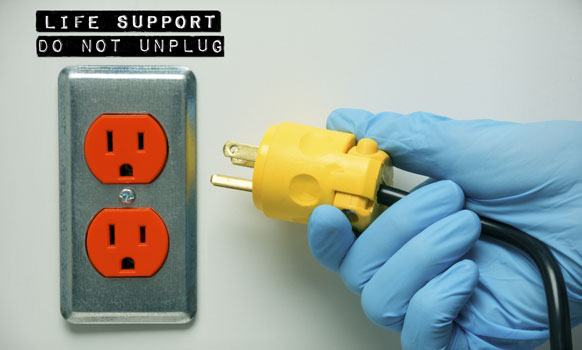
But this is no longer the case today, at least universally. Masons are overburdened, and the entire craft is suffering because of it. Many appendant bodies, at least on the local level, obtain just enough support from overwhelmed Masons to stave off shutting their doors. I would argue that given the decline in Masonic membership, changing socio-cultural norms and the concurrent breakdown of the “Masonic family,” and the proliferation of non-masonic organizations—all of which have occurred over the last century—the myriad appendant bodies, and women’s and youth organizations attached to the Masonic fraternity is no longer sustainable. One of the best things that we as Masons can do is to take struggling chapters and organizations off of life support and let them die. 
One of the very first lessons Entered Apprentices are taught is to manage time through the use of the 24-inch gauge. But today’s Masonic fraternity does not lend itself to proper time management. Masonic membership has been in sharp decline across the world for the past 60 years, yet Masonic obligations have not diminished proportionally. The calendar in my Masonic district is packed, and a lodge officer can be assured that he’ll be away from home a minimum of 2 nights a week just for his home lodge, not counting the events occurring in the district on a weekly basis to which he is “expected” to show up—and this is just for Blue Lodge! It doesn’t take into account the weekly Shrine club meetings, Scottish Rite pancake breakfasts, or the last-minute phone call from the local Royal Arch Chapter looking for one more member to attend their monthly meeting so that they have enough brethren to open. Seeing how overburdened Masons in my own District happen to be, it’s no wonder that Masonic youth groups and other aforementioned organizations fall by the wayside.

But declining Masonic membership is only one reason for this lack of support. Changing sociocultural norms also play a role. In the 1950’s, many women derived their identities from their husbands’ hobbies and lives. If your husband was a Mason, you could spend time with him by taking part in women’s Masonic organizations like Amaranth or the Order of the Eastern Star. If you were the child of a Mason, you could spend time with your father by joining DeMolay or Rainbow for Girls. This way, a Mason could concurrently spend time with his family and tend to Masonic obligations. Today, however, the “Masonic family” arguably no longer exists, especially in today’s younger generation of Masons. I can count on one finger the number of Masonic spouses under 35 who are actively engaged Masonic endeavors with their husbands (Sorry, Cori—you’re quite the outlier at present). Masonic and familial obligations today simply do not overlap. 

A final reason for lack of support is the proliferation of other organizations and ways to spend one’s time. Freemasonry no longer holds the enviable position of being the only game in town for extracurricular socialization and entertainment for men and their families. The success of youth organizations such as the Boy Scouts of America has dwarfed Masonic youth organizations like DeMolay and Job’s Daughters. 

Now that we’ve diagnosed at least a portion why Masons today are so over-obligated, how do we chart a way ahead? How do we take back the 24-inch gauge? Should we try to squeeze more commitment out of Masons through guilt, Grand Lodge edicts and resolutions, or other requests for aid? I have seen each of these tactics employed time and time again. Yet, youth groups and other appendant bodies in my area retain barely enough support to keep their doors open. Case in point—while at a blue lodge meeting I overheard a brother bragging about a youth group chapter that had become one of the biggest in the state—at 16 members. That’s a lot of effort for little quantifiable reward. Far more concerning to me, however, is the fact that I consistently witness more and more of my fellow brethren fight with their spouses over how much time Masonry is taking away from family.

Something needs to change. Short of building the membership back up to where it was at the turn of the twentieth century, the only way to lessen the burden on today’s Mason is to sacrifice struggling organizations currently on life support. No one wants to see a pet project or a chapter of an organization die, but the fact of the matter is that we can’t do it all anymore. Nor should we. Capture the institutional knowledge of an organization, document its ritual and history, and let it go.

Be bold. Make difficult choices. Take back your 24-inch gauge. We may find a strengthened fraternity as a result.

~JR

Bro. Jason Richards is the Junior Warden of Acacia Lodge No. 16 in Clifton, Virginia, and a member of both The Patriot Lodge No. 1957 and Fauquier Royal Arch Chapter No. 25 in Fairfax, Virginia. He is also Chaplain of Perfect Ashlar Council No. 349, Allied Masonic Degrees. He is the sole author of the Masonic weblog The 2-Foot Ruler: Masonry in Plain Language, and is a co-host on the weekly YouTube show and podcast The Masonic Roundtable. He lives in Virginia with his wife, cats, and ever-expanding collection of bow ties.

Is Homosexuality Unmasonic?

by Midnight Freemason Contributor
Bro:. Jason Richards
&
Guest Contributor
WB:. Jon Ruark


On Friday, 26 June, 2015, the United States Supreme Court handed down a landmark decision in support of homosexual marriage equality. This nationwide declaration of equality and the changing societal norms it represents necessitates taking a hard look at Freemasonry--long having been recognized as an organization that celebrates all men as equals--and its attitude toward homosexuality in order to ask the question: “If all men are equal, and now have equal rights to marriage across the United States, is the practice of homosexuality in and of itself ‘unmasonic’?” 

Before delving into such a discussion, it is necessary to define the term “unmasonic” for the purposes of our discussion here. Unmasonic conduct is often referenced--even by Albert Mackey on numerous occasions--but has seldom been defined. Most often, it is utilized either as a synonym for “immorality” or described as “conduct unbecoming of a Mason.” However, both of these uses are deeply subjective, and interpretation could vary widely depending on a given culture or circumstance as moral laws differ greatly from culture to culture. For the purposes of our discussion here, we would posit a more objective and measurable definition of unmasonic conduct: “an action that causes serious harm within the fraternity or its public image outside of the fraternity.” As a society of good men who strive to make eachother into better men, it is important to retain harmony within the organization so it doesn’t crumble from within, but also just as important to retain a positive public image so that the organization can persist and attract membership. 

(Left to Right) Bros. Robert Johnson,
Jason Richards &
Jon Ruark broadcasting TMR from
Jason's house in VA
Masonic laws concerning homosexuality vary widely from jurisdiction to jurisdiction. Many jurisdictions have no stated policy on the matter, but some Grand Jurisdictions (who will remain nameless) list transvestitism, homosexual behavior, or even the sheer promotion of homosexuality as Masonic offenses punishable by suspension or expulsion. Many of Masonry’s rules and Landmarks originated in time immemorial; however, the laws, rules, and edicts of each sovereign Grand Lodge comprise a governing framework established by men in authority at a given period of time, based on personal--and therefore subjective--worldviews influenced by societal norms. We would posit that as societal norms change and evolve, regulations at the Grand Lodge level should be revalidated and updated to reflect the greater society within which Masonry operates. As such, the Supreme Court decision on Friday gives leaders of the Masonic fraternity a distinct opportunity to reevaluate existing policies on homosexuality. 

But back to the original question of this article. If we look at unmasonic conduct from the objective lens postulated earlier, we find it difficult to reconcile calling homosexuality “unmasonic.” Homosexuality causes no inherent harm within the lodge. Regardless of race, age, or sexual orientation, brethren are expected to treat each other with the utmost respect. Furthermore, as societal norms have changed and homosexuality is no longer the social taboo it happened to be several decades ago, the presence of homosexuals in the lodge does not harm the fraternity’s public image. Quite to the contrary--as we have seen in recent times with organizations accused of anti-gay sentiment (
https://en.wikipedia.org/wiki/Chick-fil-A_same-sex_marriage_controversy), even a perceived lack of toleration can do harm to an organization’s public image. If we care about public perception--and we should given the past 50 years’ worth of membership trends--then a reexamination of our rules and perceptions toward homosexuality is prudent. 

If homosexuality is now accepted as a societal norm (much like minorities were increasingly accepted as equal members of society after the Civil Rights movement of the 1970’s), and causes no inherent harm within the fraternity or to the fraternity’s public image, then where are these regulations rooted? Arguably, much of the resistance to homosexuality in Masonry has roots in Christianity, the principles and dogma of which have long been interpreted as condemning the practice of homosexuality. But whether or not a given brother or grand officer subscribes to those interpretations is irrelevant where Masonry is concerned as religion has no place inside the walls of the lodge. The fraternity’s most recent addition to the landmarks of Freemasonry (https://en.wikipedia.org/wiki/Masonic_Landmarks) is that religion and politics (and sometimes nationalities/borders) are not to be discussed in lodge as those topics only serve to divide, rather than unite, brethren. For the sake of the fraternity, brethren are exhorted to celebrate the common belief of a Supreme Being within lodge while, at the same time, respecting each brother’s right to subscribe to his own religious dogma. 

As a result, a brother’s religious-inspired belief that homosexuality is immoral (and therefore “unmasonic”) has no place within the confines of the lodge room. Likewise, a man’s sexual orientation should have no bearing on his being accepted or rejected as a candidate to receive the degrees in Freemasonry. After all, candidates are balloted upon within the lodge room during a tiled meeting. As such, religious and political biases should have no bearing on a candidate’s internal qualifications for Masonic membership. 


Friday’s Supreme Court decision has presented our brotherhood with a distinct opportunity to move forward in line with the ideals upon which our great fraternity was founded: tolerance, harmony, and unity. By embracing toleration for all men under the fatherhood of God regardless of race or sexual orientation, we can set ourselves above today’s polarized society. That toleration, in turn, will promote harmony and build unity within our lodges. By celebrating our diversity rather than condemning it, our fraternity will grow stronger and attract innovative, exceptional young men to join our ranks as men and Masons for years to come. 


~JR & JR


(Left to Right) Bro. Jon Ruark,
Bro. Jason Richards
Bro. Jason Richards is the Junior Warden of Acacia Lodge No. 16 in Clifton, Virginia, and a member of both The Patriot Lodge No. 1957 and Fauquier Royal Arch Chapter No. 25 in Fairfax, Virginia. He is also Chaplain of Perfect Ashlar Council No. 349, Allied Masonic Degrees. He is the sole author of the Masonic weblog The 2-Foot Ruler: Masonry in Plain Language, and is a co-host on the weekly YouTube show and podcast The Masonic Roundtable. He lives in Virginia with his wife, cats, and ever-expanding collection of bow ties.

WB. Jon Ruark is a Past Master of The Patriot Lodge No. 1957 in Fairfax, VA. His love of technology and gadgets led him to start The Masonic Roundtable as a Hangout on Air. His Masonic interests lean toward the esoteric and philosophical aspect. He lives in Virginia with his wife, 2.5 children, a dog named Copernicus, and a cat named Tesla who’s a jerk.


Virtuous Resolutions

by Midnight Freemason Contributor
Bro. Jason Richards


Photo by Bro. Jon Ruark, PM

Late December is, for many people, a time of introspection and self-reflection. For me, Christmas Eve is particularly sacred in that regard. As long as I can remember, I stayed up extra late on Christmas Eve--not to wait for Santa or in anticipation of opening gifts the following morning--but to allow myself time to reflect on how my life has changed since the previous year's Christmas Eve and muse as to how my life might change before the next one rolls around. As I reflect, I always attempt to thank God for the blessings, lessons, and difficulties of the past year and also for the hope that comes with the next.

This past year, Masonically, has been a whirlwind adventure for which I am very thankful. I've been blessed with many new friendships with brethren across the world through The Masonic Roundtable, Midnight Freemasons, and Masonic Radio Theatre. I've also been granted increasing responsibility in my mother lodge, and look forward to my time in the East in the coming years. 

But Christmas Eve isn't just a time for self-reflection and poor attempts at forecasting the future; for me, it's always been the time to set my resolutions on how to live and act the next year. Resolutions, while often carrying negative connotations for being broken soon after they're made, can be a useful tool for sanctification whereby we chip at our own rough edges in hopes of one day becoming that that elusive, idealistic "perfect ashlar." As I was pondering my 2015 resolutions, the four cardinal virtues of Masonry about which we learn in the Entered Apprentice degree (temperance, fortitude, prudence, and justice) stood out in my mind. As they necessarily touch all parts of our lives as men and Masons, these virtues formed the perfect framework for what I resolve to accomplish this next year:


1. Temperance: Spend more time with family.

Masonry is a vast, complex machine with many moving parts; however, it has relatively few workers to keep those parts moving and may have fewer in the future if current Masonic membership trends persist. As a result, Masonry has no shortage of work for those men who choose to be active--even to the point where family life suffers as a result. This year, I resolve to give my family the quality time they need.

2. Fortitude: Put all I can into my lodge.

Spending more quality time with my family doesn't mean that I slack off on my Masonic duties. Masonry should be about quality, not quantity. As such, I resolve to give my Masonic endeavors my all (within the length of my cable tow) this year, recognizing that I cannot (and should not) do everything; but what I do do, I should do exceptionally well.

3. Prudence: Exercise more patience.

We all know brethren who drive us nuts for whatever reason (if you're on reddit or facebook, you probably know several). While our obligations may keep us from completely writing them off or telling them where to shove it (or may not, depending on how you frame them), disharmony in the Craft can still abound in cases where brethren rub each other the wrong way. This year, I resolve to exercise more patience with brethren I find difficult to befriend and relieve.   

4. Justice: Be as good of a man as I can be. All the time.

We've heard it time and time again. Masonry makes good men better. Why else would we join? You can read the rituals online. A non-mason can buy a Masonic bumper sticker to put on his car or lapel pin for his jacket if he wants to do so. We're here to build each other into men of high values and character; as a Mason, it is my duty to be as good of a man as I can be, as I resolve to do the same to the best of my ability throughout the next year.

As we move forward into 2015, I wish all brethren wheresoever dispersed a joyous new year filled with temperance, fortitude, prudence, and justice--four virtues upon which our craft was built, all of which are essential tools to master as we go forth and attempt to carry out our end goal as Masons: to make good men better.

~JR

Bro. Jason Richards is the Senior Deacon of Acacia Lodge No. 16 in Clifton, Virginia, and a member of both The Patriot Lodge No. 1957 and Fauquier Royal Arch Chapter No. 25 in Fairfax, Virginia. He is the sole author of the Masonic weblog The 2-Foot Ruler: Masonry in Plain Language, and is a co-host on the weekly YouTube show and podcast The Masonic Roundtable. He lives in Virginia with his wife, cats, and ever-expanding collection of bow ties.

Lucky Number Thirteen

Bro. Jason at the House of the Temple
Not a year ago, I was approached by a couple of Brothers from Virginia about a new venture in Masonic entertainment / education, one of whom was Bro. Jason Richards. Richards is from Acacia Lodge in Clifton Virginia. He and the other Brother (Jon Ruark) wanted to start another podcast/vidcast. Since then, Jason and I have grown close due to our weekly interactions on the YouTube live show "The Masonic Roundtable" which is a weekly show much like the view. You can read more about it in an earlier blog post.

Jason writes for his own blog cleverly titled "The Two Foot Ruler - Masonry in Plain Language" and it is fantastic. Jason recently wrote a guest piece for us right here on The Midnight Freemasons and it received thousands of hits. You can read it here. Last week, I was avidly looking for more contributors that would write regularly for us here and Bro. Jason sent me a message on Facebook.

Without delaying this exciting news any further, I am so happy and excited to announce that Brother Jason Richards is the latest to join the Midnight Freemasons as a regular contributor. I know you will all enjoy his down to earth, yet profound writings on our craft.

Here is his bio;

Bro. Jason Richards is the Senior Deacon of Acacia Lodge No. 16 in Clifton, Virginia, and a member of both The Patriot Lodge No. 1957 and Fauquier Royal Arch Chapter No. 25 in Fairfax, Virginia. He is the sole author of the Masonic weblog The 2-Foot Ruler: Masonry in Plain Language, and is a co-host on the weekly YouTube show and podcast The Masonic Roundtable. He lives in Virginia with his wife, cats, and ever-expanding collection of bow ties.

Welcome aboard Brother Jason Richards!

~RJ et al

Religious Opposition to Freemasonry: A Christian Mason’s Perspective

by Midnight Freemason Guest Contributor
Jason Richards

Several weeks ago, I received a long-awaited present to myself: Rob Morris’ The Poetry of Freemasonry, published in 1884 (for those of you who don’t know, I’m an avid collector of antique Masonic books). As I leafed through the pages in hopes of finding a good patriotic poem to read as part of this week’s Americana-themed episode of The Masonic Roundtable, I was caught by surprise when I found a Confederate twenty-dollar bill (printed in 1864) between the pages. On a whim, I took it down to a collectibles shop to verify the bill’s validity as counterfeits abound on today’s market. The shopkeeper, a large, loud, elderly gentleman, verified that the bill was indeed real, but quickly turned his undivided attention to my book inquired why I would purchase—much less own—such a thing. I told him that I was a Freemason who collected antique books on the subject. He quickly interjected: “So, do you have any of those antique Masonic books that tell you that Masonry was actually a CULT when it was first founded?!?” Partially out of shock, and partially out of pragmatism, I concluded that there was no point in arguing with him, and threw up my hands dismissively. He pointed an index finger squarely at my chest and said “Ah ha! Didn’t think about that, did you?” I thanked him for his time and walked out of the store. I won’t be returning.

I wish I could say that events like this are isolated and/or few and far between. But they are not. Several weeks ago on Reddit.com, a gentleman started a thread asking about whether or not Freemasonry conflicts with Christianity. While he received a lot of good advice from Christian brethren at the outset, a number of Christians swarmed the thread slinging the usual diatribe: “I have no experience with Masonry, but I know they worship Satan!” etc. Over the course of my three years as a member of the Masonic fraternity, I have read a multitude of similarly barbed comments damning any and every Christian who is openly a part of this organization. It’s a real shame. The purpose of this article is to not only attempt to explain the relationship between Freemasonry, philosophy, and religion in easily understandable terms, but also break down—based on my experiences—my understanding as to why Freemasonry is so unfavorably regarded in some religious circles. 

My personal comprehension of Freemasonry can be summed up thusly: Freemasonry is a fraternal organization to which strong philosophical and moral elements have been attached. But it is not a religion if for no other reason than the simple fact that it prescribes no religious dogma. There’s nothing hidden in the rites and rituals of this fraternity that tells you where to go to find religious and spiritual fulfillment. Masons are not told who to worship, how to worship, or even where to worship. Instead, the moral and philosophical elements of the fraternity are designed to assist brethren in strengthening their own respective faiths, whatever they may be. To me, the moral allegories taught through explanations of stone-masons’ working tools serve as a daily reminder to emulate love, compassion, and trust to my fellow human beings—something repeatedly exhorted by Jesus during his ministry on Earth. My close friend, brother, and fellow Methodist Jon Ruark said it best: “Masonry directly enhances my Christian faith.” I fail to see how spending time with men of high moral caliber, and participating in rites that—for the most part—take their inspiration directly from the Old Testament could do anything except help a man grow in his own respective faith (especially true if he is a member of one of the three “religions of the book”—Judaism, Christianity, and Islam—which draw heavily from various parts of the Old Testament). If Masonry is an aid to a man’s moral compass and faith, then why is it often the subject of hatred and consternation in religious circles? Based on my experience with religious anti-Masonry, I propose the following as three reasons. 

First, freemasonry is complicated. Masons don’t know when or how it emerged, though a myriad of theories have been developed to answer those questions. It is even difficult to boil down the basic structure of the fraternity into something vaguely comprehensible to a person of casual interest. When such persons ask seemingly simple questions (e.g. “Is Freemasonry a religion?”), they can often be turned off by the philosophical, caveated, seemingly convoluted, and varied responses they might receive. Case in point: A favorite response by Freemasons to the question: “Is Freemasonry a religion?” is “Freemasonry isn’t a religion……but it IS religious.” There are few explanations of Masonry that drive me crazier than that one, because it makes absolutely no sense to the casual questioner. In fact, the overall lack of simple language concerning Freemasonry is precisely the reason why I started my blog The 2-Foot Ruler: Masonry in Plain Language. This so-called “lack of plain language” on the part of well-intentioned Masons makes them appear cagey and insincere to those casual questioners with short attention spans. Much of the religious opposition to Freemasonry that I have observed has come directly from men and women who simply find it more convenient to denounce Masonry as a false religion/cult/bunch of Satanists than to conduct a full analysis of the complexities of Freemasonry and the philosophical elements contained within the symbolism of the fraternity.

Second, Masonry’s ecumenism—tolerance for men of all faiths, within certain parameters—seems to attract a great deal of religious criticism. Masonic ritual does not encourage one religion over another.  All Masons are encouraged to seek out their own spirituality and religious faith. For me, that faith is Christianity. For others, it might be Judaism or one of a myriad of other religions or walks of life. Personally, the fact that Freemasonry fails to promote Christianity over other religions or walks of life bothers me very little as secular fraternal organizations are in great supply all over the world. Some religious anti-Masons misconstrue this ecumenism as the promotion of Deist dogma. There is a clear difference, however, between a fraternity that brings men of different faiths together to encourage them to live out those disparate faiths as best they can, and a religious organization that teaches men to worship a faceless, nameless Deity. Again, Masonry prescribes no religious dogma and the men in this fraternity are encouraged to utilize the moral lessons taught in the degrees to enhance their own particular faiths. 

Third, much like Freemasonry’s tolerance of religious preference, its “tolerance” of each brother’s interpretation of symbolism and his search for “truth” can be upsetting to religious circles. As a result of Masonry’s encouragement of each brother to seek out “truth” for himself, it could appear to outsiders that Masonry actively discourages moral and religious absolutes. But determining, encouraging, and/or discouraging moral/religious absolutism is the job of a religion, and not a fraternal organization. As Masonry, once again, prescribes no dogma (Are you seeing a trend yet?)—and goes as far to forbid talk of religion in lodge—how can it inherently encourage or discourage religious absolutism?  The fact that Masonry, in and of itself, leaves interpretation of “truth” and other Masonic symbolism open to each individual brother can also lead to allegations Masonry encourages research on the occult. I know several Masons who delve into occult philosophy and ancient religions in their personal interpretation of Masonic symbolism. As we’ve discussed on The Masonic Roundtable, philosophy is a pillar of Masonic research and—as I have mentioned more times than I can count—I will take empirical historic research over esoteric philosophical research any day. Yes, much of the Masonic ritual and symbolism is rooted in Enlightenment philosophy, but just as much of it comes directly from the Bible. It’s up to the individual Mason to decide what he wants to research, and what correlations can draw between his research and Masonic symbolism, keeping in mind that correlations do not inherently equal causal linkages. 

I haven’t covered nearly all of the arguments that religious anti-Masons have levied against the Masonic fraternity. Instead, what I have attempted to do here is to distill the arguments that have personally observed into broad, easily understandable trends. The first trend in religious opposition to Freemasonry arises from the unfortunate fact that some curious and/or skeptical men and women simply cannot get a straight answer to their questions due to the inherent complexity of the fraternity. Instead, Ockham’s razor may lead the casual questioner to ascribe to other seemingly simplistic, unfavorable accounts of the fraternity—a favorite one used by anti-Masons being that of Leo Taxil’s discredited and disavowed writings stating that Masons worship Lucifer. The second trend present in religious anti-Masonry today is opposition to Freemasonry’s inherent ecumenism. This opposition may lead religious anti-Masons to insist that Freemasonry encourages Deism, when in fact, Freemasonry neither encourages any particular religion nor prescribes religious dogma. It is the duty of every single Mason to decide his spiritual fulfillment and religious path for himself. The third trend present in the arguments of religious anti-Masons falls along the same lines as the second. Freemasonry’s insistence that the individual brother seek out “truth” and the meaning behind Masonic symbolism for himself has led to allegations that the fraternity discourages religious absolutism and encourages occultism when, in fact, the ritual inherently does neither. 

Personally, I pride myself on my tolerance of other world views and my membership in various organizations that promote the same. I hold very staunch views on my particular religious faith, and it is both my right and prerogative to hold them;  but I refuse to allow my views to infringe upon the right of other human beings to make up their own minds about the world around them, so long as they treat me with the same courtesy. If you are someone who cannot extend that same courtesy to your fellow human beings, then Freemasonry is not for you, and I’m glad that you have chosen not to take part in it.

~JR

Bro. Jason Richards is the Senior Deacon of Acacia Lodge No. 16 in Clifton, Virginia, and a member of both The Patriot Lodge No. 1957 and Fauquier Royal Arch Chapter No. 25 in Fairfax, Virginia. He is the sole author of the Masonic weblog The 2-Foot Ruler: Masonry in Plain Language, and is a co-host on the weekly YouTube show and podcast The Masonic Roundtable. He lives in Virginia with his wife, cats, and ever-expanding collection of bow ties.

For further reading on the subject of Christianity and Freemasonry, Jason recommends the following scholarly works:


  1. Workman Unashamed: The Testimony of a Christian Freemason by Christopher Haffner
  2. A Pilgrim’s Path: Freemasonry and the Religious Right by John J. Robinson
  3. Is It True What They Say About Freemasonry? By Arturo De Hoyos and S. Brent Morris

The Masonic Roundtable

by Midnight Freemason Contributor
Bro. Robert Johnson 32°

February 17th 2014, it was evening and I was setting up my office with one of my old lighting rigs for the first episode of a new show. Go back a few more weeks, WB. Jon Ruark of The Patriot Lodge in Virginia contacted me about wanting to do a Google Hangout with a few other Masons from around the country.

If you don't know what a Google Hangout is, basically its a way for multiple people to talk via the internet over webcam, but the difference is that you have the option to "go live", which means broadcast your meeting to the world via Google and thereafter it would be on YouTube, syndicated for whoever to see.

So, along with myself, Jon was also in cahoots with Bro. Jason Richards who was also a Bro. from VA. They recruited WB. Nick Johnson who was a blogger on his own website and Bro. Juan Sepulveda of www.thewindingstairs.com (A Masonic podcast focusing on the individual Mason.) and also www.Freemasonryart.com (A website dedicated to his fine artwork.).

(Left to right) Jason Richards, Robert Johnson, Jon Ruark,
Nick Johnson, Juan Sepulveda.
Altogether there were five of us, and we decided to talk about a few topics and let it go out to the world. The response was amazing. Since then, the show has blossomed into a full blown weekly Masonic podcast/vidcast and does very well. Each week, we tackle a Masonic subject and discuss it, kinda' like a panel on the show The View, except we're all men and Masons.

We have a lot of fun and we have many view points expressed on the show. When I first started pod casting 3 years ago, I didn't know much about it. I knew I wanted to do something and I knew that I liked "The Digital Freemason" which was a podcast hosted by Bro. Scott Blasken out of Canada. So I decided I would try and create a show as well and hopefully just provide additional content for web savvy Freemasons of the digital age. Soon after I started it, Scott Blasken posted a message, a kind of passing the torch, not to me but to all Masons of this digital age. I can never thank Scott for all that he has done and for the inspiration he has caused in all of us.

Awhile later,  I was doing my show; "Whence Came You?" I was contacted by Bro. Juan Sepulveda about his intent to start a Masonic podcast as well. I was excited to see that other brothers were starting to offer content for today's Mason. So the now, in addition to my show, I'm on this new show, The Masonic Roundtable, which we are having a blast with.  A huge thanks to Brothers Ruark, Richards, [Nick] Johnson and Sepulveda for letting me tag along in this excellent adventure. The show is live Tuesday nights every week at 10/9 central and is syndicated via YouTube.

I invite you to check out the new show.

www.themasonicroundtable.com

Bro. Robert Johnson, 32° is the Managing Editor of the Midnight Freemasons blog. He is a Freemason out of the First North-East District of Illinois. He belongs to Waukegan Lodge No. 78. He is also a member of the York Rite bodies Royal Arch, Cryptic Council, Knights Templar, AMD, The Illinois Lodge of Research and a member of the Scottish Rite Valley of Chicago as well as a charter member of the Society of King Solomon, a charity organization run by the Grand Lodge of Illinois. Brother Johnson currently produces and hosts a weekly Podcast (internet radio program) Whence Came You? which focuses on topics relating to Freemasonry. In addition, he produces video shorts focusing on driving interest in the Fraternity and writes original Masonic papers from time to time. He is a husband and father of three. He works full time in the safety industry and is also a photographer on the side as well as an avid home brewer. He is currently working on a book of Masonic essays.