Reframing Masonic Leadership

by Senior Midnight Freemason Contributor
WB Gregory J. Knott


In my last article, “What is Leadership”, I touched on the subject of reframing leadership based on the book, Reframing Academic Leadershipby Lee G. Bolman and Joan V. Gallos that I read last summer as part of a program at Harvard University. My goal is to take the four leadership frames outlined in this book; structural, human resources (people), political and symbolic and see how they might be used within the context of the Masonic fraternity.

Before we begin a discussion of reframing, what is framing itself? Framing is how information is presented by an individual, group or organization to make an argument, persuade action or influence, or help direct a desired outcome. Politicians use framing constantly to take a select set of information or data and present this in a format (story, social media post, etc.) to persuade public opinion or voters in their favor.

Some examples of framing within the Masonic fraternity might be; “We make good men better”, “2 Be 1 Ask 1” or “You get out of it, what you put in it”. We have all heard these at some point in time in our Blue Lodges. This framing of the fraternity influences how we do our work, present ourselves to the outside world and operate administratively.

The one thing you have read over and over and this blog and numerous other masonic social media sites is our fraternities’ seemingly endless struggle with change or innovations. The charge to the Worshipful Masters in some jurisdictions says “You admit that it is not in the power of any man or any body of men, to make Innovations in the body of Masonry”.

My belief is that reframing, and the four leadership frames, can give leaders within the fraternity the tools to help shape our fraternity in the years ahead. Reframing is the ability to look beyond the current situation or framework. Bolman says of leaders the “ability to reframe sets them free”.

Reframing gives a leader the opportunity to view the same thing through more than one perspective. But why reframe? Processes that are automatic can be slowed down to give time for perspective and consideration for improvement. Reframing will allow you to expand what you see and improve the quality of your sense making.

What you see, determines what you do, by expanding what you see allows you to understand there is often more than what meets the eye. Leaders can run into trouble when they see too little, see it wrong or get so hooked in doing things your own view of the truth. In other words you need to reframe how you are seeing things as an opportunity to help lead change within an organization.

In my next installment we will examine structural reframing and the three P’s of Change: Patience, Persistence and Process.

~GJK

WB Gregory J. Knott is the Worshipful Master of Ogden Lodge No. 754 in Ogden (IL) and a plural member of St. Joseph Lodge No. 970 (IL), Homer Lodge No. 199 (IL) and Naval Lodge No. 4 in Washington, DC.

Masters of the Universe and Freemasonry

by Midnight Freemason Contributor
Robert H. Johnson

Just a day ago, Darin Lahners ended a piece he wrote on this blog with the words, "We have to try." It was in relation to attempting to change Freemasonry for the better. A few sentences earlier, he said change happens from the ground up in Freemasonry, and he's absolutely, 100% correct.

Before proceeding, I want to make myself absolutely transparent here. I am not advocating or even suggesting an "Us and Them" relationship when it comes to Freemasonry and her "camps"--The member at Lodge and the Grand Lodge. Quite the contrary--there is only us.

Grand Lodges exist today to assist in the administration of the Fraternity. The Education and experience you provide is up to the lodges. Grass-roots solutions and practices filter their way up and become either the scourge of a Grand Lodge Jurisdiction or common practice based on the determination of those who evaluate the preservation of the work. Chamber of Reflection? Pits in the West? Actual accosting? Requiring more than memorization to advance through degrees or none at all? Background checks on candidates? Credit checks? Whatever the case may be, the lodges are in control of this.

Whether you agree or disagree on elements I've stated above or any others you may find yourself pondering, we can all agree on one thing. We are the unified front that controls the Fraternity. The Grand Lodge is YOU! Want something changed? Submit the resolution. Get the signatures. Want to adopt something? Do the work to make it happen. Follow the protocols set forth to make it happen. I make an emphasis here because nothing good ever comes from coups, slamming GLs online, or anything else abrasive. It's about doing it, and doing it the right way. It CAN be done.

I guess my main point in this short blurb today, is that Freemasonry is NOT passive. You're not just a Freemason 30 minutes before the meeting. You don't cram everything you were supposed to accomplish over the last 30 days in the 30 minutes before the next meeting. Your meeting minutes shouldn't come out the day before the next meeting. (Pet peeve).

We must work--firing on all cylinders all the time. And there are those of us who do this. We try and make up for the 90% who don't. Even if you want to fight against a change, do it. Get active. The Grand Master of your jurisdiction was a regular dues paying member, just like you. He worked hard, had a vision and got involved. Look at the image below.


That's right. All that "I didn't vote." is very representative to the passiveness that the majority of Masons see around them. The inactive, dues paying, complaining with no action kind of paradigm. "I didn't vote." represents all the apathy we have. It's proportionally the same within any organization. The majority are along for the ride. Don't be along for the ride. Drive. Stay thirsty. Fight for it. Believe. If you build it they will come. Be the change. Just do it. Need any more adverts to get you motivated?

Look at North Carolina and their EDU platform. Look at Ohio and theirs. Grand Lodges are beginning to adopt rigorous and intense candidate education programs. Why? Because someone decided it was time. They did the work. They spoke to the right people. They became Atlas, holding it all and being that guy for a while. But they can't be there forever. Someone needs to step up. Be that person. This is you...a Master of the Universe--a He-Man.


Get to work--the future of everything is at stake.

~RHJ

RWB, Robert Johnson is the Managing Editor of the Midnight Freemasons blog. He is a Freemason out of the 1st N.E. District of Illinois. He currently serves as the Secretary of Spes Novum Lodge No. 1183 UD. He is a Past Master of Waukegan Lodge 78 and a Past District Deputy Grand Master for the 1st N.E. District of Illinois. Brother Johnson currently produces and hosts weekly Podcasts (internet radio programs) Whence Came You? & Masonic Radio Theatrewhich focus on topics relating to Freemasonry. He is also a co-host of The Masonic Roundtable, a Masonic talk show. He is a husband and father of four, works full time in the executive medical industry. He is the co-author of "It's Business Time - Adapting a Corporate Path for Freemasonry" and is currently working on a book of Masonic essays and one on Occult Anatomy to be released soon.

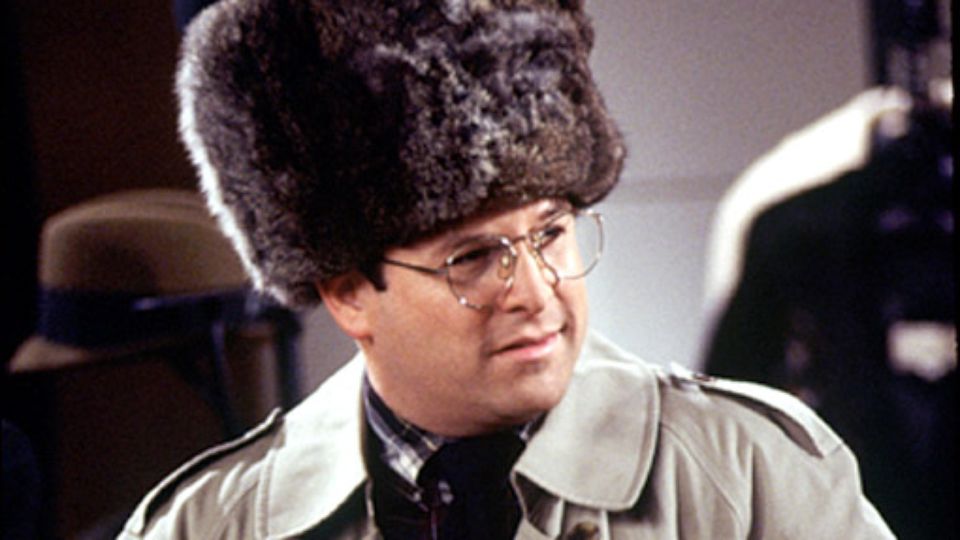
Brother George Costanza and Breakfast at Tiffany’s Masonry

by Midnight Freemason Contributor 
WB Bill Hosler


I want to head a couple of things off at the pass. First, I know the character from the longtime running television show “Seinfeld” wasn’t a Freemason. As far as I know, none of the characters in the show were ever portrayed as members. (Although the actor who portrayed Kramer, Michael Richards is a Freemason). Stating this in the beginning will be illustrated as we go through this piece.

The title of this piece comes from the Seinfeld episode entitled, “The Couch”, which was released in 1994 during the series' sixth season. Among the many moving parts of the episode, George joins a book club for the purpose of impressing a girl he likes. The club is reading the book “Breakfast at Tiffany’s”, written by Truman Capote. George attempts to read the book many times but puts the book down in frustration. He exclaims "If it's not about sports, I find it very hard to concentrate!" So instead of doing the right thing, George tries to take a shortcut and watch a video of the movie version of the book, which proves to be his undoing in front of the target of his affections when he talks about “the book” which has a totally different ending from the movie the book was adapted from.

Chances are after reading the last few paragraphs you are scratching your head wondering what in the world George, Jerry and Kramer have to do with Freemasonry. Take a deep breath Brother, you haven’t missed any symbolism…yet.

Maybe it’s just a pet peeve of mine, but I get frustrated when something I have written or something I have read about is posted on social media, and I begin to read the comments from the audience. Of course there are ones from readers who give praise and encouragements, (I like those, keep those coming--just saying.) The ones I am talking about are comments from people you can tell have not read the piece but don’t have a problem giving their opinion about the work the author has researched and written, again,  without reading a single one word of it. They just look at the title and the photo that accompanies the post, and form an opinion on the authors work and drop an opinion. I’m guessing once they hit the post button they continue to scroll down and look for cat videos or whatever else they find interest in.

This may be just a pet peeve I alone hold. But if I'm honest, and when I think about it, this small thing is just a symptom of a larger problem I witness with some of the members of the Fraternity. Let me elaborate. I believe when lodges dropped Masonic Education from their meetings and didn’t replace it with anything, we left a large void in the Masonic experience.

Without education, our meetings are just a drone of minutes being read in a monotone voice by a bored and overworked lodge secretary, and sadly, sometimes arguments about other mundane subjects occur. We have forgotten how to discuss and debate important matters before the lodge, in other words, we have forgotten what we were taught as Masons. “...that noble contention, or rather an emulation, of who best can work and best agree.” Our uninformed comments on Masonic social posts  illustrate this.

Many of our members look at a post on social media, and instead of educating themselves by clicking the link, reading the article, and forming an opinion to provide meaningful dialogue, they give a knee-jerk reaction to the photo the post displays or by the title of the article and post an illiterate opinion based on reaction. Again, not with what the author has written (many times in these cases the comment sounds to the other readers to be quite caustic) and an argument begins. Just like the lodge meeting I discussed above. I believe these remarks could possibly come from the same Brother in the lodge who will fight against every dues increase or adding any form of Masonic Education to lodge nights or at the Grand Lodge level. They will cry at the top of their lungs, without any proof or evidence, that such innovations as one day classes or (wait for the gasp) alcoholic beverages inside a lodge building are detrimental to Masonic experience. Those same Brothers will be the first to beg for “harmony” in a lodge meeting when other members have a different opinion than he possesses. I will say this, in my opinion, the term "harmony" in a lodge has been hijacked and is used to stop dissenting opinion and keep the status quo of a dying lodge.

Not only is this behavior detrimental to the “harmony” of the Fraternity but it also puts our dysfunction front and center for all the public to see. Personally I am not as worried about recruitment as many of our Brethren are, but if I were, I would point out that if a potential member reads an article and then reads comments which have to do very little with what he just read, and might sound a little negative or caustic, he might question our ability to fulfill our promise to make him a better man and decide on a different path in his direction.

Much like a Brother who doesn’t display good judgment or conduct himself in an honorable matter while wearing a piece of Masonic jewelry or clothing in public, that one man may tarnish that public image, we have spent centuries trying to build.

Brethren, I’m not asking for everyone to agree with what I or other authors write. Although if you COULD agree with everything I write that would be great. Once again, just saying 😉 Seriously though,  READ the article before you make a comment on the piece, or if you don’t choose to read what has been written, please just scroll by.

Now that you have read the entire article you are in on the secret of the title I gave this piece. With that knowledge, you can sit back and read the comments of the posters on this piece with a smile on your face and a chuckle on your lips. ( I just wish you could see the evil grin I have at this moment.)😎

~BH

WB Bill Hosler was made a Master Mason in 2002 in Three Rivers Lodge #733 in Indiana. He served as Worshipful Master in 2007 and became a member of the internet committee for Indiana's Grand Lodge. Bill is currently a member of Roff Lodge No. 169 in Roff Oklahoma and Lebanon Lodge No. 837 in Frisco,Texas. Bill is also a member of the Valley of Fort Wayne Ancient Accepted Scottish Rite in Indiana. A typical active Freemason, Bill also served as the High Priest of Fort Wayne's Chapter of the York Rite No. 19 and was commander of of the Fort Wayne Commandery No. 4 of the Knight Templar. During all this he also served as the webmaster and magazine editor for the Mizpah Shrine in Fort Wayne Indiana.

The Outliers of Freemasonry

by Midnight Freemason Contributor
Bro. Michael Arce


Discovering the hidden logic in the blueprint for our potential
"Success" is divisive. We all have different meanings of the word. Wealth, power and position are the traditional definitions portrayed by public figures, world leaders, and in the media. Although 90% of Americans defined success as "attaining personal goals and having good relationships with family and friends" in a poll conducted by Strayer University's Success Project in 2014. It's interesting that publicly success is seen as a beholder of some lever of power, while privately, personal goals and families are of the highest value. Google uses Accomplishment, Attainment, and Achievement as the three words associated with success. In Freemasonry, success begins when we have presented our Masonic apron, its history is explained, we are told of its symbolism, and encouraged to take further steps in finding light.

When I began my Masonic career, I wanted to know what the connection is between successful men and Masonry. I tried to sort out my place in our fraternity's legendary figures. From Washington to 13 other US Presidents, the first American to orbit the Earth, a magician known for his great escapes and illusions, an actor who became 'the Duke' and Presidential Medal of Freedom recipient --- all of these men were Freemasons. Did Freemasonry make men successful or did successful men make Masonry?

My search for the meaning of success deepened when I read Malcolm Gladwell's "Outliers: The Story of Success" before a trip to New York City for our Grand Lodge two years ago. Gladwell says he wrote this book out of “a frustration I found myself having with the way we explain the careers of really successful people.” Gladwell is an investigative author/reporter, and this book was exactly what I needed to better sharpen my view on Freemasonry's greatness. He started by examining the question we always ask about successful people. "We want to know what they're like — what kind of personalities they have, or how intelligent they are, or what kind of lifestyles they have, or what special talents they might have been born with. And we assume that it is those personal qualities that explain how that individual reached the top.

Gladwell concludes that Outliers benefit from hidden opportunities that fall outside of the normal experience that we confuse for “lucky breaks.” His idea is, “to understand how some people thrive, we should spend more time looking around them-at such things as their family, their birthplace, or even their birth date.”
What is an Outlier?

There are two definitions of an Outlier. The first is "something that is situated away from or classed differently from a main or related body." The second, "a statistical observation that is markedly different in value from the others of the sample." From those points, one can conclude that not all men are Masons as Freemasonry is not right for every man. It could be argued that the necessary qualifications to be a Mason also present a connection to the hidden opportunities Caldwell illudes to, for members.

In the second chapter of his book, Gladwell lists of the 75 richest people in history as an example of “wealth” as a measure of achievement. Here's what’s interesting about that list; of the 75 names, only TWO are women who were monarchs. Historians start with Cleopatra and the Pharaohs and comb through every year in human history ever since, looking in every corner of the world for evidence of extraordinary wealth, and almost 20 percent of the names they end up with come from a single generation in a single country. What is also astonishing is that 14 of the richest people in history are American men born within nine years of each other in the mid 19th century. These men were the original titans of industry. One of them just so happened to be a Mason: George Pullman, member of Renovation Lodge No. 97, Albion, New York.

Brother Pullman was born at the right time and in the right place. He lived when the railways were built, when Wall Street emerged, during the Reconstruction era following the Civil War. During the height of Pullman cars, all of the rules by which the traditional economy functioned were broken and remade. Pullman was also a man which gave him the distinct privilege to petition a Masonic lodge.
Life, Liberty, and the Pursuit of Happiness.

When the recorded history of the Grand Lodge of England began in 1717, the term freeborn had two meanings: one was being literally “born free” and the other as in “freeborn rights,” the idea of John Lilburne --- not a Mason but his words inspired generations that followed. John Lilburne was born in 17th century England when King James was re-writing the Bible. During this time there is a push for the King to give the people more freedom. John Lilburne described himself as “a lover of his country and sufferer for the common liberty." Lilburne argued for “free-born rights,” rights that we are all born with, not given to us from a King or from the Government.

Lilburne's lifetime overlapped another great English philosopher, John Locke, who coined the phrase 'pursuit of happiness,' in his book An Essay Concerning Human Understanding. Locke's concept of "pursuit of happiness" was not merely the pursuit of pleasure, property, or self-interest (although it does include all of these). It is also the freedom to be able to make decisions that result in the best life possible for a human being, which includes intellectual and moral effort. Lilburne lived before the Age of Reason; Locke was a prominent figure during the Age of Enlightenment. Both were non-Masons (although there is a debate on whether Locke was, he said he was in a letter. He died in 1704 with no recorded proof.) who had ideas that challenged the monarchy and were proponents of what revolutionists would call, “Liberty.” Like you and me, these were men, freeborn. As Masons, we embrace the idea that the Supreme Architect of the Universe has instilled in us the right to be free. To meet freely and share our ideas and opinions. We speak of The Light, which is knowledge. We share collective learning that enriches us with Masonic principles that guide us on everything from dividing our time to improving our character.

Canadian hockey players
"The Matthew Effect" is one of my favorite chapters in The Outliers because it plays to my love of data and logic. It comes from Matthew 25:29 which reads, "For unto every one that hath shall be given, and he shall have an abundance. But from him, that hath not shall be taken away even that which he hath." It is those who are successful, in other words, who are most likely to be given the kinds of special opportunities that lead to further success. In this chapter, Caldwell examines the hugely disproportionate number of Canada’s professional hockey players who are born in January, February, and March. Why? In Canada, the eligibility cutoff for youth hockey teams is January 1st. For these players, their birthdate provides an opportunity to get more "ice time" than those who are younger, that, and they are bigger, faster, and stronger than those born after the winter ice melts.

Bro. Miles Gilbert (Tim) Horton, Kroy Lodge No. 676, Toronto, Ontario, was signed by the Maple Leafs when he was 18-years-old, ironically, the lawful age to petition a Lodge in the Great State of New York. Bro. Horton scored over 500 goals in his career that spanned almost 25 years! He was also one of the first professional athletes to think of a revenue source after his playing days, while he was still active. He lent his name to start Tim Hortons Drive-In and later, Tim Horton Do-Nut in 1963 after he won his second out of four Stanley Cups with Toronto. A year later, Tim Hortons had its first franchisee. When Bro. Horton dies from a car accident in 1974, there were 35 Tim Hortons locations. Today, there are close to 3,500 restaurants with his name on the sign.

Bro. Horton's age put him at a competitive advantage early in life on the ice. He also had the foresight to prepare for life after his hockey career. While he didn't petition a Lodge until his early 30's, there is a legal age to a petition that varies by jurisdiction. The reason why there is a lawful age is that it is the age of criminal responsibility. You are considered legitimate, competent, aware of your actions. As a Craft, we have established an age you must be to come to our altar and take your obligation. Before you can be a Mason, you must be mature enough to understand that your action, your words, make you accountable.

The Duke
The phrase “well-recommended” has Medieval Latin origins. It translates to: highly praised or commended. Master Masons are tasked with the role of voting on a candidate’s petition to join our Lodge. We must ask ourselves, “is this man ready to do the work?” In The Outlier’s, Gladwell explains the 10,000 Hour Rule: invest 10,000 into learning a skill, and you will master in it. One Brother's story demonstrates this rule.

Marion Morrison was born in Iowa in 1907, came West with his family in 1914, and picked up the nickname "Duke" from firefighters in Glendale, California who called him that because of his dog, Duke. He played Football at USC, but a bodysurfing accident ended his football dreams and led him to look for work in local movie studios during the Great Depression. He was part of the "swing gang," a prop man for films. He got to stand in as an extra, playing a football player in "Brown of Harvard" in 1926. That lead to his friendship with director John Ford.

Marion wanted to learn as much as he could about filmmaking from Ford who eventually introduced him to the director who gave Marion his first starring role in the 1930 film, "The Big Trail." The studio game Marion the name, "John Wayne" and throughout the 30's, John diligently and strategically honed his craft while starring in a series of less well-known Western features and serials, preferring to spend most of his time with stuntmen and real-life cowboys so that they could teach him the skills necessary to play a realistic cowboy on screen. He developed over this period his signature walk, a fist-fighting style, wardrobe preferences, and performed many of his own stunts. Then, in 1939, John Ford gave him his big break as the Ringo Kid in the classic film, "Stagecoach."

It was after winning an Oscar for Best Actor for his role as Marshall Rooster Cogburn in the movie “True Grit,” that John petitioned Marion McDaniel Lodge 56 in Tucson, Arizona to become a Mason.

Well recommended. The one part of Brother Morrison’s story that I found so intriguing during my research directly relates to being “high praised” or “commended.” Sure, we know John Wayne as one of the most iconic figures in American Pop Culture. John Wayne’s greatest legacy was his dying wish, which was that his family and supporters use his name and likeness to help the doctors fight cancer—a wish that led to the creation of the John Wayne Cancer Foundation (JWCF) in 1985. Over the years, JWCF has supported research by funding the creation of the Cancer Institute that bears his name, education programs, awareness programs, and support groups.

When a man petitions our Lodge, we want his character to be one that is well recommended. This is where many of our stories on how we became a Mason is similar: we show an interest, we ask, we join. But it’s much deeper than that. You come to dinners, you meet with Brothers, and eventually, you ask for a petition. On that document, you list the names of personal references and a Brother of the Lodge who will sign for you - recommending you for membership.

We are Outliers
Being a Mason is our hidden opportunity. Why? Because we are a member of a worldwide organization of like-minded men who all have access to the collective knowledge handed down from the Ancients to the Revolutionists, to the Moderns. We are Outliers BY CHOICE. What makes us Outliers is the fact that not every man is a Mason, just as Freemasonry is not right for every man. We are the men who seize the opportunity to ask for Light. By coming to the door of Freemasonry, we knock, seeking the Light inside the Lodge. It is up to us, individually, to take that knowledge, those ancient teachings, and principles, and using the Working Tools, incorporate Masonry into our everyday lives.

As a Mason, we appreciate the idea that the values of the world we inhabit and the people we surround ourselves with have a profound effect on who we are. We are a group of distinct individuals who each have a unique story of success. Let me share the rest of that passage from the Book of Matthew... "For everyone who asks receives; the one who seeks finds; and to the one who knocks, the door will be opened.”

~MA

Brother Michael Arce is the Junior Warden of St. George’s #6, Schenectady and a member of Mt. Zion #311, Troy New York. When not in Lodge, Bro. Arce is the Marketing Manager for Capital Cardiology Associates in Albany, New York. He enjoys meeting new Brothers and hearing how the Craft has enriched their lives. He can be reached at: michael.arce@me.com