The Skull & Crossbones and Freemasonry--You're Doing it Wrong

by Midnight Freemason Contributors
Bro. Brian Schimian & Bro. Robert H. Johnson
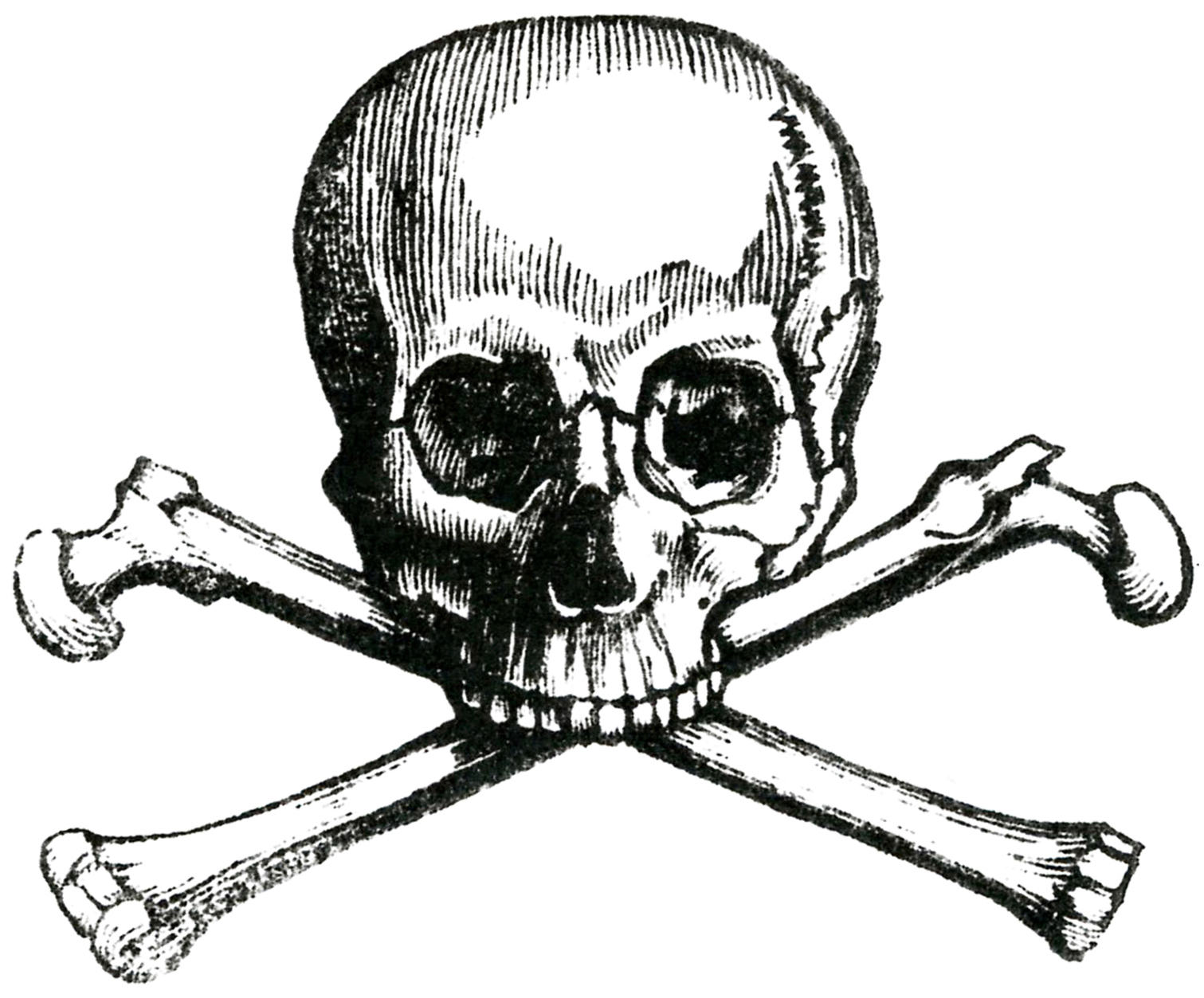


In the world of Masonry, there are many symbols which represent various teachings in the Fraternity. One, however, is continually employed by many much to the chagrin of countless persons and sovereign Masonic bodies. We are, of course, referring to the skull & crossbones. In this short article, we’d like to bring to the attention of the reader and anyone else who may happen upon this article the tradition, antiquity and importance of this great symbol and to set the record straight for those who see it in a way that is outside the definitions and philosophical interpretations of Freemasonry.

Robert: In my years as a Mason, one symbol stands alone as the most powerful, and not just because of its imagery. The Skull & Crossbones is a stark symbol. It stops you in your tracks and makes you notice it. It dares you to peruse it, to understand it. It does what it is supposed to do. It reminds you of your own mortality. Countless times, I have worn a square and compass pin with a skull in the middle in place of the American standard "G"(only adopted around 1717, mind you). And when I have worn this or any other item emblazoned with this image of a skull, a skull & crossbones, or any variation thereof, I get the same response, "Rob, what's with the skull?"

My answer is usually, "It's one of the lessons of the first degree and of the third.” The brothers always seem to give me a half cocked frown and say something like, "I don't know about that.” It’s like a skipping record. It seems as though those who take issue with the skull & crossbones being used, largely in part, seem to replace the symbolism from what it is in Freemasonry to what it means in either pop culture or their religion. To be frank, I'm a little tired of it.

One of the larger areas in which brothers complain about the use of the skull and crossbones is in the Chamber of Reflection. These Chambers of Reflection are widely used in many lodges all around the world, and their effectiveness as a tool in preparing the candidate has been extremely well documented. In place of a “prep room” they use the CoR. Chambers of Reflection and Preparation Rooms are virtually the same thing, like it or not, Brothers. The only difference is that a Chamber of Reflection has a system of quality control, it being part of the ritual, that is. It isn't a dusty old broom closet you let your candidate get dressed in. (“Take these garments and get dressed, watch out for the paint cans.”)

Let's get real here for a moment, on the level. We have a problem with them because they may be offensive to our particular religious sensibilities or are afraid that it will offend someone else’s. If the latter is the case, then a root cause analysis would show poor education on the part of an individual lodge, and ergo is the basis for banning the practice or having an issue with the symbol. In the cases of sovereign Masonic bodies having a posture against the use of the symbol, it only solidifies our lack of confidence in the individual lodge to educate its candidates in the true symbolism we hold so dear. Either way, it’s a sad state of affairs.

And yet again, I will remind you, this isn't a “devil’s room” or a “witch’s room” or anything that your “religious eyes” are seeing. It's a Masonic room, with symbols designed to make you think.
The skull’s imagery is quite antique. P.D. Newman writes of the ritual of years long past where it is referred to as “The Bone Box” which “holds the key or pass”, it describing the skull as a box of bones or teeth and which has the pass because it is represented by the human tongue. 1 Even in the oldest “Operative” Masonic lodge ever discovered in Pompeii, Italy which dates to circa 79 CE, was found a tile relief featuring…wait for it…a skull. You can read all about it here. 2

Brothers, the skull and crossbones is not evil. I'm sorry some of us feel this way. It is taught to you in the first degree and overwhelmingly in the 3rd degree. If we've forgotten that, perhaps we need to reread the lectures. It is the symbol of your mortality,

Memento Mori
“Remember That You Have To Die”

Brian: Lately, the subject of the Square & Compass being associated with a skull has been going around Masonic circles, especially on social media. To my surprise and utter disbelief, some sovereign Masonic bodies have actually issued statements that forbid the skull to be displayed with the Square & Compass. Not to seem pompous or take myself off the level, but I would have to suggest that these Brothers go back and read up on some ritual, starting with the Entered Apprentice degree.

According to some, displaying the Square & Compass with a skull “gives the wrong impression” because “that is not who we are”…

One of my closest Brothers had this to say: “Not understanding the Skull is like not understanding the Acacia.”

The Skull stands as a bastion in Masonry as a reminder that death is ever imminent and should incite ones reflection of their own life. The skull also relates to rebirth and as a reminder for spiritual reawakening. The crossed bones are added to signify the pillars of the portico where man stands as he labors in the quarry. To say that the skull is a misrepresentation of Masonry is akin to saying that the company Apple is “evil” because their logo happens to be an apple with a bite taken out of it. Somehow the jump from an innocuous corporate logo to Eve taking a bite from a forbidden fruit in the Garden of Eden makes complete logical sense to some people.

I have to say, that every time I hear about some officer getting his “jewels” in a bind over the Square & Compass and a skull being displayed together, I get closer and closer to having it tattooed on the back of my hands. I already have them tattooed on my arms. I would have to assume that there are more people in the world that are allergic to bee stings than would be offended or get the wrong idea about Masonry by seeing a skull with the “lights”. Therefore, perhaps we should remove the beehive from the ritual if we are looking to not be “offensive” to anyone.

Another Brother, whom I have had several conversations with, some on this very subject had this to say: “They tell you to not disagree with those who do not think well of masonry, uttering the "pearls before swine" stuff..... then they ban skulls because someone who isn't a mason may not like it.”

Brothers, we cannot intend to make everyone happy. By attempting to do so, we begin to cut and destroy the very fabric that this Craft was built upon. We are what we are and our symbols are what they are (and have been for hundreds of years, if not thousands). I have no tolerance for opinionated ignorance, especially when it comes to Freemasonry. From the very onset of ones journey as an Entered Apprentice, we are told that what is imparted within the degrees is a scratch on the surface and we are charged to educate ourselves further. This is yet another prime example of why we should, as a fraternity, quit wasting time and dispense with the reading of the minutes. More time and effort needs to be put into Masonic Education and exploring the meaning of our symbols. Perhaps then, we will not make such decisions in haste and further degrade the things that make Masonry what I have known it to be since I was eight years old.

Conclusion: Mackey's Masonic Encyclopedia has three entries relating to the skull. The first being "The Skeleton", which is simply a symbol for death used by the ancient Egyptians, which reminded them of mortality. 3 The second being the "skull", which it says “The skull as a symbol is not used in Freemasonry except in Masonic Templarism, where it is a symbol of mortality.” 4 And the third mention is that of the "skull and crossbones" which it defines as the following:

They are a symbol of mortality and death, and are so used by heralds in funeral achievements. As the means of inciting the mind to the contemplation of the most solemn subjects, the skull and cross-bones are used in the Chamber of Reflection in the French and Scottish Rites, and in all those Degrees where that Chamber constitutes a part of the preliminary ceremonies of initiation. 5

From this, we can say that it is indeed a fine symbol. A UNIVERSAL symbol which has transcended ages, cultures and languages. The symbol which reminds us that we can take nothing with us, that in death all men are equal. It represents that thing which is our transformation from this world to the next. The Grand Leveler. It is effective. Perhaps this is why some don't like it. It works so well, that it reminds us of our own mortality, our equality in relation to the rest of humanity and perhaps that hits just a little too close to home.

Virtus Junxit, Mors Non Separabit.
What Virtue Has United, Death Can Not Separate.


References; 1; Symbol of the Skull and Crossbones by P.D. Newman -http://www.knightstemplar.org/KnightTemplar/articles/20130523.htm, 2; Labor to Refreshment Blog, One Minute Mason Blog, 3; Masonic Dictionary “Skeleton” entry; , 4; Mackey’s Masonic Encyclopedia - “Skull” entry, 5; Mackey’s Masonic Encyclopedia “Skull and Crossbones” entry.


Bro. Brian Schimian is Life of Member A.O. Fay #676 in Highland Park Illinois and the Medinah Shriners - Lake County Shrine Club. He was also the Past Master Counselor of DeMolay - Lakes Chapter in 1995. Most recently, Brian became a Companion of the York Rite, joining Waukegan Chapter #41 R.A.M. Brian is a father of two children. "Start Square, Finish Level"


Bro. Robert Johnson, 32° is the Managing Editor of the Midnight Freemasons blog. He is a Freemason out of the First North-East District of Illinois. He is the Master of Waukegan Lodge No. 78 and Education officer for the 1st N.E. District of Illinois. He is also a member of the York Rite bodies Royal Arch, Cryptic Council, Knights Templar, AMD, The Illinois Lodge of Research and a member of the Scottish Rite Valley of Chicago as well as a charter member of the Society of King Solomon, a charity organization run by the Grand Lodge of Illinois. Brother Johnson currently produces and hosts weekly Podcasts (internet radio programs) Whence Came You? & Masonic Radio Theatre which focus on topics relating to Freemasonry. In addition, he produces video shorts focusing on driving interest in the Fraternity and writes original Masonic papers from time to time. He is also a cohost of The Masonic Roundtable, a Masonic talk show. He is a husband and father of three. He works full time in the safety industry and is also a photographer on the side as well as an avid home brewer. He is currently working on a book of Masonic essays.
Light--The Mason's Kingdom

by Midnight Freemason Contributor
Bro. Adam Thayer

One of the great joys of Freemasonry, for me, is in finding extraordinary beauty in ordinary places. After all, finding the deeper meaning behind everyday symbols is a large part of what modern Masonry was founded on; we took the tools of the common workman and turned them each into a symbol for self discovery and self improvement. Surprisingly, once you begin that search, you’ll find yourself tripping over educational opportunities everywhere you look, and constantly widening the scope that your search covers. Which brings us to The Lion King.

I was bored one Saturday, which is how far too many interesting stories start. In the past, this would have found me sitting on the couch, book in one hand, remote control in the other, looking for decent background noise to read to. This being 2015, the future we were all promised by Robert Zemeckis, I was sitting on the couch, laptop on one knee, Netflix on the television, looking for decent background noise to browse to. Progress!

As my eyes were skimming across “B-Grade” horror movies and 80’s action movies (hey, I never claimed to have good taste), trying to find a movie that wouldn’t require too much of my attention, one movie stood out that just didn’t fit in: The Lion King. It was a movie I hadn’t thought about in years, and I probably wouldn’t have given it a second look on most days, but I was feeling very nostalgic and maudlin, so I decided to press play.

Of course, this isn’t the story of why that’s one of the few Disney movies I can tolerate, nor a scene-by-scene description of me watching it. Instead, it’s an opportunity for me to show that Masonic inspiration can come from unlikely places.

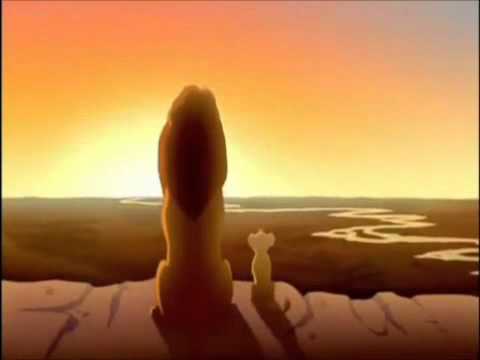
Near the beginning of the movie, there is a scene between two lions, discussing the extent of their kingdom. (You can view the scene here.The adult lion tells his cub that “Everything the light touches is our kingdom” and, just a few sentences later warns him about the shadowy place beyond where the light reaches by saying “That’s beyond our borders, you must never go there.”

That scene came on and my head whipped up so fast you could hear my neck pop. I quite literally rewound and replayed that scene half a dozen times. If they were monitoring my usage, I imagine someone at Netflix thought that a toddler must be playing with the remote control.

As Freemasons, the light itself is our kingdom. The truth, goodness, and warmth of the pure light is not only our constant joy, but our responsibility to uphold and protect. That light is what enables us to improve ourselves, and isn’t it our job to spread light as far as we can? Not through preaching or proselytizing, but through our lives and actions toward others.

As for the shadowy place, that represents those things which, as Masons, we should never do. Of course, just a few scenes later, the young cub finds a way to go directly to the place he knows he shouldn’t go, and it nearly kills him. I wouldn’t be surprised if more than once a Mason has found himself at risk for doing something that he knew he shouldn’t.

In Masonic terms, there is a point within a circle, the borders of which we must never allow our passions to take us past. The specific symbols we used may have been different from Disney’s, but the meaning behind each is the same; control yourself, keep your passions within certain boundaries, and remember that you put yourself at risk if you cross those boundaries.

As a bonus, there was one line of dialogue in between those two that I skipped, but would like to revisit. The adult lion tells his cub “A king's time as ruler rises and falls like the sun. One day, the sun will set on my time here, and will rise with you as the new king.” What if, instead of “king” we said “Worshipful Master”? Is not our time as ruler of the lodge equally short?

I could probably write a whole book on Masonic allegory found in Disney movies, but that wasn’t the point. My goal was simply to get you to start looking for allegory in unexpected places, and using it to broaden or refine your current understanding, and if I’ve sparked an interest in you, I’ll consider this a success.

Keep searching for more light!

~AT

Bro. Adam Thayer is the Junior Warden of Lancaster Lodge No 54 in Lincoln (NE) and the Worshipful Master of Oliver Lodge No. 38 in Seward (NE). He’s an active member of the Scottish Rite, and Knight Master of the Lincoln Valley Knights of Saint Andrew. Adam serves on the Education Committee of the Grand Lodge of Nebraska. You can contact him at adam.thayer@gmail.com

Freemasonry's Obsession With Empty Chairs

by Midnight Freemasons Founder
Todd E. Creason, 33°
Here's a little known fact about Freemasons--they are obsessed with empty chairs.  You don't have to talk very long to just about any group of Masons, and the subject of all those empty chairs comes up.  "We've got to fill those empty chairs in our Lodges!" they'll exclaim.  The Blue Lodges are worried about empty chairs.  The Scottish Rite is worried about those empty chairs.  The York Rite is worried about empty chairs.  The Shrine.  Amaranth.  Order of the Eastern Star.  "We've got to fill those blessed empty chairs!"

Grand Lodges come up with plans to increase membership.  Here in Illinois, just since I've been a Mason we've had several different ideas about how to fill those chairs.  We went from 2B1ASK1 to being able to ask somebody if they'd like to join our Fraternity.  We still have empty chairs.  One of our Grand Masters, a good friend of mine, had a great plan.  Every member should add a member to their Blue Lodge.  He was known to always have petitions in his pocket.  We did add members, but we still have empty chairs.  My York Rite Chapter back when I joined came up with a magic number of new members they'd like to add that year, and they worked tirelessly, putting on degrees, and putting guys through the Chapter.  They added a large number of new members.  I was one of those guys that went through then.  Guess what?  They still have empty chairs!

The problem is, we're asking the wrong question.  The question isn't how can we fill those chairs--the question is why are those chairs empty to begin with?
When I joined the Lodge, it was because I was looking for something.  I wanted to improve myself.  I wanted to learn new things.  I wanted to gain new skills.  I wanted to be more active in my community.  I wanted to be a part of something traditional and something ancient.  In an ever changing world, I wanted something in my life that remained steady and consistent.  And I've found all those things, but not entirely within the walls of my Lodge.  Much of what I've gained has been through my own explorations and studies into the Craft.  If it hadn't been for my own initiative I'm not sure I would have found that greater meaning that makes my Lodge attendance and participation so fulfilling.

Our chairs are empty because so many of our Lodges have gotten so involved with the business of Freemasonry, they've forgotten the purpose of the Craft--to make good men better by constantly working to improve ourselves.  We spend so much time reading minutes, and reciting committee reports, we forget that we're supposed to be learning something as well.  The expectation of our membership versus the reality of our meetings is the reason so many of our chairs are empty.

The world is a busy place, and very few men are willing to waste a couple hours of their time once or twice a month to sit through a meeting when the only thing they might learn in that meeting is that the Lodge's building insurance went up 8% from last year, and somebody needs to make sure we have enough pancake mix by Saturday's breakfast.
There's no sense in worrying about how to fill those chairs in your Lodge if you aren't willing to figure out why they are empty to begin with.  We must do better.  Like it was said in that famous movie "Field of Dreams"-- if you build it they will come.  Your Lodge will start seeing fewer and fewer empty chairs when you start giving your members, old and new, the thing we promised them in the beginning.

Light!

~TEC

Todd E. Creason, 33° is the Founder of the Midnight Freemasons blog and continues to be a regular contributor. He is the author of several books and novels, including the Famous American Freemasons series. He is a Past Master of Ogden Lodge No. 754 (IL), and currently serves as Secretary.  He's also a member of Homer Lodge No. 199.  He is a member the Scottish Rite Valley of Danville, the York Rite Bodies of Champaign/Urbana (IL), the Ansar Shrine (IL), Eastern Illinois Council No. 356 Allied Masonic Degrees, Charter President of the Illini High Twelve in Champaign-Urbana (IL), and a Fellow of the Missouri Lodge of Research.  He was recently awarded the 2014 Illinois Secretary of the Year Award by the Illinois Masonic Secretaries Association.  You can contact him at: webmaster@toddcreason.org

The Scottish Rite Master Craftsman Program

by Midnight Freemason Contributor
WB. Robert Johnson 32° 


A search for further light. It’s what we were all after when we joined additional rites within the craft. York, Scottish and various Knights abound. After joining the Scottish Rite NMJ back in the fall of 2012, I had the privilege of sitting at a table with Scottish Rite Brothers from New Orleans. 

At that time I didn’t know there were two jurisdictions. The Brothers told me that if I wanted further light in the Scottish Rite, that I should check out something called the Scottish Rite Master Craftsman Program. Many of you reading this now know already what it is, some have taken it and even fewer have finished it. 

In short, the Master Craftsman Program is a correspondence (by mail) education course designed to further your understanding the degrees in the Scottish Rite and the mysteries therein contained. How do you take the course? The answer to that is simple, you go to www.scottishrite.org and purchase the course for thirty-five bucks.

What do you get for thirty-five bucks? You get the five inch thick Scottish Rite Ritual and Monitor (yours to keep), a nice folder to keep your packets and information in and you get the first quiz. The idea is that you will do these quizzes in an open book fashion. When you finish the first quiz, you slide it into the addressed envelope and slap a stamp on it. When the folks at the Master Craftsman Program receive your quiz, it is graded and sent back to you along with an answer sheet which explains where you could have found the answers in that case you missed any. You also get your next quiz. 

The process continues in this fashion until you complete quiz number six. Upon completion you get a nice lapel pin (the true wage of a Master Mason) and a certificate. Correspondence courses in general have an extremely low rate of completion. We feel that since we have all the time in the world, we let other things take priority. This was the case for me. My first quiz was graded at the end of 2013 and I just finished the course in January 2015. My advice to you who might want to take this course is to not let it sit around. Get it done. 

I should mention here that the program is hosted and put on by the Southern Jurisdiction. What does that mean for us in the Northern Masonic Jurisdiction? It means that you will, indeed, still be able to take the course. It also means, do not expect it to make any sense to you unless you've seen the SJ degrees. Having said that, I don’t want my NMJ brothers to be discouraged from taking the course. After all, you do get the ritual monitor so all the answers you will need are contained within. I also cannot stress this enough, in addition to having the Scottish Rite ritual and monitor (which you get for free when you take the course), spend some money and buy, A Bridge to Light. It is plainly written and highly recommended. It will aid in your search for answers in this course immensely. 

When you finish MC I (Master Craftsman #1) there are additional courses offered. Master Craftsman II, is focussed on the same as the first course but this one is much more in depth. After you complete part II, there is Master Craftsman III which is something I find completely interesting. You see, MC III is based on the Blue Lodge or the first three degrees in our primary lodges. Finally our good friend and Brother, Art DeHoyos is, I believe, is putting together MC IV which will focus on the book, Morals and Dogma by Albert Pike (the Godfather of Masonry). Currently I’m just starting MC II, and I do have every intention of completing all the Master Craftsman Programs although admittedly, I will not be looking forward to part IV. Morals and Dogma has done one thing over and over, which is put me to sleep. I’m joking of course, but MC IV is sure to be a difficult series of quizzes. 

So, given all this info I hope you all decide to jump in and start the Master Craftsman Program. I also urge you to power through and get it done. Lastly, when you purchase the program, they will ask you if you want to round your purchase up to the next dollar to help the House of the Temple restoration. I want you to say "yes". 

Have fun in your studies, and if you get stuck on part one anywhere, shoot me an email, I can help!

~RHJ


Bro. Robert Johnson, 32° is the Managing Editor of the Midnight Freemasons blog. He is a Freemason out of the First North-East District of Illinois. He is the Master of Waukegan Lodge No. 78 and Education officer for the 1st N.E. District of Illinois. He is also a member of the York Rite bodies Royal Arch, Cryptic Council, Knights Templar, AMD, The Illinois Lodge of Research and a member of the Scottish Rite Valley of Chicago as well as a charter member of the Society of King Solomon, a charity organization run by the Grand Lodge of Illinois. Brother Johnson currently produces and hosts weekly Podcasts (internet radio programs) Whence Came You? & Masonic Radio Theatre which focus on topics relating to Freemasonry. In addition, he produces video shorts focusing on driving interest in the Fraternity and writes original Masonic papers from time to time. He is also a cohost of The Masonic Roundtable, a Masonic talk show. He is a husband and father of three. He works full time in the safety industry and is also a photographer on the side as well as an avid home brewer. He is currently working on a book of Masonic essays.